

 Products
 Martindale abrasion tester Updated
 VeriVide Original D65 Tube Light
0%
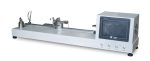

Digital Yarn Twist Tester
$0.00
Digital Yarn Twist Tester

Digital Yarn Twist Tester
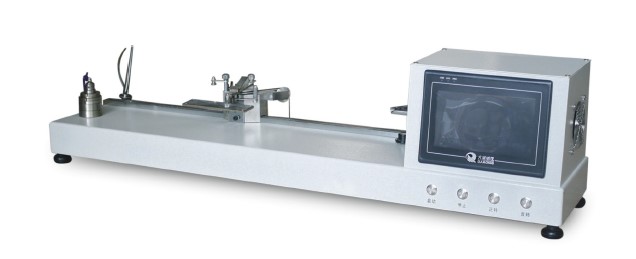
A Digital Yarn Twist Tester is a laboratory device used to measure the number of twists (turns) per unit length in a yarn. It’s crucial for evaluating yarn quality, strength, elasticity, and uniformity. The digital version offers precise, automated readings for both S-twist and Z-twist yarns.
Purpose Digital Yarn Twist Tester:
To determine twist per inch (TPI) or twist per meter (TPM) in single and plied yarns using direct untwist or untwist-retwist methods.
Applications Digital Yarn Twist Tester:
Quality control in spinning mills
Yarn standard testing (cotton, polyester, blends)
R&D in textile manufacturing
Working Principle Digital Yarn Twist Tester:
One end of the yarn is clamped, and the other is rotated to remove or measure twists.
The tester counts and displays twist digitally based on length and rotation.
Benefits of Digital Yarn Twist Tester:
High Accuracy – Digital readout ensures precise twist measurements.
Quick Testing – Faster than manual methods, increasing lab efficiency.
Versatile Application – Suitable for single, doubled, or plied yarns.
Reduces Human Error – Automated counting improves repeatability and consistency.
Supports Both S & Z Twist – Measures both twist directions accurately.
User-Friendly Operation – Intuitive controls and clear display simplify use.
Features of Digital Yarn Twist Tester:
Digital Display – Shows real-time twist count and length.
Motorized Rotation- Smooth, adjustable rotation speed for controlled untwisting.
Dual Clamp System – Holds yarn securely to prevent slippage.
Length Measurement Scale – Built-in ruler or encoder for precise yarn length setup.
Auto Stop Function – Automatically stops when yarn is fully untwisted.
Selectable Units – Twist readings available in TPI or TPM.
How to Use Digital Yarn Twist Tester:
Prepare the Yarn Sample
– Cut a yarn length (e.g., 250 mm or 10 inches) as per testing standard.
– Make sure it’s free from knots or damage.
Mount the Yarn – Fix one end in the stationary clamp and the other in the rotating clamp.
– Ensure the yarn is straight and under slight tension.
Set the Gauge Length – Adjust the length scale or input it digitally, depending on the machine.
Select Twist Direction – Choose S or Z direction based on the yarn’s twist.
Start the Test – Activate the motor to untwist (or untwist-retwist, if applicable). – The display shows the number of rotations. Read the Twist Value – The twist (TPI/TPM) appears automatically based on the set length.
Stop and Unload – Once reading is complete, stop the machine and remove the yarn.
Record the Result – Note the reading for documentation or further analysis.
Maintenance Tips for Digital Yarn Twist Tester:
Daily:
☐ Wipe down the machine and clamps to remove dust or fibers
☐ Check for yarn residue on rotating parts
☐ Ensure display and buttons are responsive
Weekly:
☐ Lubricate rotating spindle lightly (if required)
☐ Inspect clamps for wear or misalignment
☐ Test motor rotation for smooth operation
☐ Check twist direction selector switch
Monthly:
☐ Calibrate digital display if twist readings drift
☐ Inspect electrical wiring and connectors
☐ Tighten any loose screws or panel parts
Safety Tips:
Avoid Loose Clothing: Prevent getting caught in the rotating spindle
Use Proper Yarn Tension: Overstretching may snap the yarn or damage clamps
Handle With Care: Avoid rough handling of the digital panel or twist arm
Power Off When Not in Use: Prevents accidental operation
Follow Manual: Refer to user guide for specific calibration or cleaning procedures
Digital Yarn Twist Tester – Maintenance & Safety Checklist
Daily Maintenance:
☐ Clean clamps and body surface
☐ Remove lint or yarn fragments
☐ Verify display & control buttons function properly
Weekly Maintenance:
☐ Lightly lubricate spindle if required
☐ Inspect clamp alignment and grip
☐ Test motor for smooth, silent operation
☐ Check twist direction switch
Monthly Maintenance:
☐ Calibrate twist reading accuracy
☐ Inspect cables and connectors
☐ Tighten loose hardware
☐ Run full test to ensure system performance
Safety Checklist:
☐ Keep hands clear of rotating parts during testing
☐ Avoid loose clothing or jewelry
☐ Do not overstretch or over tension yarn
☐ Power off when cleaning or not in use
☐ Follow the machine’s manual for calibration and service
Basic Troubleshooting Guide – Digital Yarn Twist Tester
Issue: No Power / Display Not Turning On
– Check power cable and socket
– Inspect fuse or main switch
– Ensure emergency stop isn’t engaged
Issue: Twist Count Seems Inaccurate
– Recalibrate the machine
– Verify yarn length input is correct
– Check for slippage in clamps
Issue: Motor Not Rotating
– Ensure motor switch is ON
– Inspect motor connection and wiring
– Test rotation manually to check for blockage
Issue: Display Freezes or Buttons Unresponsive
– Restart the machine
– Check control panel for dust or moisture
– Contact support if issue persists
Issue: Auto-Stop Not Working
– Ensure length and twist direction are set
– Check sensor alignment or damage
– Reboot and re-run test
Scope of application
It is used for testing the twist, twist irregularity and twist shrinkage of all kinds of yarns.
[Related standards]
GB/T2543.1/2 FZ/T10001 ISO2061 ASTM D1422 JIS L1095 etc.
Technical parameters
1. Work mode:Computer program control, data processing, printout results
2. Test methods:
A, Average twisting slip elongation
B, Average maximum twisting elongation.
C, Direct counting method D, twisting twisting A method
E, Twisting twisting B method f and three times twisting twisting method
3. Sample length:10、25、50、100、200、250、500mm
4. Twist test range:1~1998 twist /10cm, 1~1998 twist /m
5. The extent of twist removal:Maximum 50mm
6. Maximum twist measurement.20mm
7. Speed:600~3000r/min
8. Pre tension:0.5~171.5cN
Digital Yarn Twist Tester
9. Size:920×170×220mm
10. Power supply:Ac220V 50Hz 25W
11. Weight:16kg
Shipping & Delivery
Related products

Steam Soaping machine
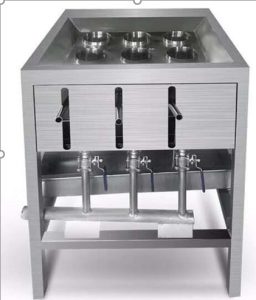
Steam Soaping Machine
Steam Soaping Machine
A Steam Soaping Machine is a specialized laboratory apparatus used in textile dyeing processes, particularly for post-dyeing treatments like soaping, which enhances color fastness and removes unfixed dyes from fabric samples. This machine is designed to perform soaping treatments on dyed textile samples using steam. Soaping is a critical step in dyeing, especially for reactive dyes, as it removes unfixed dye particles, ensuring better color fastness and preventing dye bleeding. The steam soaping process involves treating the dyed fabric with a soaping solution at elevated temperatures, facilitated by steam, to achieve optimal results. ⚙️ Key Features of Steam Soaping Machine - Beaker Material: Constructed with high-grade 316L stainless steel for excellent corrosion resistance and durability.- Operation Modes: Offers both automatic control and manual water filling options, providing flexibility in operation. - Drainage System: Equipped with an automatic drainage device for efficient removal of used solutions.- Temperature Control: Precise temperature regulation to maintain optimal soaping conditions.- Compact Design: Suitable for laboratory settings, occupying minimal space while delivering effective performance. ✅ Benefits of Steam Soaping Machine - Enhanced Color Fastness: Effectively removes unfixed dyes, resulting in improved wash and rub fastness of the fabric.- Efficient Processing: Reduces the time required for post-dyeing treatments compared to conventional methods.- Consistent Results: Provides uniform treatment across samples, ensuring reproducibility in testing and quality control.- Resource Optimization: Minimizes water and chemical usage through controlled processing parameters.- Versatility: Applicable to various fabric types and dye classes, making it a valuable tool in research and development. Typical Applications - Laboratory Testing: Used in dyeing laboratories for evaluating the fastness properties of dyed samples. - Research and Development: Assists in developing and optimizing dyeing processes and formulations. - Quality Control: Ensures that dyed fabrics meet specified fastness standards before bulk production. In summary, a Steam Soaping Machine is an essential laboratory instrument in the textile industry, facilitating efficient and effective post-dyeing treatments to enhance the quality and durability of dyed fabrics. Features of Steam Soaping Machine:- High-Grade Stainless Steel Beakers - Made from 316L stainless steel for excellent chemical and heat resistance.
- Steam-Based Heating - Uses direct or indirect steam to maintain consistent high temperatures ideal for soaping.
- Precise Temperature Control - Maintains stable temperatures (typically up to 98–100°C) for effective removal of unfixed dyes.
- Automatic and Manual Modes - Offers both programmable automatic cycles and manual operation for flexibility.
- Beaker Agitation or Rotation - Ensures uniform soaping action across fabric surfaces.
- Automatic Drainage System - Efficiently removes used soaping solution to speed up cycle changeovers.
- Compact Design - Fits well in lab settings while allowing multiple samples to be processed simultaneously.
- Safety Features - Includes pressure and temperature protection systems to ensure safe operation.
- Low Water and Chemical Use - Designed for minimal liquor ratios, enhancing sustainability.
- User-Friendly Interface - Simple digital controls or touch panel for easy operation and cycle programming.
- Prepare the Dyed Sample - After dyeing, rinse the fabric to remove surface dye and prepare it for soaping.
- Load the Fabric - Place the dyed fabric or sample into the beakers or holders inside the machine.
- Add Soaping Solution - Pour the prepared soaping agent (usually a detergent solution) into the beakers or tank as per recipe.
- Set Parameters
- Start the Cycle - Begin the soaping process. The machine will heat the solution using steam and agitate/rotate the beakers for even treatment.
- Drain and Rinse - After the cycle ends, the machine may auto-drain. Rinse the fabric with warm water to remove residual chemicals.
- Unload the Samples - Carefully remove the fabric. Inspect for evenness and color fastness improvement.
- Clean the Machine - Rinse and dry the beakers or tank to maintain hygiene for the next use.
 used for sample soaping after dyeing in laboratory
Beaker material: 316L S/S
automatic control / manual filling water device, with automatic drainage device.
Steam Soaping machine Dunlin price in Bangladesh
Steam Soaping machine Dunlin in textile testing equipment
Textile testing equipment in Bangladesh
Textile testing equipment in Dhaka
Textile testing equipment in Uttara
MAAM tex Steam Soaping machine Dunlin price in Bangladesh
used for sample soaping after dyeing in laboratory
Beaker material: 316L S/S
automatic control / manual filling water device, with automatic drainage device.
Steam Soaping machine Dunlin price in Bangladesh
Steam Soaping machine Dunlin in textile testing equipment
Textile testing equipment in Bangladesh
Textile testing equipment in Dhaka
Textile testing equipment in Uttara
MAAM tex Steam Soaping machine Dunlin price in Bangladesh 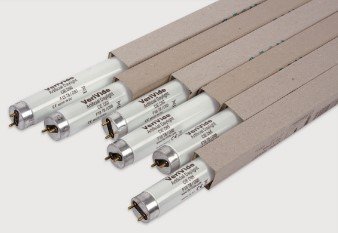

VeriVide Original D65 Tube light
Physical Testing & Fabric Testing, Dyeing Lab Machine, Lab Equipment & Instrument, Yarn Dyeing Machine & Equipment
VeriVide Original D65 Tube Light – Artificial Daylight
VeriVide Original D65 Artificial Daylight Tube Light – 6500K, CRI 98
Original VeriVide D65 Artificial Daylight Tube Light for Accurate Colour Assessment
VeriVide Original D65 Tube Light – Artificial Daylight is a professional standardized daylight light source designed for accurate and consistent visual colour assessment. With a correlated colour temperature of 6500K and high CRI 98, the VeriVide D65 provides a controlled artificial daylight environment for evaluating colours, shades, textiles, garments, printed materials, plastics, paints, packaging and other products where colour consistency is critical.
Natural daylight changes according to the time of day, weather, season, geographical location and surrounding conditions. These changes can create differences in visual colour evaluation. A standardized D65 artificial daylight source provides a controlled lighting condition so that colour decisions can be made consistently. VeriVide explains that using the same standardized artificial light source throughout the supply chain helps reduce problems caused by variations in natural daylight.
The VeriVide Original D65 Artificial Daylight Tube is therefore an important replacement or lighting component for professional colour assessment cabinets, viewing systems and suitable standardized visual inspection environments.
Product Overview
| Specification | Details |
|---|---|
| Product Name | VeriVide D65 Artificial Daylight Tube Light |
| Brand | VeriVide |
| Light Source | D65 Artificial Daylight |
| Correlated Colour Temperature | 6500K |
| Colour Rendering Index | CRI 98 |
| Lamp Type | T8 |
| Available Length | 600 mm / 1200 mm / 1500 mm |
| Available Power | 18W / 36W / 58W |
| Application | Colour Assessment & Visual Inspection |
| Colour Evaluation | Standardized Artificial Daylight |
| Typical Use | Textile, Garments, Printing, Packaging, Paint, Plastic & Manufacturing |
| Manufacturer | VeriVide |
| Product Codes | 600D65 / 1200D65 / 1500D65 |
Specifications are based on VeriVide's published lamp information. Availability of individual lengths/models should be confirmed at the time of order.
What is VeriVide D65 Artificial Daylight?
VeriVide Original D65 Tube light is a standardized daylight illuminant representing daylight with a correlated colour temperature of approximately 6500 Kelvin. VeriVide describes D65 as the international standard measure of daylight based around a mean colour temperature of 6500K.
The purpose of D65 lighting is not simply to provide a bright white light. Instead, it provides a standardized spectral lighting condition suitable for professional visual colour assessment.
Two products can sometimes appear to have the same colour under one light source but look different under another. This phenomenon is known as metamerism. For this reason, professional colour assessment requires controlled and standardized illumination. VeriVide specifically highlights the importance of viewing colour samples under standardized lighting conditions to identify colour differences and metameric effects.
VeriVide Original D65 Tube light is engineered for this type of controlled colour assessment environment.
Why Choose Original VeriVide D65 Tube Light?
Colour evaluation is an important part of quality control in many industries. A small difference in colour can result in rejection of fabric, garments, packaging, printed materials or finished products.
Using ordinary room lighting or an uncontrolled daylight source may produce inconsistent visual results. The VeriVide D65 provides a standardized artificial daylight source designed specifically for professional colour assessment.
Key advantages include:
- 6500K standardized D65 daylight
- High CRI 98
- Designed for accurate visual colour assessment
- Consistent lighting conditions
- Suitable for professional colour matching
- Helps reduce variations caused by natural daylight
- Suitable for colour assessment equipment and viewing systems
- Available in multiple tube lengths
- Suitable for textile and garment quality control
- Useful for identifying colour differences and metamerism
- Original VeriVide replacement lamp
VeriVide states that its D65 lamp has a CRI of 98, allowing colours to be rendered more accurately than lower-CRI light sources.
Technical Specifications
1. Correlated Colour Temperature – 6500K
VeriVide Original D65 Tube light has a 6500K correlated colour temperature.
6500K is the defining colour-temperature characteristic of D65 artificial daylight. It produces a cool daylight appearance suitable for professional colour evaluation.
This is particularly important when colour standards and product samples need to be compared under controlled lighting conditions.
2. High Colour Rendering Index – CRI 98
VeriVide Original D65 Tube light is specified with a CRI of 98.
CRI, or Colour Rendering Index, indicates how accurately a light source renders colours in comparison with a reference light source. A higher CRI is generally desirable for visual colour assessment because it allows colours to be represented more accurately.
For applications such as textile shade matching, garment inspection and product colour comparison, high colour rendering performance is an important consideration. VeriVide lists its D65 lamp with CRI 98.
3. T8 Tube Design
The VeriVide D65 fluorescent lamp is available in T8 format.
The T8 designation refers to the tube diameter/type used by the lamp. The official VeriVide specification lists D65 versions in 600 mm, 1200 mm and 1500 mm lengths, with corresponding 18W, 36W and 58W power ratings.
Available VeriVide D65 Models
VeriVide 600D65
- Length: 600 mm
- Power: 18W
- Tube Type: T8
- CCT: 6500K
- CRI: 98
- Product Code: 600D65
VeriVide 1200D65
- Length: 1200 mm
- Power: 36W
- Tube Type: T8
- CCT: 6500K
- CRI: 98
- Product Code: 1200D65
VeriVide 1500D65
- Length: 1500 mm
- Power: 58W
- Tube Type: T8
- CCT: 6500K
- CRI: 98
- Product Code: 1500D65
These three D65 configurations are listed in VeriVide's official lamp specification.
Application of VeriVide Original D65 Tube light
The VeriVide D65 Artificial Daylight Tube is suitable for applications where standardized daylight illumination is required for visual inspection and colour assessment.
Textile Industry
The textile and garment industry is one of the major applications for D65 artificial daylight.
Textile manufacturers, dyeing factories, garment factories, buying houses and quality-control laboratories need to compare fabric samples, dyed yarns, garments and colour standards under controlled lighting.
Typical applications include:
- Fabric shade matching
- Garment colour inspection
- Yarn colour comparison
- Dyed fabric inspection
- Colour approval
- Lab dip assessment
- Bulk production shade checking
- Colour standard comparison
- Final garment inspection
- Buyer sample approval
Using standardized lighting helps different departments and organizations evaluate the same colour under similar viewing conditions.
Colour Matching
Colour matching requires more than simply checking whether two samples look similar.
A sample may appear acceptable under one light source but show a noticeable difference under another light source. This is particularly important in textile, garment and manufacturing applications.
VeriVide Original D65 Tube light provides a standardized daylight reference for visual assessment.
For example, a laboratory may compare:
Approved Colour Standard → Lab Dip → Bulk Fabric
All three samples can be evaluated under the same D65 lighting condition.
This provides a more controlled environment for colour decisions.
Metamerism Assessment
Metamerism occurs when two colours appear to match under one lighting condition but appear different under another.
This can create serious problems in textile and product manufacturing.
For example:
- Fabric A may match the approved standard under one light.
- Under daylight, Fabric A may appear different.
- Under store lighting, the difference may become even more noticeable.
VeriVide Original D65 Tube light recommends standardized viewing environments because changing illumination can reveal colour differences that may not be visible under another light source.
VeriVide Original D65 Tube light light source can therefore form an important part of a professional colour assessment system.
Use in VeriVide Colour Assessment Cabinets
VeriVide colour assessment cabinets can be configured with standardized light sources including D65 and D50, along with other illuminants depending on the application.
The D65 tube is particularly useful where daylight-standard colour assessment is required.
A typical colour assessment cabinet may contain multiple light sources to allow the operator to check colour behaviour under different lighting conditions.
This can help identify:
- Colour inconsistency
- Metamerism
- Shade variation
- Fluorescence-related appearance
- Differences between product and colour standard
Use in Textile Testing Laboratories
Textile testing laboratories require controlled and repeatable environmental conditions for visual assessments.
VeriVide Original D65 Tube light can be used as part of an appropriate viewing cabinet or visual inspection system for:
- Colour fastness assessment
- Shade evaluation
- Fabric colour grading
- Garment inspection
- Pilling assessment
- Appearance assessment
- Colour matching
- Standard comparison
VeriVide Original D65 Tube light own textile testing equipment uses CIE D65 artificial daylight for standardized visual assessment applications. For example, its Pilling Assessment Viewer uses VeriVide CIE D65 Artificial Daylight for assessment under relevant EN ISO 12945 methods.
Colour Fastness Assessment
Visual evaluation is also important in textile colour fastness testing.
A controlled D65 light source can provide standardized viewing conditions when comparing test specimens with reference standards.
VeriVide's Colour Fastness Cabinet, for example, uses D65 Artificial Daylight at 6500K as one of its standardized light sources, together with UV black light for relevant assessment applications.
Benefits for Garment Manufacturers
For garment manufacturers, colour consistency is essential from sampling through bulk production.
The VeriVide Original D65 Tube light can help establish a controlled visual environment for:
Sampling
Compare the original colour standard with lab dips and development samples.
Production
Check whether bulk production remains within the approved colour range.
Quality Control
Evaluate finished garments before shipment.
Buyer Inspection
Provide a standardized environment for colour approval.
Final Inspection
Reduce the possibility of colour disputes caused by inconsistent lighting.
Benefits for Textile Dyeing Factories
In dyeing factories, colour decisions are often made at several stages.
These may include:
- Recipe development
- Lab dip preparation
- Lab dip approval
- Bulk dyeing
- Shade checking
- Finishing
- Final inspection
- Shipment inspection
Using a standardized VeriVide Original D65 Tube light source can help maintain consistent visual conditions across these stages.
This is especially useful when several people are involved in colour evaluation.
Standards and Compliance
The VeriVide Original D65 Tube light is specified by VeriVide for use as a D65 artificial daylight source.
According to VeriVide's published lamp information, the D65 lamp has a 6500K correlated colour temperature, is within the tolerances prescribed in BS 950 Part 1, and has high conformance to relevant CIE specifications for accurate colour matching. VeriVide's current documentation also references ISO/CIE 23603 / CIE S 012/E for D65 applications.
Depending on the particular testing method, viewing cabinet and industry application, additional standards may apply. Users should always verify the exact lighting requirements specified by their applicable test method, buyer or customer.
Why Standardized Lighting Matters
Natural daylight is not constant.
It can change due to:
- Time of day
- Weather
- Season
- Geographic location
- Atmospheric conditions
- Window orientation
- Surrounding environment
Because of these factors, a colour sample may look different at different times or locations.
VeriVide notes that these natural-light variations can cause colour consistency problems throughout a supply chain. Standardized artificial light provides a controlled alternative.
For international textile and garment supply chains, this is especially important because a buyer, manufacturer and supplier may be located in different countries.
VeriVide D65 vs Ordinary Daylight
| Feature | VeriVide D65 | Ordinary Natural Daylight |
|---|---|---|
| Standardized | Yes | No |
| Colour Temperature | 6500K | Variable |
| Controlled Environment | Yes | No |
| Colour Assessment | Professional | Variable |
| Repeatability | High | Low |
| Weather Dependent | No | Yes |
| Time-of-Day Dependent | No | Yes |
| Suitable for Standardized Colour Evaluation | Yes | Not recommended as sole reference |
The purpose of VeriVide D65 is therefore to provide a more consistent and controlled lighting condition than relying on natural daylight alone.
VeriVide Original D65 Tube Replacement
For existing VeriVide viewing cabinets and compatible systems, correct lamp replacement is important.
VeriVide recommends replacing lamps after their specified service life because the spectral output of lamps can change with usage. The manufacturer notes a 2000-hour life-cycle recommendation for its lamps and recommends replacement after 2000 hours or one year of use to maintain reliable colour assessment conditions.
When replacing a lamp, users should verify:
- Correct VeriVide D65 specification
- Correct tube length
- Correct wattage
- Correct tube type
- Compatibility with the existing equipment
- Applicable voltage and ballast requirements
How to Select the Correct D65 Tube
Before ordering a replacement VeriVide D65 tube, check the existing lamp.
Step 1 – Check the Length
Measure the existing tube.
Available VeriVide D65 lengths include:
- 600 mm
- 1200 mm
- 1500 mm
Step 2 – Check Wattage
The corresponding official specifications are:
- 600 mm – 18W
- 1200 mm – 36W
- 1500 mm – 58W
Step 3 – Check Tube Type
The listed D65 versions are T8.
Step 4 – Check Equipment Compatibility
If the lamp is being installed into a VeriVide viewing cabinet or colour assessment equipment, confirm the equipment model before ordering.
Step 5 – Confirm Original Product Requirement
For professional colour assessment, use the correct standardized lamp rather than an ordinary commercial daylight tube.
Suitable Industries
The VeriVide Original D65 Tube Light can be relevant to many industries, including:
Textile & Garments
Fabric, yarn, garment and shade evaluation.
Dyeing & Finishing
Lab dip and bulk shade comparison.
Printing
Visual colour checking of printed materials.
Packaging
Colour consistency of packaging materials.
Plastics
Colour and appearance inspection.
Paint & Coating
Visual colour comparison.
Automotive
Component colour and appearance assessment.
Furniture
Fabric, leather, plastic and surface colour evaluation.
Graphic Arts
Visual inspection under controlled lighting where the relevant D65 specification is applicable.
Key Features at a Glance
VeriVide Original D65 Tube light offers:
- Original VeriVide D65 light source
- 6500K correlated colour temperature
- CRI 98
- T8 tube format
- Multiple length options
- Standardized artificial daylight
- Professional colour assessment
- Consistent visual inspection conditions
- Suitable for textile and garment industries
- Suitable for colour matching
- Useful for metamerism assessment
- Suitable for compatible VeriVide equipment
- Professional replacement lamp solution
Frequently Asked Questions
What is a VeriVide D65 Tube Light?
VeriVide D65 is a standardized artificial daylight lamp designed to provide controlled D65 illumination for professional visual colour assessment.
What is the colour temperature of VeriVide D65?
The VeriVide D65 Artificial Daylight Tube has a correlated colour temperature of 6500K.
What is the CRI of VeriVide Original D65 Tube light ?
The official VeriVide specification lists the D65 lamp with CRI 98.
What lengths are available?
The official specification lists 600 mm, 1200 mm and 1500 mm versions.
What are the wattages?
The listed versions are 18W, 36W and 58W, corresponding respectively to 600 mm, 1200 mm and 1500 mm lengths.
Is VeriVide Original D65 Tube light suitable for textile colour matching?
Yes. D65 standardized daylight is widely used in controlled visual colour assessment, including textile and garment applications. VeriVide specifically describes D65 as being specified for applications where colour consistency and quality need to be maintained.
Why should I use Original VeriVide D65 instead of an ordinary 6500K tube?
A tube being labelled “6500K” does not by itself make it a standardized VeriVide D65 colour-assessment lamp. Professional colour assessment depends on the characteristics of the light source, not only its nominal colour temperature. VeriVide's D65 lamp is designed and specified as an artificial daylight source for standardized colour assessment.
When should the D65 lamp be replaced?
VeriVide recommends replacement after approximately 2000 hours or one year of use to maintain reliable assessment conditions.
Can this lamp be used in any T8 fixture?
Not necessarily. Compatibility with the fixture, ballast, electrical requirements and intended application should be checked before installation.
Product Applications
VeriVide D65 Artificial Daylight Tube Light is suitable for:
- Textile Testing Laboratory
- Garment Factory
- Dyeing Factory
- Fabric Inspection
- Colour Matching Laboratory
- Quality Control Laboratory
- Buying House
- Apparel Industry
- Printing Industry
- Packaging Industry
- Plastic Industry
- Paint Industry
- Product Inspection
- Colour Assessment Cabinet
- Viewing Cabinet
- Visual Inspection System
Why Buy VeriVide D65 from MAAM TEX?
MAAM TEX supplies textile testing instruments, laboratory equipment, colour assessment products and related consumables for textile and garment industries.
For customers requiring VeriVide Original D65 Artificial Daylight Tube Light, we can provide the appropriate specification based on your existing equipment, required tube length and application.
Before placing an order, please provide:
- Required quantity
- Tube length – 600 / 1200 / 1500 mm
- Existing machine/cabinet model, if applicable
- Required wattage
- Photo of the existing tube, if available
This information helps ensure that the correct replacement lamp is supplied.
Ordering Information
Product:
VeriVide Original D65 Tube Light – Artificial Daylight
Available Options:
600D65
600 mm / 18W / T8 / 6500K / CRI 98
1200D65
1200 mm / 36W / T8 / 6500K / CRI 98
1500D65
1500 mm / 58W / T8 / 6500K / CRI 98
current stock Available
Conclusion
The VeriVide Original D65 Tube Light – Artificial Daylight is a professional standardized daylight source for controlled visual colour assessment. With 6500K colour temperature and CRI 98, it is designed for applications where colour consistency, repeatability and accurate visual evaluation are important.
For textile and garment manufacturers, dyeing factories, testing laboratories, buying houses and quality-control departments, a standardized D65 lighting environment can help create more consistent colour evaluation conditions and reduce problems associated with variable natural daylight.
For compatible VeriVide equipment and professional colour assessment applications, selecting the correct Original VeriVide D65 lamp is important for maintaining the intended lighting conditions of the system.
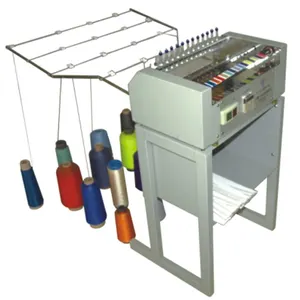
Card winding machine
Card Winding Machine
Card Winding Machine
Product description
Color Card Winding Machine applies to a number of brass wire, yarn,
while according to technological requirements on winding type with quantitative,
bound, for yarn user optional color, contrast and testing purposes.
It is a professional new product designed to give a variety of sample cards.
Specification
Model FH-25
Color card winding machine
Voltage 220V 50HZ one phase
Color White
Dimensions L1100xW600xH800(mm)
Paper color card size According to custom-made Piece Within 25 pieces
Power 15w
Weight 30kgs
We could make special type according to the customers request.
Card Winding Machine

IR Dyeing Machine Dunlin
IR Dyeing Machine Dunlin
IR Dyeing machine Dunlin is Safe, high efficiency, environment friendly, energy saving, optimum for new dyeing small sample machines
0 - 3.5 ℃ / min Cooling rate 0.2 - 5 ℃ / min Cooling method Air-cooled Rotation speed 0 - 60 rpm Liquor ratio 1:5 -1:100 Power supply 1∮AC 220V 50/60HZ Dimensions( L x W x H) 670×670×780mm 860×680×780mm Weight 100kg 120kg Standard Accessories Cups 1set
Put the test sample. Cups stand 1set Place where to put cups. Protective glove 1set To avoid to be hurt by HT cups. Model: IF-24SCapacity: 24 pots Brad: DUNLIN Origin: China
Color dyeing tests for various dyestuffs of IR Dyeing machine Dunlin- Step dyeing tests. C. Dispersing, levelling and impregnating test. D. High or low liquor ratio exhausting tests. E. Fabric steak and staining tests. F. Concentration tests and others. Protection and Safety gates to protect. Temperature control accuracy +/- 0.2degree

IR Dyeing machine
Digital Bench top PH Meter
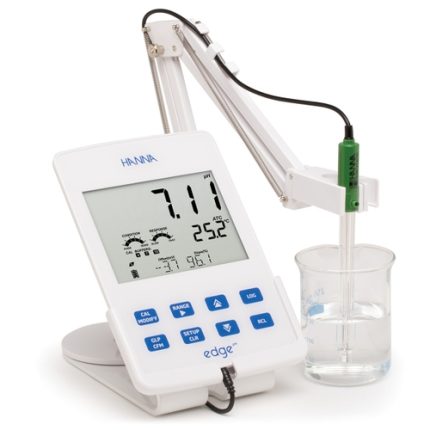
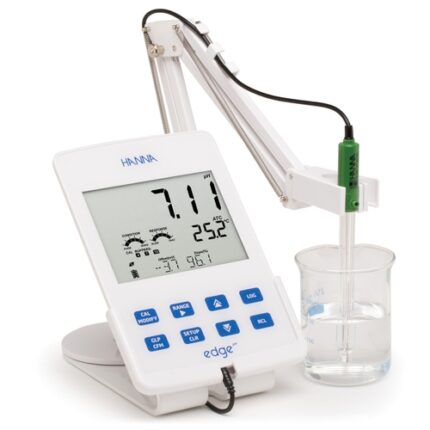
Digital Bench top PH Meter
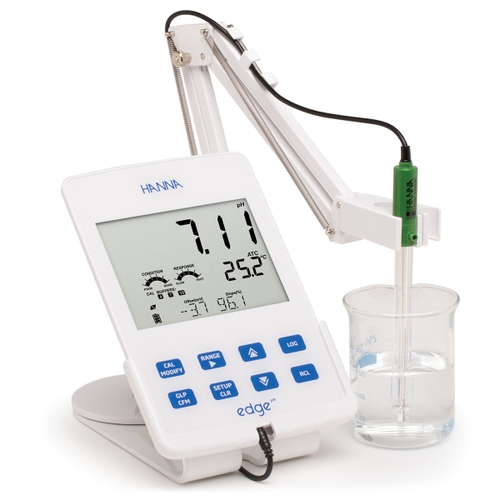
Digital Bench top PH Meter
Brand: Hanna Model: HI2002 Country of Manufacture: Romania Origin: USA
Digital Bench top PH Meter
Single parameter of Digital Bench top PH Meter features user-friendly tablet design with bench, portable or wall mount options for ultimate flexibility. Switch from portable to bench in the same procedure or clear the surface for easier working and hang on the wall. Digital Bench top PH Meter Range -2.00 to 16.00pH; pH Digital smart electrode compatible Accuracy: ±0.01 pH edge® pH is dedicated to testing pH. Using Hanna's latest innovation in technology and design, edge® can be adapted to suit your working method. Select from hand held, wall mount or bench top - or switch between them all. edge® is happy any which way. Simply plug in the electrode, then play. Measurement is simpler, quicker and more accurate than ever. Results are fast and reliable. Combining high precision technology with the user-friendly dimensions and format of a small digital tablet, edge® is breaking new ground in electrochemistry. This is a must-have meter for your laboratory.| pH Range | basic mode: -2.00 to 16.00 pH; standard mode: -2.000 to 16.000 pH | |
| Resolution | basic mode: 0.01 pH; standard mode: 0.001 pH | |
| Accuracy (@25°C) | basic mode: ±0.01 pH; standard mode: ±0.002 pH | |
| Calibration | basic mode: automatic, up to three points calibration, 5 standard buffers available; standard mode: automatic, up to five point calibration, 7 standard buffers available and two custom buffers | |
| Temperature Compensation | automatic, -5.0 to 100.0°C (using integral temperature sensor) | |
| Electrode Diagnostics | standard mode: probe condition, response time and out of calibration range | |
| mV pH Range | ±1000 mV | |
| Resolution | 0.1 mV | |
| Accuracy (@25°C) | ±0.2 mV | |
| ORP Range | ±2000 mV | |
| Resolution | 0.1 mV | |
| Accuracy (@25°C) | ±0.2 mV | |
| Temperature Range | -20.0 to 120.0°C | |
| Resolution | 0.1°C | |
| Accuracy | ±0.5°C | |
| Additional Specifications: | ||
| Probe | HI-11310 digital glass body pH electrode with 3.5mm connector and 1m cable | |
| Logging | up to 1000 (400 for basic mode) records organised in: manual log-on demand (max. 200 logs), manual log-on-stability (max. 200 logs), interval logging (max. 600 samples; 100 lots) | |
| Connectivity | 1 USB port for storage; 1 micro USB port for charging and PC connectivity | |
| Environment | 0 to 50°C; RH max 95% non-condensing | |
| Power Supply | 5 VDC adapter (included) | |
| Dimensions | 2020 x 140 x 12 mm | |
| Weight | 250 g |
- High Accuracy and Resolution
- Digital Display - Large, clear LCD or LED screen shows pH readings, temperature, and sometimes mV or ion concentration. - Some models include a backlit display for better visibility.
- Electrode System - Uses a pH-sensitive electrode (usually glass) connected to a reference electrode. Electrodes are often replaceable and require regular calibration and maintenance.
- Temperature Compensation - Automatic or manual temperature compensation to correct pH readings based on sample temperature. - Integrated temperature sensors or separate probes are used.
- Calibration Functions - Supports 2-point, 3-point, or multi-point calibration using standard buffer solutions. - Auto-recognition of calibration buffers in advanced models.
- Data Storage and Connectivity - Internal memory for storing results. - USB or RS232 ports for data export to PCs or printers; some models support wireless connectivity.
- Sturdy Design - Benchtop models are larger and more stable than portable meters. - Often come with a durable casing and electrode arm for hands-free operation.
- High Accuracy and Precision
- User-Friendly Interface- Digital displays (LCD/LED) make readings easy to see and interpret.- Many models offer intuitive controls and guided calibration, simplifying operation.
- Advanced Calibration Features- Supports multi-point calibration for improved accuracy across a wide pH range.- Some models automatically recognize buffer solutions, reducing user error.
- Temperature Compensation- Automatic temperature compensation (ATC) corrects readings based on sample temperature, ensuring accuracy.
- Stable and Durable Design- Benchtop units are more robust and stable than handheld devices, reducing the risk of spills or tipping.- Often include electrode holders or arms for secure, hands-free measurements.
- Data Management and Connectivity- Built-in memory for storing measurement data.USB, RS232, or wireless connectivity for exporting data to computers or laboratory information systems (LIS).
- Multi-Functionality- Some models also measure ORP (oxidation-reduction potential), ion concentration, or conductivity.- Suitable for a variety of testing needs beyond just pH.
- Ideal for Long-Term Use- Designed for prolonged and repeated use in laboratory environments.- Replaceable electrodes and parts extend the meter’s usable life.
- Compliance and Documentation- Data logging features support documentation and compliance with regulatory standards in regulated industries (e.g., pharma, food, environmental testing).
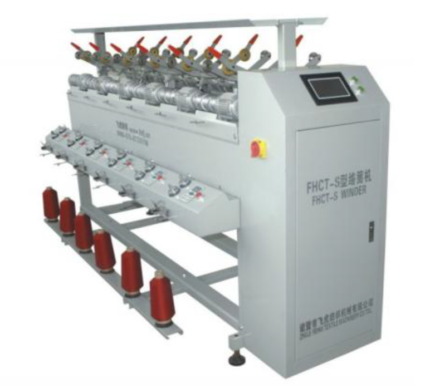
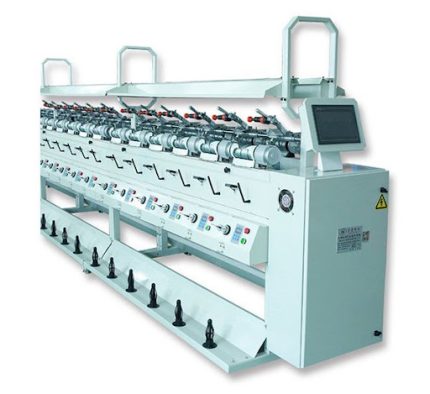
High Speed Soft Winding Machine
High Speed Soft Winding Machine latest 2026
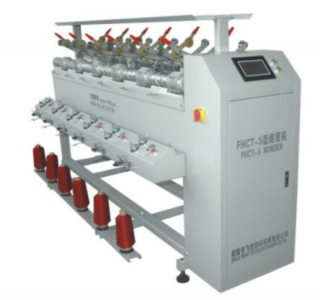
High Speed Soft Cone Winding Machine latest 2026
Product Introduction
The High Speed Soft Winding Machine latest 2026 is a high-efficiency industrial yarn winding machine specially designed for preparing yarn cones before the dyeing process. It is suitable for winding a wide range of yarns, including Cotton, Wool, Acrylic, Polyester and other commonly used textile yarns.The machine is designed to produce well-formed and uniform soft yarn packages, helping improve the quality and consistency of the subsequent dyeing process. With a winding speed of 100–1000 m/min, the machine provides high productivity while allowing the operator to adjust the process speed according to yarn quality and feeding conditions. The High Speed Soft Cone Winding Machine latest 2026 also helps reduce manual workload and improve operational efficiency in textile yarn preparation. Its integrated yarn monitoring and control functions make it suitable for modern spinning, dyeing and textile processing facilities.Scope of Application
The High Speed Soft Cone Winding Machine latest 2026 is mainly used for before-dyeing yarn preparation. It can be used in textile mills, yarn dyeing factories, spinning mills and other facilities where yarn needs to be prepared in soft cone form before dyeing. It is suitable for:- Cotton yarn
- Wool yarn
- Acrylic yarn
- Polyester yarn
- Blended yarn
- Other suitable textile yarns
Standard Features
- High-speed winding operation
- 96 spindles per set
- 12 spindles per section, double side
- Cone-to-cone winding system
- Adjustable winding speed from 100–1000 m/min
- Suitable for different types of textile yarn
- Individual 90W DC motor for each spindle
- Meter counting system
- Automatic yarn break sensor
- Adjustable speed control
- Yarn tension control device
- Anti-stack device
- Centralized control box
- Touch-screen control system
- Voltage regulator
- Complete with standard accessories
- Designed for efficient and uniform yarn package formation
Technical Specification of High Speed Soft Winding Machine latest 2026
| Parameter | Specification |
|---|---|
| Machine Name | High Speed Soft Cone Winding Machine |
| Brand | FEIHU |
| Model | FHCT-S / As Per Machine |
| Origin | China |
| Machine Type | Cone to Cone |
| Application | Before Dyeing Yarn Preparation |
| Spindle Number | 96 Spindles/Set |
| Spindle Arrangement | 12 Spindles/Section, Double Side |
| Winding Speed | 100–1000 m/min |
| Motor Power | 90W DC Motor / Spindle |
| Yarn Tension | Adjustable |
| Meter Counting | Available |
| Yarn Break Sensor | Available |
| Speed Control | Adjustable |
| Anti-Stack Device | Available |
| Control System | Centralized Control Box |
| Display | Touch Screen |
| Voltage Regulation | Available |
| Standard Accessories | Complete Set |
| Dimension | L 18160 × W 1060 × H 1560 mm / As Per Machine |
| Net Weight | As Per Machine |
Winding Speed
The FEIHU FHCT-S provides a winding speed range of 100–1000 m/min. The actual process speed can be adjusted according to the quality of yarn, yarn type, feeding condition and required package formation. This adjustable speed function allows users to select an appropriate operating condition for different yarn materials and production requirements.Spindle Configuration
The High Speed Soft Winding Machine latest 2026 is configured with 96 spindles per set, arranged as 12 spindles per section with double-side construction. This configuration allows the machine to achieve high production capacity while maintaining an organized and efficient winding arrangement. The multi-spindle design makes the FHCT-S suitable for industrial-scale yarn preparation where continuous and reliable production is required.Individual Spindle Motor
Each spindle is equipped with a 90W DC motor, providing independent and efficient spindle operation. The individual motor arrangement supports stable winding performance and allows the machine to operate effectively across its specified speed range.Yarn Tension Control
Consistent yarn tension is an important requirement for producing a properly formed yarn package. The FHCT-S is equipped with a yarn tension device to help maintain controlled yarn tension during the winding process. Proper tension control helps produce more uniform packages and supports improved performance during subsequent textile processing and dyeing operations.Meter Counting System
The integrated meter counting system enables operators to monitor the winding length during operation. This feature provides convenient production monitoring and helps maintain consistency between yarn packages.Yarn Break Sensor
The machine is equipped with a yarn break sensor for detecting yarn breakage during winding. This helps the operator identify interruptions quickly and improves the overall efficiency of the winding operation.Anti-Stack Device
The built-in anti-stack device is designed to support proper yarn distribution during winding. It helps reduce concentrated yarn build-up and contributes to better package formation.Centralized Touch-Screen Control
The FEIHU FHCT-S features a centralized control box with touch-screen operation, providing convenient access to machine operating functions. The centralized control arrangement makes it easier for operators to monitor and control the winding process from a single operating point.Voltage Regulator
A voltage regulator is included as part of the standard machine configuration. It supports stable electrical operation and helps protect the machine's control system under suitable operating conditions.Package Formation
One of the main purposes of the High Speed Soft Winding Machine latest 2026 is to produce a well-formed soft yarn package suitable for subsequent dyeing operations. Proper package formation is important in yarn dyeing because it supports consistent penetration and circulation of dye liquor through the yarn package. The machine's controlled winding speed, yarn tension system and anti-stack arrangement work together to support uniform package preparation.Applications of High Speed Soft Winding Machine latest 2026
The High Speed Soft Winding Machine latest 2026 can be used in:- Yarn Dyeing Factories
- Textile Manufacturing Plants
- Spinning Mills
- Knitting Industries
- Garment Textile Production
- Cotton Yarn Processing
- Wool Yarn Processing
- Acrylic Yarn Processing
- Polyester Yarn Processing
- Blended Yarn Processing
- Before-Dyeing Yarn Preparation
Suitable Yarn Types
The machine is designed for winding various textile yarns, including: Cotton Yarn: Suitable for preparing cotton yarn packages before dyeing. Wool Yarn: Suitable for appropriate wool yarn winding applications. Acrylic Yarn: Can be used for preparing acrylic yarn for subsequent processing. Polyester Yarn: Suitable for polyester yarn package preparation. Other Textile Yarns: The machine can also be configured for other suitable yarn types according to production requirements.Advantages of High Speed Soft Winding Machine latest 2026
High Production Efficiency
With up to 96 spindles per set and a winding speed of up to 1000 m/min, the machine is designed for high-volume yarn preparation.Uniform Yarn Packages
Controlled winding parameters and tension management help produce well-formed and consistent soft cones.Reduced Labor Intensity
The multi-spindle configuration and centralized control system reduce manual workload and improve operator efficiency.Adjustable Operating Speed
The winding speed can be adjusted according to yarn quality, yarn type and feeding conditions.Improved Process Preparation
Properly prepared yarn packages can support more consistent performance during subsequent dyeing and textile processing.Convenient Operation
The centralized touch-screen control system provides a convenient interface for machine operation and monitoring.Yarn Break Monitoring
The integrated yarn break sensor helps detect winding interruptions and supports efficient production management.Complete Standard Accessories
The machine is supplied with its standard accessories and essential operating components.Why Choose High Speed Soft Winding Machine latest 2026
The High Speed Soft Winding Machine latest2026 is designed for textile manufacturers looking for an efficient and reliable solution for before-dyeing yarn preparation. Its combination of 96-spindle capacity, adjustable 100–1000 m/min winding speed, individual DC motors, yarn tension control, meter counting, yarn break sensing, anti-stack technology and centralized touch-screen control makes it suitable for modern textile production environments. The machine can help textile factories improve yarn preparation efficiency, reduce manual workload and achieve more consistent soft cone packages for subsequent dyeing operations.Standard Accessories
The machine is supplied with complete standard accessories required for normal operation, subject to the final machine configuration and supplier specification.Machine Dimension
Length: 18160 mm Width: 1060 mm Height: 1560 mm Dimension: As Per Machine Net Weight: As Per MachineProduct Summary of High Speed Soft Winding Machine latest 2026
The High Speed Soft Winding Machine latest 2026 is an industrial cone-to-cone yarn winding machine designed primarily for before-dyeing preparation. With 96 spindles/set, 12 spindles per section, double-side configuration, 100–1000 m/min winding speed and 90W DC motor per spindle, it provides an efficient solution for preparing cotton, wool, acrylic, polyester and other textile yarns. Its meter counter, yarn break sensor, adjustable speed, yarn tension device, anti-stack device, centralized touch-screen control box and voltage regulator provide convenient and controlled winding operation for modern textile processing facilities.
GSM Cutter with Balance
GSM Cutter with Balance

GSM Cutter with Balance
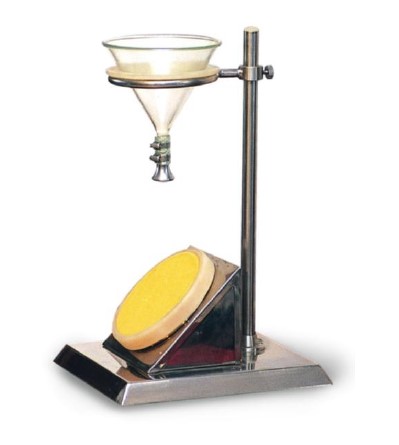
Spray Rating Tester
Spray Rating Tester

Spray Rating Tester
- Quick and Simple Evaluation - Offers a fast way to assess fabric water repellency without complex setup.
- Standardized Testing- Complies with AATCC 22 and ISO 4920, ensuring globally accepted results.
- Cost-Effective- Low maintenance and no power requirement make it economical for routine lab use.
- Improves Fabric Performance - Helps manufacturers develop or improve water-resistant textiles.
- Non-Destructive Test - Does not damage the fabric, allowing for additional tests on the same sample.
- Visual Grading- Easy to interpret using a standard spray rating chart (0 to 100 scale).
- Supports Quality Control - Detects finish degradation or variation in water-repellent treatments.
- Portable and Compact- Lightweight design allows easy use in various lab or field settings.
- Standardized Spray Nozzle - Delivers consistent water spray per AATCC and ISO specifications.
- 45° Specimen Mounting Angle - Ensures uniform test setup for accurate and repeatable results.
- Stainless Steel or Aluminum Frame - Corrosion-resistant and durable for long-term use with water exposure.
- Water Reservoir and Funnel System - Provides precise water volume (usually 250 ml) for each test.
- Graduated Spray Stand- Fixed height (150 mm above specimen) for controlled spray impact.
- Detachable Specimen Holder- Easy loading and removal of fabric samples.
- Compact and Lightweight Design - Portable and convenient for both lab and field testing.
- No Electricity Required - Fully manual operation increases reliability and reduces operating costs.
- Prepare the Sample - Cut fabric to standard size (usually 180 × 180 mm). - Condition the sample if required (21°C, 65% RH for 24 hours).
- Mount the Fabric - Place the fabric on the specimen holder at a 45° angle.
- Fill the Reservoir - Pour 250 ml of distilled water into the upper funnel.
- Start the Test - Release the water through the nozzle; it sprays over the fabric for about 25–30 seconds.
- Inspect the Fabric - After spraying, visually assess the water beading or penetration on the surface.
- Rate the Sample - Compare the fabric’s wetting pattern with the standard spray rating chart: - 100 = No sticking/wetting - 90–50 = Partial wetting - 0 = Complete wetting
- Record the Rating - Document the spray rating for quality control or reporting.
 Spray Reting Tester
[Scope of application]:
Used for the determination of moisture resistance (wetting grade) of various fabrics
which have been or have not been treated with water resistance or water repellency.
[related standards]:
GB/T4745 ISO4920 AATCC22 JISL1092 etc.
[technical parameters]:
1. Glass funnel:150 x 150 (capacity 500ml)
2. Specimen placement angle:The level is 45 degrees.
3. Distance from nozzle to sample center:150mm
4. Specimen diameter:Ф150mm
5. Size of water receiving pan:500×400×30mm
6. Matching measuring cups:500ml
7, size 500 x 400 x 500mm
8. Instrument weight:5Kg
Spray Reting Tester
[Scope of application]:
Used for the determination of moisture resistance (wetting grade) of various fabrics
which have been or have not been treated with water resistance or water repellency.
[related standards]:
GB/T4745 ISO4920 AATCC22 JISL1092 etc.
[technical parameters]:
1. Glass funnel:150 x 150 (capacity 500ml)
2. Specimen placement angle:The level is 45 degrees.
3. Distance from nozzle to sample center:150mm
4. Specimen diameter:Ф150mm
5. Size of water receiving pan:500×400×30mm
6. Matching measuring cups:500ml
7, size 500 x 400 x 500mm
8. Instrument weight:5Kg 
