

 Products
 Martindale abrasion tester Updated
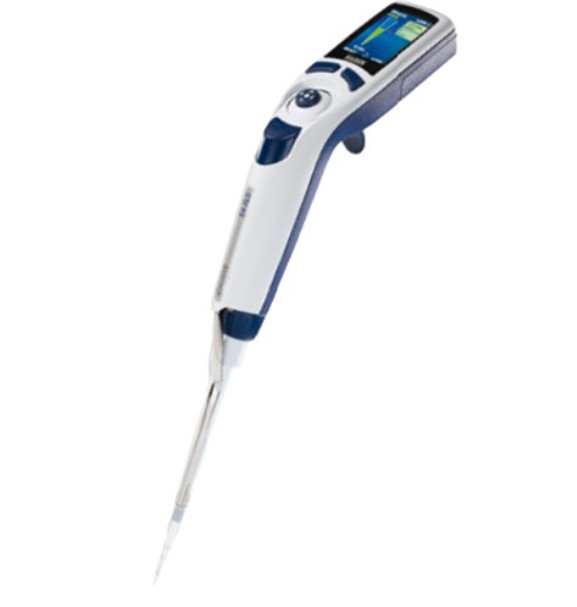
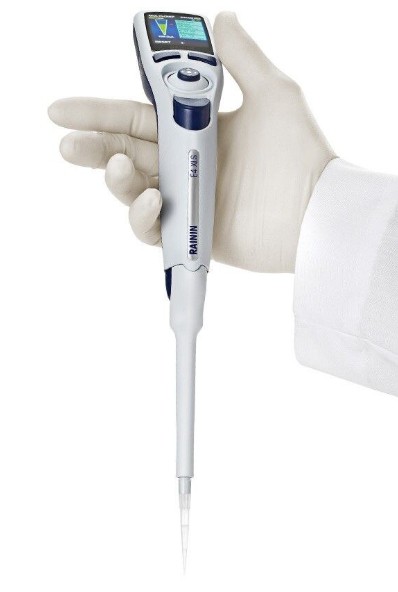
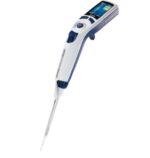

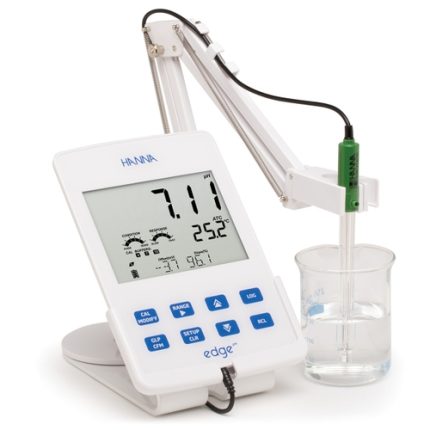

Rainin Digital Pipette
$0.00
Rainin Digital Pipette
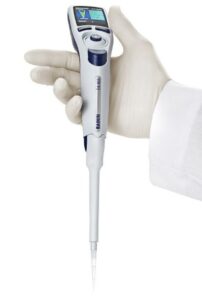
Digital Pipette
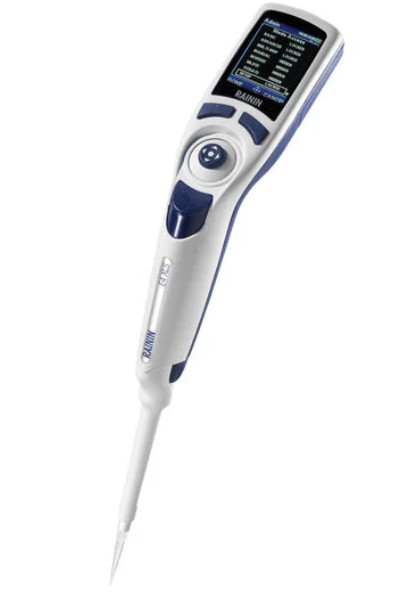
Rainin Digital Pipette E4-XLS Electronic Pipette,
The Rainin Digital Pipette is a high-precision liquid handling instrument used in laboratories for accurate and reproducible measurement and transfer of small liquid volumes. Manufactured by Rainin Instruments (a Mettler Toledo company), these pipettes are known for their ergonomic design, reliability, and advanced digital controls.
Features of Rainin Digital Pipette:
- Digital Volume Setting
– Allows for precise and repeatable volume adjustments via a digital display or dial.
– Reduces user error compared to manual pipettes.
- High Accuracy and Precision
– Offers minimal variability in volume delivery, making it ideal for sensitive assays and experiments.
- Ergonomic Design
– Lightweight and comfortable to use over long periods, reducing hand strain (good for repetitive tasks). – Often features a finger hook and low pipetting force.
- Easy Calibration and Maintenance
– Includes software or manual options for calibration.
– Designed for easy disassembly and cleaning.
- Durable and Chemically Resistant – Built with high-quality materials that resist damage from chemicals and frequent use.
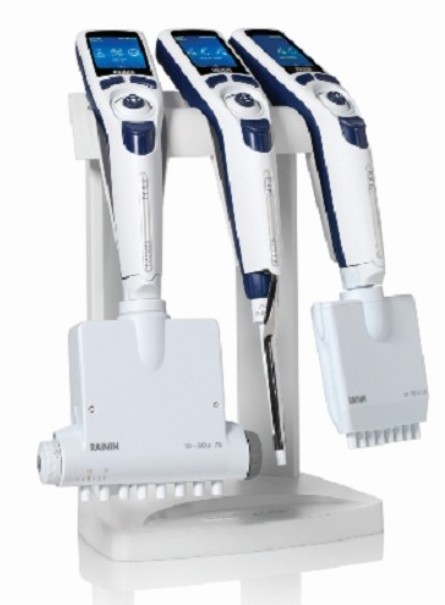
- Models and Volume Ranges – Available in single-channel and multi-channel versions.
Covers a wide volume range from 0.1 µL to 10 mL depending on the model.
- LTS (LiteTouch System) – Many Rainin pipettes use the LTS tip system which reduces tip ejection force and ensures a consistent seal.
- Compliance and Traceability – Some digital models offer data storage or integration with lab information systems for traceability.
Applications
– Molecular biology
– Microbiology
– Clinical diagnostics
– Pharmaceutical and chemical research
Benefits of Rainin Digital Pipette:
- High Accuracy and Precision – Ensures reliable and reproducible results, essential for sensitive experiments.
- Digital Volume Control – Reduces human error with easy and precise volume setting via digital interface.
- Ergonomic Design- Minimizes hand strain and fatigue during prolonged use; ideal for repetitive pipetting tasks.
- LiteTouch System (LTS) – Eases tip attachment and ejection, reducing risk of RSI (Repetitive Strain Injury) and improving comfort.
- Versatile Volume Range – Available in multiple models to handle volumes from microliters to milliliters.
- Durable and Reliable – Built with high-quality materials for long life and resistance to chemicals and frequent use.
- Easy Maintenance and Calibration – Simplified calibration and cleaning ensure long-term performance and compliance.
- Data Integrity and Traceability -Some models store data, supporting audit trails and regulatory compliance.
- Enhanced Productivity – Quick setup, easy operation, and consistent performance speed up lab workflows.
Features of Rainin Digital Pipette:
- Digital Volume Adjustment – Precise and easy-to-read digital display for accurate volume setting.
- High Precision and Accuracy- Delivers consistent results, meeting ISO and GLP/GMP standards.
- Ergonomic Design- Lightweight, balanced with low plunger and tip ejection force to reduce fatigue.
- LiteTouch Tip Ejection System (LTS) – Reduces tip attachment/ejection force, improving comfort and consistency.
- Durable Construction – Built with high-quality, chemically resistant materials for long-term use.
- Wide Volume Range – Available in multiple models from 0.1 µL to 10 mL.
- Single-Channel and Multi-Channel Options – Suitable for various applications including high-throughput assays.
- Autoclavable Components- Some parts can be autoclaved for sterilization and contamination control.
- Easy Calibration and Maintenance – User-friendly calibration settings with accessible parts for cleaning.
- Optional Electronic Models – Some versions include programmable features, multiple modes (e.g., reverse pipetting), and memory storage.
Rainin Digital Pipette dealer In Bangladesh,
Digital Pipette Importer in Bangladesh,
Digital Pipette in Bangladesh,
Digital Pipette Machine in Bd,
Digital Pipette In Uttara,
Digital Pipette Price in Bangladesh,
Digital Pipette Supplier in Bangladesh,
Digital Pipette in Bangladesh,
Shipping & Delivery
Related products
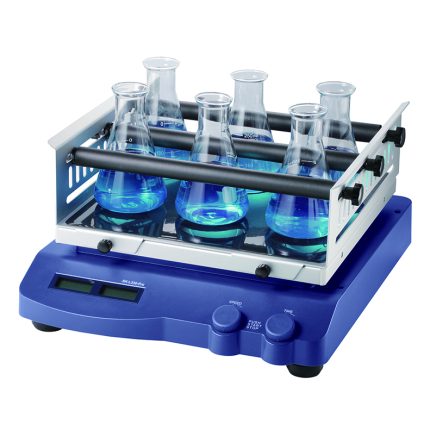
Orbital Shaker Machine
Orbital Shaker Machine
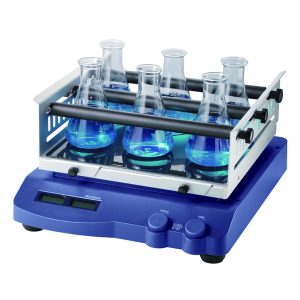
Orbital Shaker Machine
- Orbital Motion - Provides a smooth circular shaking pattern, ideal for gentle mixing without foaming or splashing.
- Adjustable Speed Control - Speed typically ranges from 50 to 300 RPM, depending on the model and application.
- Timer Function - Allows users to set shaking time from minutes to hours for precise control of experiments.
- Platform with Clamps or Mats - Holds flasks, beakers, test tubes, or trays securely during operation.
- Digital Display (in advanced models) - Shows speed and time settings for accurate and repeatable performance.
- Variable Capacity - Available in sizes to accommodate different lab needs—from a few samples to dozens.
- Quiet Operation - Designed for minimal vibration and noise during continuous use.
- Uniform Mixing - Ensures even distribution of dyes, chemicals, or cultures without manual stirring.
- Gentle Agitation - Ideal for delicate samples like cell cultures or fabric swatches, reducing damage or splashing.
- Hands-Free Operation - Allows continuous, unattended mixing—improving lab efficiency and freeing up personnel.
- Customizable Settings - Adjustable speed and timer let users tailor mixing to specific sample types and needs.
- Versatile Use - Suitable for a wide range of applications including dye mixing, sample incubation, chemical reaction enhancement, and microbial growth.
- Enhanced Reproducibility - Consistent shaking patterns and digital controls ensure repeatable results across experiments.
- Reduces Human Error - Automated operation minimizes variability and manual handling mistakes.
- Compact and Lab-Friendly - Takes up minimal space while accommodating multiple sample containers.
- Orbital Shaking Motion - Moves samples in a circular path for uniform and consistent mixing.
- Variable Speed Control - Adjustable shaking speed (typically 50–300 RPM) to suit different sample types.
- Digital Timer - Programmable run time for precise and repeatable operations.
- Flat Platform Design - Accommodates flasks, beakers, tubes, or trays with optional clamps or non-slip mats.
- LCD or LED Display (in advanced models) - Shows speed, time, and operating status clearly.
- Quiet Operation - Low-noise motor and stable base minimize vibration and disturbance in the lab.
- Overload Protection - Prevents motor damage from excessive weight or resistance.
- Compact and Durable Build - Designed to fit standard lab benches and withstand regular use.
- Versatile Capacity Options - Available in various sizes to handle different numbers and sizes of containers. User-Friendly Interface - Simple control panel for easy setup and operation.
 Brand: Dunlin
Origin: Korea.
Maximum. load capacity (with platform) is 7.5kg
Support orbital and linear shaking
Fashion design of high strength tempered glass on the front panel
LED display for easy-reading of speed and time simultaneously
Digital speed control system and micro-computer control make stable running and prevent sample splashing.
Brushless DC motor is maintenance-free and provides long service life
Over-load and over-speed detection and protection
Supports both orbital shaking and linear shaking and easy to switch the shaking mode
Continuous operation and timed operation in range of 0-99h59min are available
Automatic alarm by time controller allows for unsupervised operation
A wide choice of platforms for various applications
Orbital Shaker Machine Shaker Machine Dunlin price in Bangladesh
Orbital Shaker Machine Shaker Machine Dunlin in textile
Textile testing equipment in Bangladesh
Textile testing equipment in Dhaka
Textile testing equipment in Uttara
MAAM tex Shaker Machine Dunlin price in Bangladesh
Brand: Dunlin
Origin: Korea.
Maximum. load capacity (with platform) is 7.5kg
Support orbital and linear shaking
Fashion design of high strength tempered glass on the front panel
LED display for easy-reading of speed and time simultaneously
Digital speed control system and micro-computer control make stable running and prevent sample splashing.
Brushless DC motor is maintenance-free and provides long service life
Over-load and over-speed detection and protection
Supports both orbital shaking and linear shaking and easy to switch the shaking mode
Continuous operation and timed operation in range of 0-99h59min are available
Automatic alarm by time controller allows for unsupervised operation
A wide choice of platforms for various applications
Orbital Shaker Machine Shaker Machine Dunlin price in Bangladesh
Orbital Shaker Machine Shaker Machine Dunlin in textile
Textile testing equipment in Bangladesh
Textile testing equipment in Dhaka
Textile testing equipment in Uttara
MAAM tex Shaker Machine Dunlin price in Bangladesh 
Oscillation type water bath Dyeing Machine
Oscillation Type Water Bath Dyeing Machine

water bath/Shaker bath Dyeing machine
- Oscillating Mechanism - Provides back-and-forth movement of beakers for uniform dye penetration and sample agitation.
- Multiple Beaker Capacity - Supports dyeing of 12–24 samples simultaneously, ideal for comparative lab testing.
- Digital Temperature Control - Maintains precise water bath temperature (typically up to 99°C), essential for consistent dyeing.
- Variable Oscillation Speed - Adjustable speed settings (e.g., 50–200 cycles/min) to suit different materials and processes.
- Programmable Settings - Allows setting of temperature, time, and speed for repeatable and automated dyeing cycles.
- Stainless Steel Construction - Corrosion-resistant frame and bath for durability in chemical environments.
- Beaker Safety Holders - Secure placement of beakers to prevent spills and maintain consistent treatment.
- Compact Design - Lab-friendly size for easy integration into research and quality control spaces.
- Low Liquor Ratio Operation - Efficient dyeing using minimal dye bath volume (e.g., 1:5 to 1:20), reducing chemical and water use.
- Quiet and Stable Performance
water bath/Shaker bath Dyeing machine

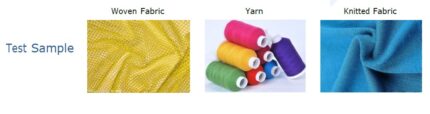
IR Dyeing Machine Dunlin
IR Dyeing Machine Dunlin
IR Dyeing machine Dunlin is Safe, high efficiency, environment friendly, energy saving, optimum for new dyeing small sample machines
0 - 3.5 ℃ / min Cooling rate 0.2 - 5 ℃ / min Cooling method Air-cooled Rotation speed 0 - 60 rpm Liquor ratio 1:5 -1:100 Power supply 1∮AC 220V 50/60HZ Dimensions( L x W x H) 670×670×780mm 860×680×780mm Weight 100kg 120kg Standard Accessories Cups 1set
Put the test sample. Cups stand 1set Place where to put cups. Protective glove 1set To avoid to be hurt by HT cups. Model: IF-24SCapacity: 24 pots Brad: DUNLIN Origin: China
Color dyeing tests for various dyestuffs of IR Dyeing machine Dunlin- Step dyeing tests. C. Dispersing, levelling and impregnating test. D. High or low liquor ratio exhausting tests. E. Fabric steak and staining tests. F. Concentration tests and others. Protection and Safety gates to protect. Temperature control accuracy +/- 0.2degree

IR Dyeing machine
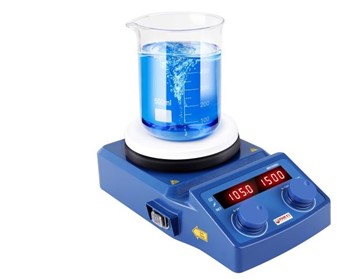

Digital hot plate-magnetic stirrer
Digital hot plate-magnetic stirrer
Digital hot plate-magnetic stirrer
- Magnetic Stirrer:
- Digital Display and Controls:
- Temperature Sensors: - Built-in or external probes (like a PT100 or thermocouple) for accurate temperature control.
- Precision and Control- Digital Interface: Allows accurate setting and monitoring of temperature and stirring speed.- Consistent Results: Ensures reproducibility in experiments and solution preparations.
- Efficient Mixing and Heating- Uniform Mixing: Magnetic stirring eliminates hotspots and ensures even distribution of solutes.- Simultaneous Operation: Ability to heat and stir at the same time improves efficiency.
- Safety Features- Overheat Protection: Prevents accidents by automatically shutting off at unsafe temperatures.- Sealed Surface: Reduces risk of contamination and easy to clean.
- Versatility
- Compact and User-Friendly- Takes up minimal bench space.- Simple to operate with user-friendly controls and displays.
- Durability- High-quality materials like ceramic or stainless steel tops resist corrosion and wear.
- Time-Saving Speeds up preparation of solutions and reactions compared to manual stirring and separate heating. Would you like these benefits presented in a slide format or for a product brochure?
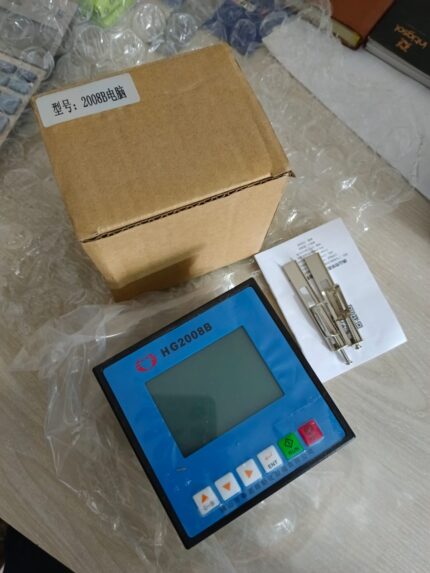
Controller For IR Dyeing Machine
Controller For IR Dyeing Machine
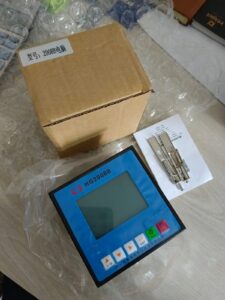
IR Dyeing machine controller
- Temperature Control:- Precisely regulates the infrared heaters to maintain uniform temperature across the dye bath. - Supports customizable heating curves (ramp-up, hold, and cool-down phases).
- Programmable Logic Control (PLC): - Allows operators to set and automate dyeing programs for different fabrics and dye types. - Supports multiple recipes or programs for different batches.
- Real-Time Monitoring and Feedback: - Monitors parameters like temperature, fabric rotation, bath circulation, and timing. - Provides real-time data and alarms for deviations.
- Touchscreen Interface / HMI (Human Machine Interface): - User-friendly interface for configuring and monitoring processes. - Multi-language support and graphical display of process curves.
- Data Logging and Traceability: - Records process data for quality control and traceability.
- Energy Efficiency Optimization: - Manages IR heater output to reduce energy usage. - Often includes features for auto shut-off or idle mode.
- Safety Features: - Includes emergency stop, over-temperature protection, and fault detection systems. 8. Connectivity: - Modern controllers may support Ethernet, Modbus, or other industrial communication protocols for integration into factory automation systems.
- Improved Dyeing Accuracy and Consistency
- Enhanced Energy Efficiency- Infrared heating is more energy-efficient than traditional heating methods.- The controller optimizes energy use by adjusting the IR output based on process needs, reducing overall energy consumption.
- Time Savings- Faster heating and cooling cycles due to infrared technology.- Automated processes reduce manual intervention and cycle times. 4. Better Process Control- Programmable dyeing cycles and precise control over each stage (heating, dyeing, rinsing, cooling).- Real-time monitoring and adjustments improve reliability.
- Reduced Water and Chemical Usage- More efficient dye penetration and fixation mean less water and fewer chemicals are needed for reprocessing or corrections.6. Lower Operational Costs
- Enhanced Safety Built-in alarms, emergency shut-off and automatic fault detection enhance operational safety.8. Data Logging and Traceability- Ability to record and review dyeing process data helps in quality control and troubleshooting.- Facilitates compliance with industry standards and audits.
- User-Friendly Operation- Modern touchscreen interfaces make it easier for operators to manage and monitor processes.- Multilingual support and visual feedback enhance usability.

Digital Ink Rubbing Tester
Digital Ink Rubbing Tester
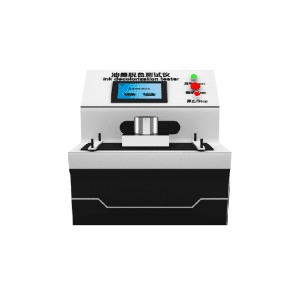
Digital Ink Rubbing Tester
Digital Ink Rubbing Tester
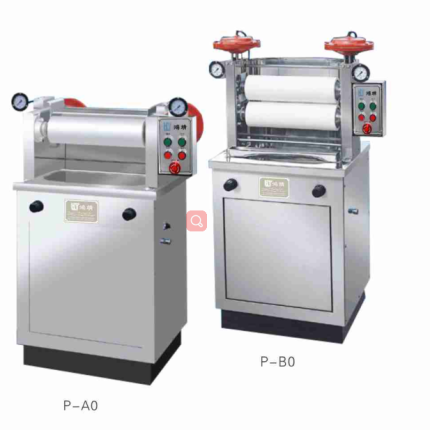
Laboratory Padder
Laboratory Padder
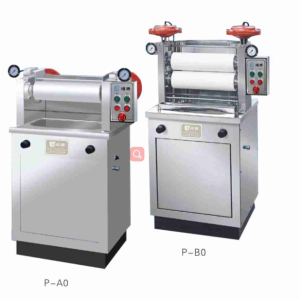
Mini Lab Dyeing Padder
- Adjustable Rollers - The fabric is passed through two or more rollers to apply even pressure and squeeze out excess solution, ensuring uniform chemical or dye application.
- Variable Pressure Control - Allows adjustment of roller pressure for different fabric types and chemical formulations, ensuring optimal penetration without damage.
- Solution Bath - Holds the liquid (e.g., dye, finish, or other chemical treatments) in a bath through which the fabric is dipped before passing through the rollers.
- Fabric Speed Control - Adjustable conveyor speed allows for control over the time the fabric spends in contact with the liquid solution, affecting the degree of treatment.
- Digital Control Panel - Provides easy adjustment of pressure, speed, and solution volume to ensure precise and reproducible results.
- Compact Design - Smaller, lab-scale version of industrial padders, ideal for research, development, and small-scale testing.
- Safety Features - Safety guards, emergency stops, and proper handling mechanisms to prevent accidents during operation.
- Precise Application of Chemicals - Provides uniform and controlled application of dyes, finishes, and other chemicals, ensuring consistent results.
- Small-Scale Testing - Ideal for small sample testing, allowing for fabric treatment without needing full-scale production equipment.
- Versatile Use - Suitable for dyeing, finishing, and applying various chemical treatments, making it a flexible tool for R&D labs.
- Cost-Effective - Reduces the need for large-scale machinery and the associated costs, while providing reliable results for small batches.
- Controlled Fabric Treatment - Offers adjustable pressure, speed, and solution concentration, enabling fine-tuned processing for different fabric types and applications.
- Accelerates Development - Speeds up the testing and development of new products or finishes, improving time-to-market for textile manufacturers.
- Energy Efficient - Consumes less energy compared to larger, industrial-scale machines, making it suitable for lab use.
- Compact and Space-Saving - Designed for laboratory environments with limited space, without compromising on functionality.
- Reproducible Results - Ensures consistent application of treatments across multiple samples, aiding in accurate testing and comparison.
- Adjustable Roller Pressure - Allows precise control over the pressure applied to the fabric, ensuring uniform chemical or dye application.
- Variable Speed Control - Adjustable conveyor speed for controlling the time the fabric spends in the solution bath, influencing the absorption rate.
- Solution Bath - Holds dye, chemicals, or finishes, and the fabric passes through this bath before moving to the rollers.
- Digital Control Panel - Easy-to-use interface for setting and adjusting parameters like speed, pressure, and solution concentration.
- Compact and Lab-Friendly Design - Designed for smaller, space-efficient use in textile labs, allowing for small sample testing.
- Roller Gap Adjustment - Allows for fine-tuning of the gap between rollers to regulate the amount of solution squeezed out of the fabric.
- Stainless Steel Construction - Durable and resistant to corrosion from the chemicals used in textile treatments.
- Safety Mechanisms - Includes safety guards, emergency stops, and user protection features during operation.
- Even and Controlled Application - Ensures even distribution of treatments (dye, finish, etc.) on fabric with minimal waste.
- Versatility in Application - Can be used for a wide range of textiles and treatments, including dyeing, softening, flame-retardant treatments, etc.
- Prepare the Fabric Sample - Cut the fabric sample to the required size for the experiment. Ensure it’s clean and free of any debris.
- Prepare the Solution - Mix the dye, chemical, or finish solution according to the desired concentration and the fabric's needs. Ensure that the solution is homogeneous.
- Set the Parameters - Pressure: Adjust the roller pressure based on the fabric type. Different fabrics require different pressure levels to ensure uniform application. - Speed: Set the fabric conveyor speed depending on the desired treatment time (longer exposure for deeper treatment).
- Load the Fabric into the Machine - Place the fabric carefully into the machine. The fabric should go through the solution bath and then pass between the rollers.
- Start the Machine - Turn on the machine and allow the fabric to pass through the rollers. The solution will be evenly applied to the fabric as it moves through the bath and is squeezed by the rollers.
- Monitor the Process - Keep an eye on the fabric to ensure it is being treated uniformly and there are no blockages or fabric jams.
- Unload the Fabric - Once the fabric has been treated, carefully remove it from the machine. Inspect for even application of the solution and any excess liquid.
- Dry or Process Further - Depending on the treatment, proceed with further steps such as drying, heat setting, or curing, as required by the experiment or process.
Mini Lab Dyeing Padder

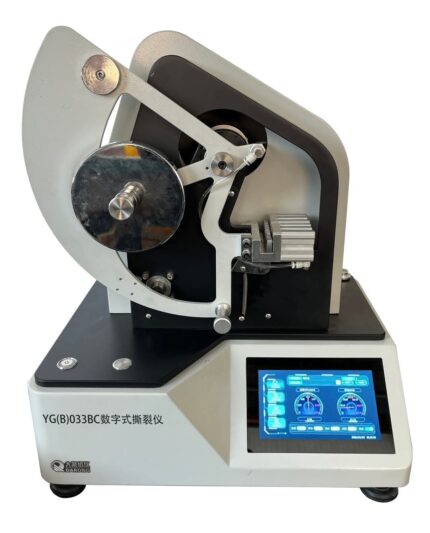
Digital Elmendorf tearing tester
Digital Elmendorf Tearing Tester
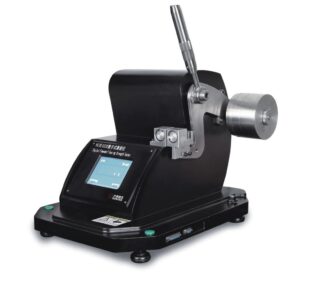
Digital Elmendorf Tearing Tester
- Accurate Tear Strength Measurement - Provides precise data on tear resistance, critical for quality control and product performance.
- Digital Readout - Easy-to-read display gives instant, reliable results without manual calculations.
- High Reproducibility - Ensures consistent test outcomes due to controlled tearing angle and speed.
- Fast Testing Process - Simple loading and quick test cycle increase lab efficiency.
- Suitable for Various Materials - Tests a wide range of flexible materials like textiles, paper, plastic, and packaging.
- Customizable Range - Use of optional weights extends the test range for low to high tear strength materials.
- Low Sample Waste - Requires small fabric or material samples, reducing waste during testing.
- Standards Compliance - Meets international testing standards (e.g., ASTM D1424, ISO 13937) for credibility and uniformity.
- Precision Sample Clamp - Securely holds samples in place to ensure accurate tear initiation.
- Pre-Cutting Blade - Integrated knife creates a precise initial slit in the sample before tearing.
- User-Friendly Interface - Simple buttons and screen navigation for ease of operation.
- Standard Test Compliance - Compatible with ASTM D1424, ISO 1974, ISO 13937, and other tear strength standards.
- Sturdy Construction - Made with durable materials for long-lasting performance and stable operation.
- Compact Design - Space-efficient footprint ideal for laboratory environments.
- Data Output Options- Some models offer USB or printer connectivity for result documentation.
- Prepare the Sample - Cut the material (fabric, paper, film, etc.) to standard size (typically 100 × 63 mm for textiles) and slit it with the pre-cutter as required.
- Select Pendulum Weight - Choose the appropriate pendulum or add counterweights based on expected tear strength.
- Calibrate the Machine - Set the pendulum to its starting position and zero the display.
- Clamp the Sample - Fix one half of the sample in the stationary clamp and the other in the moving clamp.
- Cut the Initial Slit - Use the integrated blade to make a precise cut at the marked slit area (usually 20 mm).
- Release the Pendulum - Trigger the pendulum to swing and tear the sample through the pre-slit.
- Read the Result - The digital display will show the tearing force automatically (in g, mN, or cN).
- Record or Export Data - Save or print the result if your model supports USB or printer connection.
- Reset for Next Test - Reposition the pendulum and prepare a new sample for the next cycle.
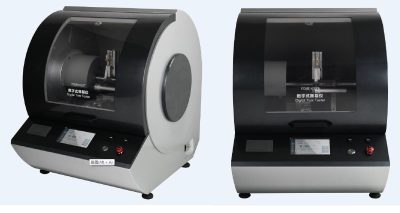 Scope of application
It is used for the determination of the tear resistance of various woven
fabrics (Elmendorf method), and it can also be used for the determination
of the tear resistance of thick paper, plastic sheeting, electrical tape, etc.
Related standards
GB/T 3917.1 FZ/T60006 FZ/T75001 ISO1974/9290 ASTM D1424/5734
etc.
Instrument characteristics
1. Maximum 300N test range
2. Microcomputer control, digital decoding, support online
communication
3. Color touch screen control, Chinese and English menu operation
interface
4. Pneumatic clamping, automatic cutting
5. A variety of measurement units (cN, gf) selection
6. Fully automatic operation with safe operation protection.
7. Automatically increase potential energy
[Technical parameter]:
1. Test range: first gear: (0~16)N second gear: (0~32)N third gear: (0~
64)N fourth gear: (0~128)N fifth gear: (0~300)N
2. Test accuracy: ≤±0.2%F·S
3. Tearing length: 43mm (non-standard 30-60mm can be set)
4. Automatic incision length: (20±0.2)mm
5. Sample size: (100×63)mm
6. Specimen clamping: pneumatic way
7. Sample test: Up to 10 sets per group on the device side, and 30 sets
of data can be selected to be saved
8. Power supply: AC220V±10% 50Hz 100W
9. Dimensions: (650×660×680)mm
10. Weight: 50kg
[Sample of control interface]:(English version is also available.)
Scope of application
It is used for the determination of the tear resistance of various woven
fabrics (Elmendorf method), and it can also be used for the determination
of the tear resistance of thick paper, plastic sheeting, electrical tape, etc.
Related standards
GB/T 3917.1 FZ/T60006 FZ/T75001 ISO1974/9290 ASTM D1424/5734
etc.
Instrument characteristics
1. Maximum 300N test range
2. Microcomputer control, digital decoding, support online
communication
3. Color touch screen control, Chinese and English menu operation
interface
4. Pneumatic clamping, automatic cutting
5. A variety of measurement units (cN, gf) selection
6. Fully automatic operation with safe operation protection.
7. Automatically increase potential energy
[Technical parameter]:
1. Test range: first gear: (0~16)N second gear: (0~32)N third gear: (0~
64)N fourth gear: (0~128)N fifth gear: (0~300)N
2. Test accuracy: ≤±0.2%F·S
3. Tearing length: 43mm (non-standard 30-60mm can be set)
4. Automatic incision length: (20±0.2)mm
5. Sample size: (100×63)mm
6. Specimen clamping: pneumatic way
7. Sample test: Up to 10 sets per group on the device side, and 30 sets
of data can be selected to be saved
8. Power supply: AC220V±10% 50Hz 100W
9. Dimensions: (650×660×680)mm
10. Weight: 50kg
[Sample of control interface]:(English version is also available.) 
