

 Products
 Martindale abrasion tester Updated
 VeriVide Original D65 Tube Light

0%
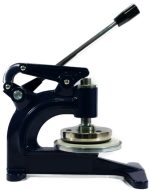


Hydraulic GSM Cutter
$0.00
Hydraulic GSM Cutter
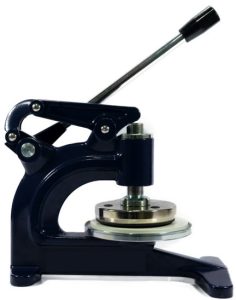
Hydraulic GSM Cutter
A Hydraulic GSM Cutter is a precision instrument used to cut circular fabric samples for GSM (Grams per Square Meter) testing. It uses hydraulic pressure to ensure clean, uniform cuts through multiple fabric layers, making it ideal for high-throughput or thicker materials.
Purpose of Hydraulic GSM Cutter:
– To prepare accurate circular samples (usually 100 cm² area) for determining fabric weight in GSM.
– Used widely in textile testing labs for quality control and consistency.
Working Principle of Hydraulic GSM Cutter:
– Fabric is placed on a cutting pad.
– The cutter, equipped with a sharp circular blade, is hydraulically pressed down on the fabric.
– The cut sample is then weighed to calculate GSM using a formula or GSM scale.
Applications of Hydraulic GSM Cutter:
– Suitable for woven, knitted, and nonwoven fabrics.
– Used in textile mills, labs, and R&D centers.
Benefits of Hydraulic GSM Cutter:
- High Cutting Precision – Ensures consistent and accurate fabric sample size for reliable GSM results.
- Effortless Operation- Hydraulic action reduces manual effort and operator fatigue.
- Ideal for Thick or Multi-Layer Fabrics – Cuts through dense or multiple fabric layers cleanly.
- Time-Saving – Speeds up the sample preparation process, especially for high-volume testing.
- Improves Test Accuracy – Uniform samples help eliminate errors in GSM calculation.
- Durable and Long-Lasting – Robust construction ensures stability and extended service life.
- Safety Enhancement – Reduces risk of injury compared to manual rotary cutters.
- Consistent Pressure Application – Hydraulic mechanism maintains steady force for each cut.
Features of Hydraulic GSM Cutter:
- Hydraulic Press Mechanism – Applies consistent and strong pressure for clean, even cuts.
- Standard Cutting Die (100 cm²) – Produces fabric samples suitable for GSM testing with standard area.
- Heavy-Duty Construction – Built with robust metal frame for long-term lab or industrial use.
- Sharp Stainless Steel Blades – Durable and replaceable blades ensure smooth, precise cuts.
- Cutting Pad Included – Comes with a rubber or nylon base to protect blades and ensure clean edges.
- Simple Lever or Button Operation – Easy to use with minimal training required.
- Non-slip Base – Provides stability during operation for safe, accurate cutting.
- Supports Various Fabric Types
– Suitable for woven, knitted, nonwoven, technical textiles, and coated fabrics.
How to Use Hydraulic GSM Cutter:
- Place the Cutting Pad – Lay the rubber or nylon cutting pad on a flat surface.
- Position the Fabric – Place the fabric sample flat and smooth on the cutting pad.
- Align the Cutter – Position the GSM cutter die over the desired area of the fabric.
- Activate Hydraulic Press – Pull the lever or press the button to apply hydraulic pressure and cut the sample.
- Remove the Sample – Lift the cutter and carefully take out the circular fabric piece (usually 100 cm²).
- Weigh the Sample – Place the cut sample on a precision balance or GSM scale to determine weight.
- Calculate GSM – Multiply the sample weight (in grams) by 100 to get GSM.
GSM Formula (Grams per Square Meter):
GSM is used to measure the weight of fabric and indicates its thickness and quality.
Formula:
GSM = (Sample Weight in grams × 10000) / Sample Area in cm²
For standard cutters that cut 100 cm² samples:
GSM = Sample Weight (in grams) × 100
Example:
– If a 100 cm² fabric sample weighs 1.5 grams:
GSM = 1.5 × 100 = 150 GSM
Hydraulic GSM Cutter
Shipping & Delivery
Related products

Counting Balance-Weighing Scale
Counting Balance-Weighing Scale
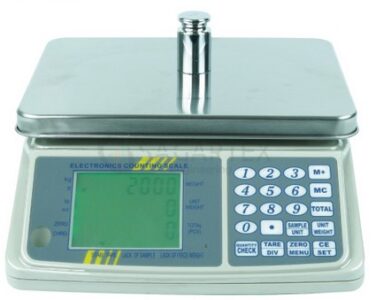
Counting Balance-Weighing Scale
Counting Balance-Weighing Scale

Gray scale
Gray Scale
Gray Scale
- Gray Scale for Color Change - Compares the original and tested sample to measure color fading or alteration.
- Gray Scale for Staining - Compares a white adjacent fabric (before and after testing) to assess color transfer or staining.
- Standardized Evaluation - Provides a consistent and objective way to assess color change or staining.
- Simple and Quick to Use - Enables rapid visual comparison during fabric testing.
- Widely Accepted - Complies with international standards (ISO, AATCC) for color fastness grading.
- Cost-Effective Tool - Inexpensive yet essential for reliable quality control in textiles.
- Enhances Quality Assurance - Helps detect dyeing or printing issues before bulk production.
- Supports Multiple Tests - Used for evaluating wash fastness, rubbing fastness, perspiration, light exposure, and more.
- Portable and Durable - Easy to carry and long-lasting with proper care.
- Dual Type Availability - Comes in two types: for Color Change and for Staining.
- 5-Point Grading System - Grades from 1 (poor) to 5 (excellent), with half-step intervals like 4–5, 3–4.
- Standardized Grey Chips - Includes contrasting grey color pairs to match fabric changes accurately.
- Compact Design - Small, portable card or booklet format for easy lab and field use.
- Durable Material - Made from stable, fade-resistant plastic or cardboard for long-term use.
- Compliance with Standards - Follows ISO 105-A02 (Color Change) and ISO 105-A03 (Staining) norms.
- Easy Visual Comparison - Designed for quick side-by-side assessment of fabric before and after testing.
- Place the Samples - Lay the untested (original) and tested fabric side by side (for color change)
- Match Against Gray Scale Chips - Visually compare the difference between the samples and find the closest matching gray pair on the scale.
- Assign a Grade
- Record the Result - Note the grade in your test report as per the test method (e.g., ISO 105).
- Store Properly - Keep the gray scale away from light and moisture to avoid fading.
- Features :
- Dual Type Availability - Comes in two types: for Color Change and for Staining.
- 5-Point Grading System - Grades from 1 (poor) to 5 (excellent), with half-step intervals like 4–5, 3–4.
- Standardized Grey Chips - Includes contrasting grey color pairs to match fabric changes accurately.
- Compact Design - Small, portable card or booklet format for easy lab and field use.
- Gray Scale for Color Change - Used to evaluate the degree of color fading or change in a fabric after testing (e.g., washing, light exposure). - Assesses how much the original color has altered.
- Gray Scale for Staining - Used to assess the degree of color transfer from a dyed fabric to an adjacent white fabric during testing (e.g., rubbing, washing).
Gray Scale

IR Dyeing Machine Dunlin
IR Dyeing Machine Dunlin
IR Dyeing machine Dunlin is Safe, high efficiency, environment friendly, energy saving, optimum for new dyeing small sample machines
0 - 3.5 ℃ / min Cooling rate 0.2 - 5 ℃ / min Cooling method Air-cooled Rotation speed 0 - 60 rpm Liquor ratio 1:5 -1:100 Power supply 1∮AC 220V 50/60HZ Dimensions( L x W x H) 670×670×780mm 860×680×780mm Weight 100kg 120kg Standard Accessories Cups 1set
Put the test sample. Cups stand 1set Place where to put cups. Protective glove 1set To avoid to be hurt by HT cups. Model: IF-24SCapacity: 24 pots Brad: DUNLIN Origin: China
Color dyeing tests for various dyestuffs of IR Dyeing machine Dunlin- Step dyeing tests. C. Dispersing, levelling and impregnating test. D. High or low liquor ratio exhausting tests. E. Fabric steak and staining tests. F. Concentration tests and others. Protection and Safety gates to protect. Temperature control accuracy +/- 0.2degree

IR Dyeing machine

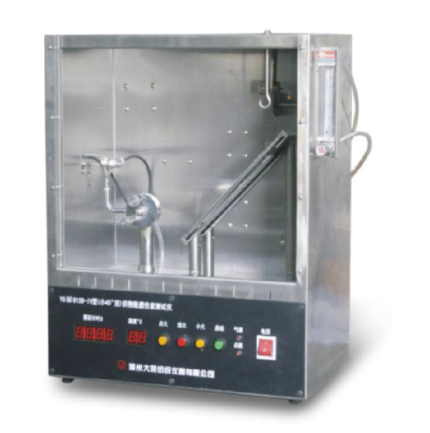
Fabric flame retardant tester
Fabric Flame Retardant Tester
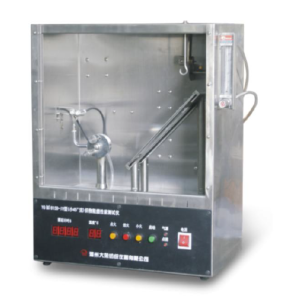
Fabric Flame Retardant Tester
- Sample Preparation: A fabric specimen is cut to specified dimensions and conditioned as per standard requirements.
- Mounting: The sample is mounted vertically or at a specified angle in the testing chamber.
- Ignition: A controlled flame is applied to the fabric for a predetermined time.
- Observation: The tester records ignition time, flame spread, after-flame time, and afterglow time.
- Evaluation: Results are compared against standard criteria to determine compliance.
- Prepare the Sample
- Mount the Sample
- Set Up the Burner Position the burner at the required angle (usually 90° for vertical tests).
- Ignite the Flame - Apply the flame to the bottom edge of the fabric for 12 seconds.
- Observe and Measure - Start timing when flame is applied.
- Record the Results
- Compare with Standards
 burning of flammable textile materials after ignition.
(specific ignition nozzles and sample holders can be customized to meet multiple criteria).
Related standards
GB/T14644 ASTM D1230 CFR1610 etc.
Technical parameters
1. The spread of time:0 ~ 999.9S resolution 0.1S
2. The temperature inside the box shows:Room temperature -99 degrees C resolution 1 c
3. Igniting time:1S
4. Type of igniter:4 1/2 syringe
5. Sample clip size:Outer frame:204mm * 78mm inner frame:152mm×38mm
6. Distance from the top of the igniter to the sample surface:8mm
7. Studio size and outline size
Studio size:370mm×220mm×350mm
Outline size:375mm×245mm×478mm
8. Power supply:AC220V 50Hz 20W
9. Weight:18Kg
burning of flammable textile materials after ignition.
(specific ignition nozzles and sample holders can be customized to meet multiple criteria).
Related standards
GB/T14644 ASTM D1230 CFR1610 etc.
Technical parameters
1. The spread of time:0 ~ 999.9S resolution 0.1S
2. The temperature inside the box shows:Room temperature -99 degrees C resolution 1 c
3. Igniting time:1S
4. Type of igniter:4 1/2 syringe
5. Sample clip size:Outer frame:204mm * 78mm inner frame:152mm×38mm
6. Distance from the top of the igniter to the sample surface:8mm
7. Studio size and outline size
Studio size:370mm×220mm×350mm
Outline size:375mm×245mm×478mm
8. Power supply:AC220V 50Hz 20W
9. Weight:18Kg
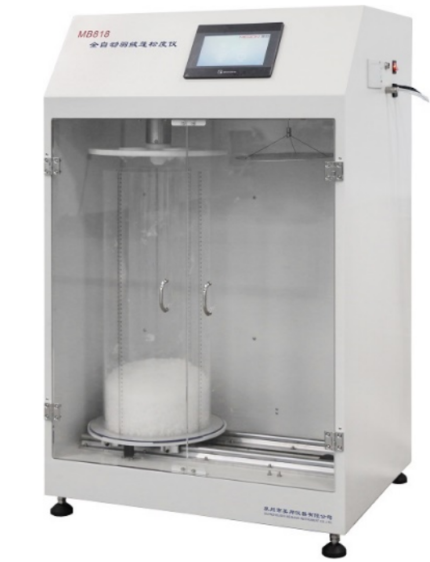
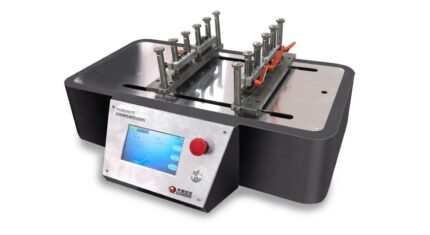
Down Feather Fill tester Powerful & Accurate
MB818 Automated Filling Power Meter for Down & Feather Fill Power Testing
Down Feather Fill tester Powerful & Accurate 1
Down Feather Fill Power Test Machine MB818 is a powerful and accurate automated testing instrument designed to measure the fill power of down, feather, and other filling materials. The machine provides reliable test results for quality control and laboratory testing in textile, garment, bedding, and down-product industries. The Down Feather Fill tester Powerful & Accurate 1 is designed to support internationally recognized testing methods and provides convenient operation with an LCD control panel, automatic measurement, selectable testing units, and printer connectivity.The Down Feather Fill Power Test Machine is an advanced laboratory testing instrument designed to determine the filling power of down, feather and other filling materials. The MB818 Automated Filling Power Meter measures the volume occupied by a specified amount of filling material under controlled testing conditions. Fill Power is an important quality parameter used to evaluate the approximate insulation performance and lofting characteristics of down and feather fillings.
The MB818 is suitable for textile laboratories, garment testing laboratories, bedding manufacturers, down and feather processors, quality control departments and research & development facilities. The instrument supports major international testing methods including IDFB-FP, JIS L1903, GB/T 14272 and BS EN 12130.
Product Overview
The MB818 Automated Filling Power Meter features an automated testing system, adjustable sinking speed, controlled air volume and adjustable air blowing time. It is designed to provide convenient and repeatable testing of down and feather filling materials.
The instrument incorporates a strong metal housing, adjustable rubber feet, removable testing-bin and movable testing-bin plate. A built-in blower helps loosen and prepare the test material before measurement. The LCD control panel provides convenient operation and monitoring of the testing process.
Different measuring units can be selected according to the applicable testing method, including mm, cm, l/kg, cubic inch and Japanese standard units. The instrument can also be connected to a printer for test-result documentation.
What is Fill Power of Down Feather Fill tester Powerful & Accurate 1
Fill Power is a volumetric measurement commonly used for down and feather filling materials. It indicates the volume occupied by a specific mass of filling material under defined testing conditions.
Higher-quality down generally has greater lofting ability and can occupy a larger volume with the same mass of material. Therefore, fill power is an important parameter when evaluating down and feather filling materials used in insulated garments, quilts, comforters, sleeping bags and other products.
Accurate measurement of fill power helps manufacturers and laboratories maintain consistent product quality and compare different filling materials under standardized conditions.
Scope of Application
The MB818 Down Feather Fill Power Test Machine is suitable for testing:
- Down filling materials
- Feather filling materials
- Down and feather blends
- Filling materials used in garments
- Quilt and comforter fillings
- Sleeping bag filling materials
- Bedding insulation materials
- Other suitable textile filling materials
It can be used for incoming material inspection, production quality control, laboratory testing, product development and research.
Standard Features of Down Feather Fill tester Powerful & Accurate 1
The MB818 Automated Filling Power Meter provides a combination of automated operation and flexible testing control.
Key features include:
- Modern and professional instrument design
- Strong metal housing
- Adjustable rubber feet for stability
- Movable testing-bin plate
- Removable testing-bin
- Built-in blower for loosening test material
- Adjustable sinking speed
- Adjustable air volume
- Adjustable air blowing time
- Multiple selectable measuring units
- LCD control panel
- Printer connection
- Suitable for laboratory quality control
- Supports multiple international testing methods
Technical Specification of Down Feather Fill tester Powerful & Accurate 1
| Parameter | Specification |
|---|---|
| Model | MB818 |
| Product Type | Automated Filling Power Meter |
| Brand | MEBON |
| Origin | China |
| Sinking Speed | 0–1000 mm/min, adjustable |
| Air Volume | 2–40 l/s, adjustable |
| Air Blowing Time | 0:00–99:59 min, adjustable |
| IDFB-FP Cylinder | Ø288 mm × Minimum 500 mm |
| JIS L1903 Cylinder | Ø290 mm × Minimum 600 mm, Optional |
| GB/T 14272 Cylinder | Ø240 mm × 750 mm, Optional |
| Dimensions | 450 × 500 × 1250 mm |
| Power Supply | 220V, 50Hz / 110V, 60Hz |
| Weight | Approx. 75 kg |
| Control Panel | LCD |
| Printer Connection | Available |
Testing Standards of Down Feather Fill tester Powerful & Accurate 1
The MB818 Down Feather Fill Power Test Machine is designed to support major international testing standards and methods, including:
IDFB-FP
The IDFB-FP method is used for determining the filling power of down and feather materials under specified test conditions.
JIS L1903
The instrument can be configured with an optional testing cylinder for the JIS L1903 method.
GB/T 14272
An optional testing cylinder is available for testing according to GB/T 14272 requirements.
BS EN 12130
BS EN 12130 – Feather and Down – Test Methods – Determination of the Filling Power (Massic Volume) provides a standardized method for determining the filling power of feather and down materials.
Applications of Down Feather Fill tester Powerful & Accurate 1
The MB818 can be used in a wide range of textile and filling-material testing applications.
Down and Feather Industry
The machine can be used to evaluate the filling power of raw and processed down and feather materials before they are used in finished products.
Garment Industry
Manufacturers of down jackets and insulated garments can use fill power testing to evaluate filling materials and maintain consistent product quality.
Bedding Industry
The MB818 is suitable for testing fillings used in quilts, comforters, pillows and other bedding products.
Sleeping Bags
Fill power is an important characteristic of insulation materials used in sleeping bags. The MB818 can assist manufacturers in evaluating filling performance.
Textile Laboratories
Testing laboratories can use the instrument for routine quality control, material comparison, product development and research.
Advantages of Down Feather Fill tester Powerful & Accurate 1
The MB818 offers several practical advantages for laboratory and production testing.
Automated Testing: The automated design reduces manual operations and makes the testing procedure convenient for laboratory users.
Adjustable Testing Parameters: Sinking speed, air volume and blowing time can be adjusted according to testing requirements.
Built-in Blower: The integrated blower helps loosen the filling material before measurement, supporting consistent sample preparation.
Multiple Measuring Units: Users can select different measurement units such as mm, cm, l/kg and cubic inch, including Japanese standard units.
International Standard Support: The machine supports testing methods associated with IDFB-FP, JIS L1903, GB/T 14272 and BS EN 12130.
Strong Construction: The metal housing and adjustable rubber feet provide a stable structure suitable for laboratory use.
Easy Operation: The LCD control panel provides convenient operation and monitoring of test parameters.
Printer Connectivity: The instrument can be connected to a printer for documentation and reporting of test results.
Standard Accessories of Down Feather Fill tester Powerful & Accurate 1
The standard supply includes:
- Main Unit – 01 No.
- IDFB-FP Testing Kit – 01 No.
- Power Cord – 01 No.
- User's Manual – 01 No.
- Inspection & Conformance Certificate – 01 No.
Optional Testing Kits: JIS L1903 and GB/T 14272 testing cylinders are available as optional configurations according to the required testing method.
Why Choose a Down Feather Fill tester Powerful & Accurate 1
Accurate fill power measurement is important for manufacturers and laboratories working with down and feather products. Manual or inconsistent testing can make it difficult to compare materials and maintain consistent quality.
A dedicated Down Feather Fill Power Test Machine provides controlled testing conditions and adjustable parameters for laboratory evaluation. The MB818 combines automated operation, adjustable testing conditions, multiple measurement units and support for international testing methods in one laboratory instrument.
For companies producing down garments, quilts, bedding, sleeping bags or other insulated products, fill power testing can support raw-material inspection, quality assurance and product development.
Suitable for Textile Quality Control
The Down Feather Fill tester Powerful & Accurate is suitable for both laboratory and quality-control environments. Its compact footprint, strong metal construction and user-friendly LCD control panel make it practical for textile testing laboratories and production quality-control departments.
The Down Feather Fill tester Powerful & Accurate machine can be used alongside other textile laboratory instruments to establish a complete quality-control system for down and feather products.
Product Summary of Down Feather Fill tester Powerful & Accurate 1
The Down Feather Fill tester Powerful & Accurate is a professional Automated Filling Power Meter for determining the filling power of down, feather and other suitable filling materials. With adjustable sinking speed, air volume and blowing time, the instrument provides flexible testing conditions for different applications.
With support for IDFB-FP, JIS L1903, GB/T 14272 and BS EN 12130, the MB818 is suitable for textile laboratories, down and feather manufacturers, garment factories, bedding manufacturers, sleeping-bag manufacturers, quality-control departments and research facilities.
Product: Down Feather Fill Power Test Machine Powerful & Accurate Model: MB818 Brand: MEBON Origin: China Main Application: Down & Feather Fill Power Testing Website: MAAM TEX www.maamtexbd.com – Textile Testing & Laboratory Equipment https://maamtexbd.com/product/down-feather-fill-power-test-machine/ www.facebook.com/maamtex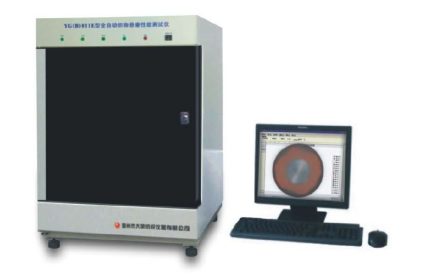
Fabric drape tester
Fabric Drape Tester
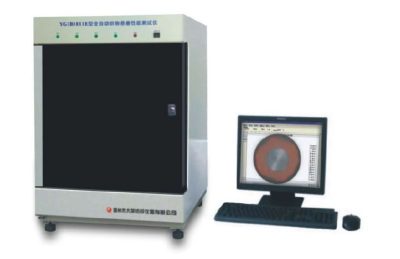
Fabric Drape Tester
- Quantifies Fabric Flow - Measures drape behavior accurately, crucial for garments and furnishings.
- Supports Design Decisions - Helps designers select fabrics that match the intended look and movement of a product.
- Improves Garment Fit and Comfort - Ensures fabrics behave naturally on the body, enhancing wear ability.
- Enhances Product Aesthetics - Prevents stiff or limp fabric choices in fashion, interior, or technical textiles.
- Standardized Evaluation - Enables comparison across fabrics using drape coefficient, based on standards (e.g., BS 5058).
- Supports R&D - Useful in developing new fabrics or finishes to improve drape quality.
- Non-Destructive Testing - Tests fabric without damaging it, allowing for further analysis.
- Boosts Quality Control - Identifies batch inconsistencies or performance issues early in production.
- Rotating Support Disc - Holds the fabric sample over a smaller disc to create natural drape.
- Standard Sample Size Support - Designed for circular fabric samples, usually 30 cm in diameter.
- Light Projection System - Projects the draped fabric’s shadow onto a screen or recording surface.
- Drape Coefficient Calculation - Measures the shadow area to compute the drape coefficient (percentage of unsupported area covered by the shadow).
- Digital or Manual Options - Available in models with digital image processing or manual plan meter tracing.
- Stable Base and Structure - Ensures consistent and vibration-free testing conditions.
- Sample Templates Provided - For cutting precise, standard-sized fabric specimens.
- User-Friendly Interface - Simple controls for rotation and light alignment.
- Compact and Lab-Ready Design - Fits easily on lab benches and in testing environments.
- Compliance with Testing Standards - Supports BS 5058 and other relevant drape measurement methods.
- Prepare the Fabric Sample - Cut a circular fabric sample, typically 30 cm in diameter, using the provided template.
- Place the Fabric - Center the fabric sample over the smaller support disc (usually 18 cm diameter) on the tester.
- Turn on the Light Source - Illuminate the fabric from above so it casts a shadow onto the recording surface or paper below.
- Capture the Shadow Outline - Trace the shadow manually on paper or capture it digitally, depending on the model.
- Measure the Shadow Area - Use a plan meter (manual) or software (digital) to determine the shadow’s area.
- Calculate Drape Coefficient (DC) - Use the formula:
- Record the Result - Log the drape coefficient to evaluate how stiff or flexible the fabric is.
- Repeat for Accuracy - Test multiple samples and average the results for consistency.
 It is used for testing dynamic and static drape properties
(drape coefficient, shape change rate, surface ripple and drape uniformity, etc.)
of various fabrics.
Related standards GB/T23329 FZ/01045 BS5058 etc.
Instrument characteristics
1. CCD imaging, dynamic and static image processing.
2. A variety of charts and data statistics, analysis, storage, output
3. No need to replace background color, can test all kinds of color samples.
4. Work mode:Microcomputer control, CCD imaging, automatic processing of images and data automatically.
Technical parameters
1. Communication interface: RS232, USB
2. Image sensor: CCD sensor.
3. Static (dynamic) state draping coefficient: 0 ~ 100% + 2
4. Drapability uniformity: 0 ~ 100% + 2
5. The rate of morphological change is 0 to 100% + 2.
6. Surface waviness error: + 1
It is used for testing dynamic and static drape properties
(drape coefficient, shape change rate, surface ripple and drape uniformity, etc.)
of various fabrics.
Related standards GB/T23329 FZ/01045 BS5058 etc.
Instrument characteristics
1. CCD imaging, dynamic and static image processing.
2. A variety of charts and data statistics, analysis, storage, output
3. No need to replace background color, can test all kinds of color samples.
4. Work mode:Microcomputer control, CCD imaging, automatic processing of images and data automatically.
Technical parameters
1. Communication interface: RS232, USB
2. Image sensor: CCD sensor.
3. Static (dynamic) state draping coefficient: 0 ~ 100% + 2
4. Drapability uniformity: 0 ~ 100% + 2
5. The rate of morphological change is 0 to 100% + 2.
6. Surface waviness error: + 1 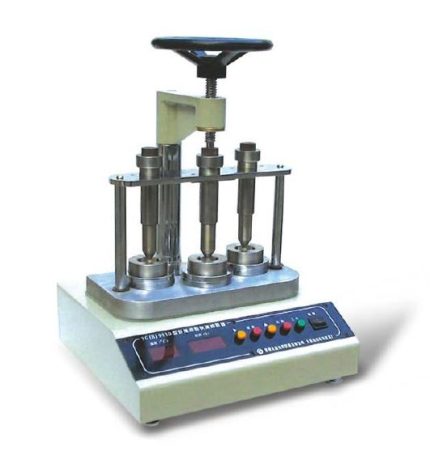

Fiber Oil Fast Extractor
Fiber Oil Fast Extractor

Fiber Oil Fast Extractor
- Sample Preparation: Cut the fabric or fiber into small pieces.
- Solvent Addition: Place the sample into a metal tube and add an appropriate solvent (e.g., petroleum ether, ethyl ether).
- Extraction: Apply weight to the sample to facilitate the dissolution of oils into the solvent.
- Evaporation: The solvent-oil mixture drips onto a heated plate where the solvent evaporates, leaving behind the oil.
- Measurement: Weigh the remaining oil and calculate its percentage relative to the initial sample mass.
- Accurate Oil Content Measurement- Precisely determines oil or finish content in fibers, crucial for quality control.
- Rapid Extraction Process - Delivers fast results, improving lab efficiency and productivity.
- Simultaneous Multi-Sample Testing - Multiple workstations (e.g., 4 at once) reduce testing time for bulk samples.
- Improved Product Quality - Helps maintain consistent oil levels, which affect dyeing, processing, and fabric performance.
- Automatic Operation - Automated pressing and heating reduce manual effort and operator error.
- Digital Monitoring - Built-in timer, temperature control, and oil calculator enhance accuracy and usability.
- Compliance with Standards - Supports industry methods like GB/T 6504-2017, ensuring reliable and standard-compliant results.
- Safe Solvent Handling - Enclosed design minimizes solvent exposure and evaporation loss.
- Multiple Test Stations - Usually equipped with 2 to 4 independent work units for parallel testing.
- Automatic Weight Pressing System - Applies consistent pressure on samples for uniform solvent extraction.
- Microcomputer Temperature Control - Maintains precise heating (typically 90–120°C) with ±1°C accuracy.
- Built-in Timer and Calculator - Allows setting extraction time and calculates oil content directly.
- Solvent Evaporation Plate- Heats and evaporates solvent quickly, leaving only the oil residue.
- Digital Display - Shows time, temperature, and process status for user-friendly operation.
- Compact and Durable Design - Made with corrosion-resistant materials suited for chemical handling.
- Safety Features - Includes overheat protection and enclosed solvent chamber to reduce exposure risk.
- Standard Compliant - Designed to meet GB/T 6504-2017 and similar industry testing standards.
- Prepare the Sample - Cut 5–10 g of fiber or yarn into small pieces and place in the sample tube.
- Add Solvent - Pour a suitable solvent (e.g., petroleum ether) into the tube to cover the sample.
- Apply Weight - Place the extractor's weight or press system onto the sample to aid extraction.
- Start Extraction - Activate the machine. The solvent dissolves the oils and flows to the heating plate.
- Heat for Evaporation - Set the temperature (typically 90–120°C). The solvent evaporates, leaving oil on the plate.
- Measure Oil Content- After drying, weigh the remaining oil. Use the built-in calculator or formula:
- Clean the Unit - After cooling, clean all parts to prepare for the next test.
Fiber Oil Fast Extractor

Laboratory mini stenter Dryer
Laboratory mini stenter Dryer
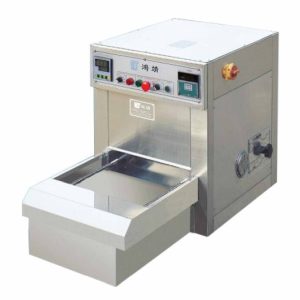
Automatic fixing Dryer
- Controlled Heating System
- Adjustable Fabric Width
- Variable Speed Conveyor - Allows control over fabric dwell time for drying or heat-setting.
- Compact and Bench-Top Design - Space-saving design ideal for textile labs and R&D units.
- Digital Controls - Easy-to-use digital interface for setting temperature, conveyor speed, and process time.
- Transparent Viewing Window - Allows operators to monitor fabric movement and drying visually.
- Low Energy Consumption - Designed for lab use, consuming less power than industrial models.
- Accurate Simulation of Production - Mimics industrial stenter conditions on a lab scale, ideal for pre-production testing and R&D.
- Cost-Effective Testing - Enables testing and fabric finishing without the high cost or space requirements of full-scale machines.
- Energy Efficient - Consumes less power compared to large stenters, making it economical for small-scale or frequent use.
- Precise Control - Offers accurate control of temperature, speed, and fabric tension, ensuring consistent results.
- Space-Saving Design - Compact and bench-top friendly, perfect for laboratories with limited space.
- Multiple Applications - Useful for drying, heat-setting, shrinkage testing, and evaluating chemical finishes.
- Faster Development Cycles - Speeds up new product development by allowing rapid sample testing and adjustments.
- Improved Fabric Quality - Helps optimize finishing parameters for better dimensional stability, hand feel, and appearance.
- Safe and User-Friendly- Designed with lab safety in mind, including temperature safety controls and easy operation.
- Compact Bench-Top Design - Ideal for laboratory use with limited space requirements.
- Adjustable Temperature Control - Precise heating (usually up to 220–250°C) with digital controllers for accurate processing.
- Variable Conveyor Speed- Allows adjustment of fabric dwell time for different drying or heat-setting needs.
- Width Adjustment Mechanism - Equipped with clips or pins to stretch and fix fabric width-wise, simulating industrial stenter conditions.
- Transparent Viewing Window - Enables visual monitoring of fabric movement and drying inside the chamber.
- Digital Display Panel- Easy-to-use interface for setting and monitoring temperature, speed, and time.
- Stainless Steel Construction- Durable and corrosion-resistant for long-term use at high temperatures.
- Uniform Heat Distribution- Ensures consistent fabric treatment across the width.
- Safety Features- Over-temperature protection and insulated body for operator safety.
- Versatile Applications - Suitable for drying, heat-setting, shrinkage testing, and chemical finish evaluations.

