Skip to content
About us
Select category
  • Select category
  • Dyeing Lab Machine
  • Lab Equipment & Instrument
  • Physical Testing & Fabric Testing
  • Yarn Dyeing Machine & Equipment
0 items $0.00
Menu
About us
0 items $0.00
  • Home
  • Products
    • Dyeing Lab Machine
      • Products
        • IR Dyeing Machine Dunlin IR Dyeing Machine Dunlin
        • Digital Ph meter
        • Color fastness to washing machine
        • Rainin Digital Pipette
        • HTHP Glycerin bath dyeing machine
        • Laboratory mini stenter Dryer
        • Laboratory tenter
        • Laboretory hydro Extractor
        • Laboretory Padder
        • Oscillation type Dyeing Machine
        • Orbital Shaker Machine
        • Steam Soaping machine

      IR Dyeing Machine Dunlin

      View More
    • Physical Testing & Fabric Testing Machine
      • Products
        • Tensile Strength tester
        • Martindale abrasion tester
        • Martindale abrasion tester updated Martindale abrasion tester Updated
        • Digital Elmendorf tearing tester
        • Bursting strength tester
        • ICI pilling & Snagging test machine
        • Fabric Stiffness Tester
        • Color Fastness to washing machine
        • Fabric air permeability tester
        • Fabric drape tester
        • Fabric flame retardant tester
        • fabric moisture permeability tester
      • Products
        • Stretch Recovery Tester Static Method
        • Xenon Arc Light Fastness Tester
        • Fastness rotary friction tester
        • Fiber oil fast extractor
        • Fabric flame retardant tester
        • Random Tumble Pilling Tester
        • Spray Rating Tester
        • Fatigue tester for Elastic fabric
    • Lab Equipment & Instrument
      • Products
        • Counting Balance /Weighing Scale
        • controller for Ir Dyeing Machine
        • Analog Thickness gauge
        • color matching cabinet/Light box
        • VeriVide Colour Assessment Cabinets
        • Digital hotplate magnetic stirrer
        • Digital Temperature Humidity meter
        • Digital Ink Rubbing Tester
        • Digital paper dot meter Densitometer
        • Digital Bench top PH Meter
        • Digital precision balance
        • Digital thickness gauge
      • Products
        • Pantone book
        • Hydraulic GSM Cutter
        • Gray scale
        • GSM Cutter & Balance
        • Hand needle detector
      • Products
        • Perspiration Tester
        • Textile moisture meter tem aqua boy
        • VeriVide D65 Tube Light
        • Yarn Tension Meter
    • Wet & Dry Process Instrument
      • Products
        • Bosch tumble dryer
        • Bosch-Washing-Machine-WAJ2018SGC-4
        • Capillary effect tester
        • Color fastness to wash
        • Color fastness to sublimation & heating
        • Durawash print Durability tester
        • Formaldehyde tester for textiles
        • Ozone Exposure chamber
        • Pilling assessment viewer
        • Whirlpool washer & Dryer
      Textile Machinery Supplier in Bangladesh

      MAAM TEX

      Lab Machine Supplier in Bangladesh, Testing machine supplier in Bangladesh, Dyeing Machine supplier in Bangladesh, Lab Machine Supplier in Dhaka, yarn Dyeing machine supplier in Bangladesh, Lab Dispensing Machine supplier in Bangladesh, soft winding machine supplier in Bangladesh, Hard winding machine supplier in Bangladesh, IR Dyeing machine supplier in Bangladesh, Lab machine Price in Bangladesh, 

    • Yarn Dyeing Machine-Equipment
      • Products
        • Cone yarn Dyeing machine
        • Automatic Bobbin Hydroextractor
        • Card winding machine for yarn
        • Sample Cone Yarn Dyeing machine
        • Digital yarn twist Tester
        • Electronic wrap reel
        • Fully Automatic Radio Frequency Dryer
        • Thread Cone Winding Machine
        • High speed hard winding machine
        • High speed Soft cone winding machine
        • Yarn evenness tester
      • Products
        • Yarn evenness tester
    • Washing-Drying Machine
      • Products
        • Automatic washing project
  • About us
  • Contact us
Digital Elmendorf Tearing Tester
360 product view
    0%
    Click to enlarge
    Digital Elmendorf Tearing Tester
    Digital Elmendorf Tearing Tester
    Digital Elmendorf Tearing Tester
    Home Dyeing Lab Machine Digital Elmendorf tearing tester
    Pneumatic bursting tester
    Bursting strength tester $0.00
    Back to products
    Fabric air permeability tester
    Fabric air permeability tester $0.00

    Digital Elmendorf tearing tester

    $0.00

    Digital Elmendorf Tearing Tester
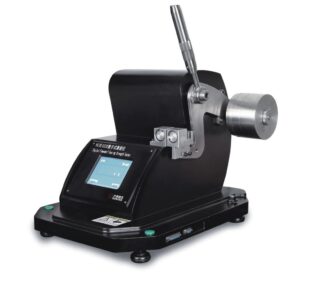
    Digital Elmendorf Tearing Tester

    Digital Elmendorf Tearing Tester


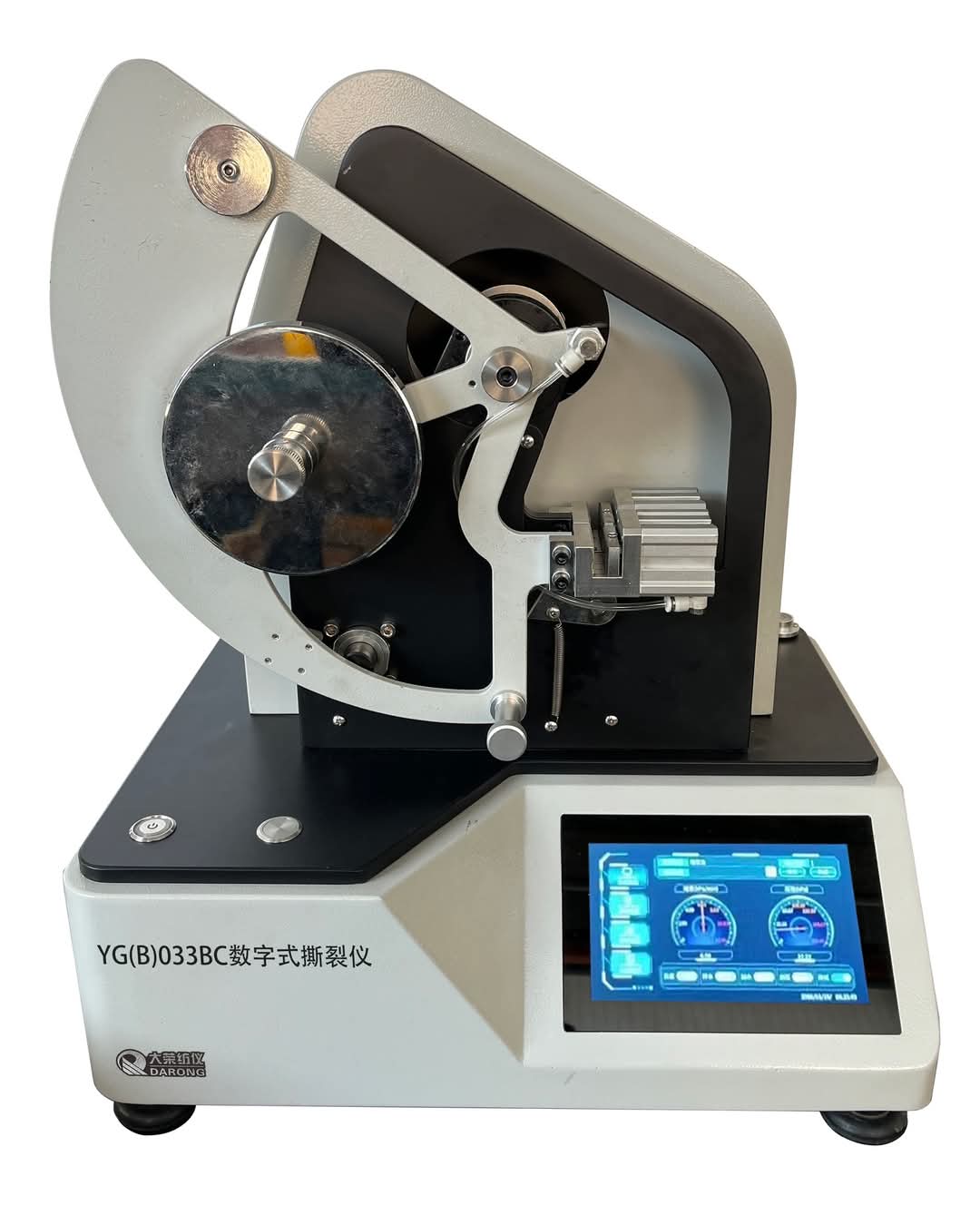
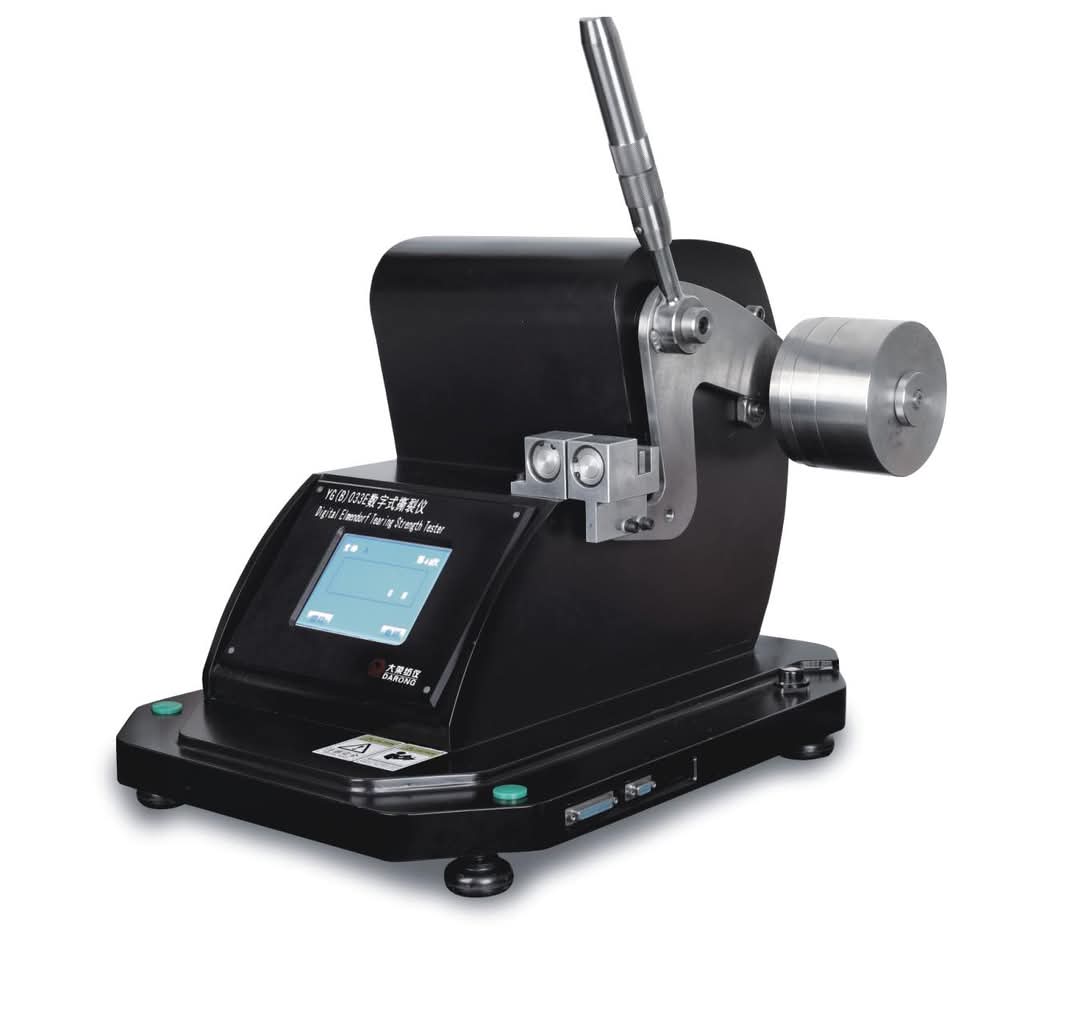
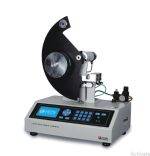
    Digital Elmendorf Tearing Tester is a precision instrument used to measure the tear strength of materials like woven fabrics, paper, plastic films, and nonwovens. It determines how much force is required to continue tearing a pre-slit sample.

    Key Functions of Digital Elmendorf Tearing Tester:

    – Measures propagation tear resistance, not initial tear.

    – Uses a pendulum to apply force; the energy lost during tearing is calculated to determine tear strength.

    – Equipped with a digital display for direct reading of results in grams or millinewtons.

    Core Components:

    – Pendulum Arm: Applies tearing force.

    – Clamps: Secure the sample before and after the tear.

    – Cutting Blade: Creates a precise slit at the start of the test.

    – Digital Display Unit: Shows the tearing force result clearly and instantly.

    – Counterweights: Optional weights for increasing test range (for stronger materials).


    Applications of Digital Elmendorf Tearing Tester:

    – Testing tear resistance of:

    – Textile fabrics (especially woven)

    – Paper and cardboard

    – Plastic films

    – Nonwovens

    – Packaging materials

    Benefits of Digital Elmendorf Tearing Tester:

    1. Accurate Tear Strength Measurement – Provides precise data on tear resistance, critical for quality control and product performance.
    2. Digital Readout – Easy-to-read display gives instant, reliable results without manual calculations.
    3. High Reproducibility – Ensures consistent test outcomes due to controlled tearing angle and speed.


    1. Fast Testing Process – Simple loading and quick test cycle increase lab efficiency.
    2. Suitable for Various Materials – Tests a wide range of flexible materials like textiles, paper, plastic, and packaging.
    3. Customizable Range – Use of optional weights extends the test range for low to high tear strength materials.
    4. Low Sample Waste – Requires small fabric or material samples, reducing waste during testing.
    5. Standards Compliance – Meets international testing standards (e.g., ASTM D1424, ISO 13937) for credibility and uniformity.

    Features of Digital Elmendorf Tearing Tester:

    Digital Display – Provides accurate and direct reading of tear strength in grams, mN, or cN. Pendulum Mechanism – Uses a swinging pendulum to simulate tear propagation with consistent force. Adjustable Test Range – Includes interchangeable pendulum weights to test various material strengths.

    1. Precision Sample Clamp – Securely holds samples in place to ensure accurate tear initiation.
    2. Pre-Cutting Blade – Integrated knife creates a precise initial slit in the sample before tearing.
    3. User-Friendly Interface – Simple buttons and screen navigation for ease of operation.
    4. Standard Test Compliance – Compatible with ASTM D1424, ISO 1974, ISO 13937, and other tear strength standards.
    1. Sturdy Construction – Made with durable materials for long-lasting performance and stable operation.
    2. Compact Design – Space-efficient footprint ideal for laboratory environments.
    3. Data Output Options- Some models offer USB or printer connectivity for result documentation.

    How to Use a Digital Elmendorf Tearing Tester:

    1. Prepare the Sample – Cut the material (fabric, paper, film, etc.) to standard size (typically 100 × 63 mm for textiles) and slit it with the pre-cutter as required.
    2. Select Pendulum Weight – Choose the appropriate pendulum or add counterweights based on expected tear strength.
    1. Calibrate the Machine – Set the pendulum to its starting position and zero the display.
    2. Clamp the Sample – Fix one half of the sample in the stationary clamp and the other in the moving clamp.
    3. Cut the Initial Slit – Use the integrated blade to make a precise cut at the marked slit area (usually 20 mm).
    1. Release the Pendulum – Trigger the pendulum to swing and tear the sample through the pre-slit.
    2. Read the Result – The digital display will show the tearing force automatically (in g, mN, or cN).
    3. Record or Export Data – Save or print the result if your model supports USB or printer connection.
    4. Reset for Next Test – Reposition the pendulum and prepare a new sample for the next cycle.

    Safety Tip: – Always ensure your hands are clear before releasing the pendulum.


    Digital Elmendorf tearing tester
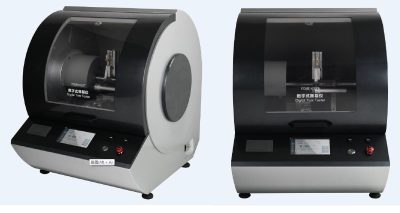
    Scope of application
    It is used for the determination of the tear resistance of various woven
    fabrics (Elmendorf method), and it can also be used for the determination
    of the tear resistance of thick paper, plastic sheeting, electrical tape, etc.

    Related standards
    GB/T 3917.1 FZ/T60006 FZ/T75001 ISO1974/9290 ASTM D1424/5734
    etc.
    Instrument characteristics
    1. Maximum 300N test range
    2. Microcomputer control, digital decoding, support online
    communication
    3. Color touch screen control, Chinese and English menu operation
    interface

    4. Pneumatic clamping, automatic cutting
    5. A variety of measurement units (cN, gf) selection
    6. Fully automatic operation with safe operation protection.
    7. Automatically increase potential energy
    [Technical parameter]:
    1. Test range: first gear: (0~16)N second gear: (0~32)N third gear: (0~
    64)N fourth gear: (0~128)N fifth gear: (0~300)N

    2. Test accuracy: ≤±0.2%F·S
    3. Tearing length: 43mm (non-standard 30-60mm can be set)
    4. Automatic incision length: (20±0.2)mm
    5. Sample size: (100×63)mm
    6. Specimen clamping: pneumatic way

    7. Sample test: Up to 10 sets per group on the device side, and 30 sets
    of data can be selected to be saved
    8. Power supply: AC220V±10% 50Hz 100W
    9. Dimensions: (650×660×680)mm
    10. Weight: 50kg
    [Sample of control interface]:(English version is also available.)

    Categories: Dyeing Lab Machine, Physical Testing & Fabric Testing Tags: Digital Elmendorf tearing tester, Digital Elmendorf tearing tester price in Bangladesh, Digital Tear tester price in Bangladesh, tear tester price in Bangladesh Brand: DARONG
    Share:
    • Description
    • Shipping & Delivery
    Description

      Shipping & Delivery

      Related products

      COLOR FASTNESS TO WASHING MACHINE
      COLOR FASTNESS TO WASHING MACHINE

      Color fastness to washing machine

      Dyeing Lab Machine
      $0.00
      COLOR FASTNESS TO WASHING MACHINE
      COLOR FASTNESS TO WASHING MACHINE

      COLOR FASTNESS TO WASH MACHINE

      Color fastness to washing machine refers to a fabric’s resistance to fading or bleeding when subjected to washing processes. This test measures how well the dye or colorant stays on the fabric when exposed to water, detergent, heat, and mechanical action—conditions typically found in household or industrial washing machines. Purpose of Color fastness to washing machine - To evaluate the durability of dyed or printed textiles during laundering.- Essential for determining fabric quality and suitability for end-use (e.g., clothing, upholstery). Test Method Usually based on international standards such as: - ISO 105-C06 - AATCC 61- IS 3361- AATCC 28/61/132/151/190, BS 1006 C01-C05, ISO 105 Part C01-C06/C08/D01, M&S C4/C5/C10A/P3B, FTMS 191-5610, NEXT TM2/3/5, GB/T 5711/3921 Procedure (Simplified)1. Sample Preparation:   - A fabric specimen is stitched with undyed adjacent fabrics (usually cotton or wool).2. Washing:   - Washed in a laboratory washing machine using standard detergent, water, and specific temperature/time settings (e.g., 40°C for 30 minutes).
      1. Drying: - After washing, the sample is dried, typically air-dried or tumble-dried.4. Evaluation: - Color change and staining on adjacent fabrics are assessed using a gray scale (1 to 5 scale; 5 = no change, 1 = severe change).   - Results may also be evaluated visually under standard lighting.
      Types of Color fastness to washing machine Tests Domestic laundering (home washing conditions)- Industrial laundering (more intense, commercial cleaning)- Accelerated washing (to simulate multiple washes in less time) Applications- Apparel (especially colored garments)- Home textiles (bed linens, curtains)- Industrial fabrics Would you like to know how to perform this test in a lab setting or check color fastness ratings for specific fabrics? Benefits of Color fastness to washing machine: Ensures Product Quality     - Confirms the durability of dyes and prints during laundering, maintaining the fabric's original appearance.2. Enhances Customer Satisfaction - Reduces complaints and returns caused by fading, bleeding, or color transfer.
      1. Supports Brand Reputation - Reliable color fastness contributes to a premium product image and consistent performance.4. Compliance with Standards - Meets industry requirements (e.g., ISO, AATCC), crucial for export, certifications, and regulatory compliance.
      2. Improves Process Control- Helps identify dyeing or finishing process issues early, leading to better production control.6. Reduces Rework and Waste - Minimizes production losses due to color defects after washing.
      3. Essential for Specific End Uses - Critical for items subject to frequent washing (e.g., uniforms, baby clothes, hospital linens).8. Supports Material Selection - Guides textile manufacturers in choosing appropriate dyes and fabrics for specific applications.
      Features of Color Fastness to Washing Machine Test:1. Standardized Testing Methods - Follows international standards like ISO 105-C06, AATCC 61, ensuring consistency and comparability of results.2. Simulated Washing Conditions - Replicates real-world laundering (water, detergent, temperature, mechanical action) in a controlled lab environment.
      1. Assessment of Color Change and Staining- Evaluates both the fabric’s color retention and the staining of adjacent fabrics using grey scales (1 to 5 rating).4. Multi-Fiber Fabric Use - Tests include fabric stitched with adjacent test strips (cotton, wool, etc.) to assess color bleeding onto different fibers.
      2. Multiple Test Options - Includes domestic, accelerated, and industrial washing conditions depending on the end-use of the fabric.6. Temperature and Time Control - Precise control over wash temperature (e.g., 40°C, 60°C) and duration (e.g., 30 mins), simulating specific washing cycles.
      3. Detergent and Additive Use - Uses standardized detergent formulations with/without optical brighteners, and sometimes alkaline or oxidizing agents.8. Reproducible and Quantifiable - Provides repeatable results that can be objectively measured and documented.
      4. Applicability to All Textile Types - Suitable for dyed, printed, or coated fabrics across various fibers (cotton, polyester, blends, etc.).
      Model: WF-12 Brand: Dunlin Origin: China Beaker Capacity: 12 Test Scope: Dyed textile product Consumables of Color fastness to washing machine: Specimen Container, Stainless Steel Ball, Stainless Steel Disc, Container Sealing Gasket Specification of Color fastness to washing machine: 1. Test dock: 6 unit 550mL containers + 6 unit 1200mL containers 2. Specimen rack rotation speed: 40±2rpm 3. Capacity of container: 550mL, 1200mL 4. Temperature range: Room temperature to 97ºC 5. Temperature accuracy: ± 0.5ºC
      1. Rate of temperature rise: Maximum speed for 2ºC/min 7. Internal materials: Imported Stainless Steel 316L 8. Control panel: Touch screen
      2. Rack point control function helps to replace containers easily 10. Safety device: Safety door switch, over-temperature protector and dry heating protector 11. Heating media: Distilled water 12. Power supply: AC220V 50Hz 30A
      Add to cart
      Quick view
      Laboratory Padder
      Laboratory Padder

      Laboratory Padder

      Dyeing Lab Machine
      $0.00

      Laboratory Padder

      Laboratory Padder

      Mini Lab Dyeing Padder

      A Laboratory Padder is a compact, laboratory-scale machine used to apply liquids like dyes, chemicals, and finishes to fabric samples. It simulates the padding process in textile manufacturing, where fabric is passed through a liquid solution, then squeezed between rollers to ensure uniform application and absorption.   Key Features of a Laboratory Padder:
      1. Adjustable Rollers - The fabric is passed through two or more rollers to apply even pressure and squeeze out excess solution, ensuring uniform chemical or dye application.
      2. Variable Pressure Control - Allows adjustment of roller pressure for different fabric types and chemical formulations, ensuring optimal penetration without damage.
       
      1. Solution Bath - Holds the liquid (e.g., dye, finish, or other chemical treatments) in a bath through which the fabric is dipped before passing through the rollers.
      2. Fabric Speed Control - Adjustable conveyor speed allows for control over the time the fabric spends in contact with the liquid solution, affecting the degree of treatment.
       
      1. Digital Control Panel - Provides easy adjustment of pressure, speed, and solution volume to ensure precise and reproducible results.
      2. Compact Design - Smaller, lab-scale version of industrial padders, ideal for research, development, and small-scale testing.
       
      1. Safety Features - Safety guards, emergency stops, and proper handling mechanisms to prevent accidents during operation.
      Applications: - Dyeing: For even application of dye or pigment on fabric. - Finishing: Applying finishes like softeners, water repellents, or flame retardants. - Chemical Treatments: Applying various chemicals used in textile manufacturing, such as anti-microbial treatments or stain-resistant solutions. - Shrinkage Testing: Simulating treatments to test fabric behavior under different conditions.   Benefits of Laboratory Padder:
      1. Precise Application of Chemicals - Provides uniform and controlled application of dyes, finishes, and other chemicals, ensuring consistent results.
      2. Small-Scale Testing - Ideal for small sample testing, allowing for fabric treatment without needing full-scale production equipment.
       
      1. Versatile Use - Suitable for dyeing, finishing, and applying various chemical treatments, making it a flexible tool for R&D labs.
      2. Cost-Effective - Reduces the need for large-scale machinery and the associated costs, while providing reliable results for small batches.
       
      1. Controlled Fabric Treatment - Offers adjustable pressure, speed, and solution concentration, enabling fine-tuned processing for different fabric types and applications.
      2. Accelerates Development - Speeds up the testing and development of new products or finishes, improving time-to-market for textile manufacturers.
      3. Energy Efficient - Consumes less energy compared to larger, industrial-scale machines, making it suitable for lab use.
      4. Compact and Space-Saving - Designed for laboratory environments with limited space, without compromising on functionality.
       
      1. Reproducible Results - Ensures consistent application of treatments across multiple samples, aiding in accurate testing and comparison.
        Features of Laboratory Padder:
      1. Adjustable Roller Pressure - Allows precise control over the pressure applied to the fabric, ensuring uniform chemical or dye application.
      2. Variable Speed Control - Adjustable conveyor speed for controlling the time the fabric spends in the solution bath, influencing the absorption rate.
       
      1. Solution Bath - Holds dye, chemicals, or finishes, and the fabric passes through this bath before moving to the rollers.
      2. Digital Control Panel - Easy-to-use interface for setting and adjusting parameters like speed, pressure, and solution concentration.
       
      1. Compact and Lab-Friendly Design - Designed for smaller, space-efficient use in textile labs, allowing for small sample testing.
      2. Roller Gap Adjustment - Allows for fine-tuning of the gap between rollers to regulate the amount of solution squeezed out of the fabric.
       
      1. Stainless Steel Construction - Durable and resistant to corrosion from the chemicals used in textile treatments.
      2. Safety Mechanisms - Includes safety guards, emergency stops, and user protection features during operation.
      3. Even and Controlled Application - Ensures even distribution of treatments (dye, finish, etc.) on fabric with minimal waste.
      4. Versatility in Application - Can be used for a wide range of textiles and treatments, including dyeing, softening, flame-retardant treatments, etc.
        How to Use a Laboratory Padder:
      1. Prepare the Fabric Sample - Cut the fabric sample to the required size for the experiment. Ensure it’s clean and free of any debris.
      2. Prepare the Solution - Mix the dye, chemical, or finish solution according to the desired concentration and the fabric's needs. Ensure that the solution is homogeneous.
       
      1. Set the Parameters - Pressure: Adjust the roller pressure based on the fabric type. Different fabrics require different pressure levels to ensure uniform application. - Speed: Set the fabric conveyor speed depending on the desired treatment time (longer exposure for deeper treatment).
      - Roller Gap: Adjust the roller gap to control the amount of liquid squeezed out from the fabric.  
      1. Load the Fabric into the Machine - Place the fabric carefully into the machine. The fabric should go through the solution bath and then pass between the rollers.
      2. Start the Machine - Turn on the machine and allow the fabric to pass through the rollers. The solution will be evenly applied to the fabric as it moves through the bath and is squeezed by the rollers.
       
      1. Monitor the Process - Keep an eye on the fabric to ensure it is being treated uniformly and there are no blockages or fabric jams.
      2. Unload the Fabric - Once the fabric has been treated, carefully remove it from the machine. Inspect for even application of the solution and any excess liquid.
       
      1. Dry or Process Further - Depending on the treatment, proceed with further steps such as drying, heat setting, or curing, as required by the experiment or process.
      Safety Tips:- Always wear appropriate personal protective equipment (PPE), such as gloves and goggles, when handling dyes or chemicals. - Ensure the machine is turned off and the rollers are stopped before attempting to remove or adjust the fabric.   Laboratory Padder dealer In Bangladesh, Lab Padder Importer in Bangladesh, Laboratory Padding mangle in Bangladesh, Laboratory Padding mangle in Bd, Laboratory Padder  Price in Bangladesh, Laboratory Padder in Bangladesh, Laboratory Padding mangle price in Bangladesh       Laboratory Padder
      Laboratory Padder

      Mini Lab Dyeing Padder

      Brand: DUNLIN Model:PM-A1 Origin: China Roller position: Vertical Rollers width :450mm Rollers diameter:125mm Rubbers hardness: 70degree shore Cloth speed: 0-10m/min Standard pressure: 0.6Mpa Retained dyestuff ratio: 40-80% Power supply: 1∮AC 220V 50/60HZ Dimensions (L x W x H):710 x 600x 1340mm Standard Accessories English manual Certificate of quality. Laboratory Padder Machine Dunlin price in Bangladesh Laboratory Padder Machine Dunlin in textile Textile testing equipment in Bangladesh Textile testing equipment in Dhaka Textile testing equipment in Uttara MAAM tex Laboratory Padder Machine Dunlin price in BangladeshLaboratory Padder
      Add to cart
      Quick view
      Digital Bench top PH Meter
      Digital Bench top PH Meter

      Digital Bench top PH Meter

      Dyeing Lab Machine
      $0.00

      Digital Bench top PH Meter

      Digital Bench top PH Meter

      Digital Bench top PH Meter

      Brand: Hanna Model: HI2002 Country of Manufacture: Romania Origin: USA

      Digital Bench top PH Meter

      Single parameter of Digital Bench top PH Meter features user-friendly tablet design with bench, portable or wall mount options for ultimate flexibility. Switch from portable to bench in the same procedure or clear the surface for easier working and hang on the wall. Digital Bench top PH Meter Range -2.00 to 16.00pH; pH  Digital smart electrode compatible  Accuracy: ±0.01 pH edge® pH is dedicated to testing pH. Using Hanna's latest innovation in technology and design, edge® can be adapted to suit your working method. Select from hand held, wall mount or bench top - or switch between them all. edge® is happy any which way. Simply plug in the electrode, then play. Measurement is simpler, quicker and more accurate than ever. Results are fast and reliable. Combining high precision technology with the user-friendly dimensions and format of a small digital tablet, edge® is breaking new ground in electrochemistry. This is a must-have meter for your laboratory.
      pH Range basic mode: -2.00 to 16.00 pH; standard mode: -2.000 to 16.000 pH
       Resolution basic mode: 0.01 pH; standard mode: 0.001 pH
       Accuracy (@25°C) basic mode: ±0.01 pH; standard mode: ±0.002 pH
       Calibration basic mode: automatic, up to three points calibration, 5 standard buffers available; standard mode: automatic, up to five point calibration, 7 standard buffers available and two custom buffers
      Temperature Compensation automatic, -5.0 to 100.0°C (using integral temperature sensor)
      Electrode Diagnostics standard mode: probe condition, response time and out of calibration range
      mV pH Range ±1000 mV
       Resolution 0.1 mV
       Accuracy (@25°C) ±0.2 mV
      ORP Range ±2000 mV
       Resolution 0.1 mV
       Accuracy (@25°C) ±0.2 mV
      Temperature Range -20.0 to 120.0°C
       Resolution 0.1°C
       Accuracy ±0.5°C
      Additional Specifications:
       Probe HI-11310 digital glass body pH electrode with 3.5mm connector and 1m cable
       Logging up to 1000 (400 for basic mode) records organised in: manual log-on demand (max. 200 logs), manual log-on-stability (max. 200 logs), interval logging (max. 600 samples; 100 lots)
       Connectivity 1 USB port for storage; 1 micro USB port for charging and PC connectivity
       Environment 0 to 50°C; RH max 95% non-condensing
       Power Supply 5 VDC adapter (included)
       Dimensions 2020 x 140 x 12 mm
       Weight 250 g
      A Digital Bench Top pH Meter is a laboratory-grade instrument designed to measure the pH (acidity or alkalinity) of liquid samples with high precision. It's commonly used in research labs, industrial applications, environmental testing, and educational institutions. Key Features of a Digital Bench Top pH Meter
      1. High Accuracy and Resolution
      - Offers precise pH measurements, often with accuracy up to ±0.01 pH units. - Suitable for applications where exact pH control is critical.  
      1. Digital Display   - Large, clear LCD or LED screen shows pH readings, temperature, and sometimes mV or ion      concentration.   - Some models include a backlit display for better visibility.
       
      1. Electrode System   - Uses a pH-sensitive electrode (usually glass) connected to a reference electrode. Electrodes are often replaceable and require regular calibration and maintenance.
       
      1. Temperature Compensation - Automatic or manual temperature compensation to correct pH readings based on sample temperature.   - Integrated temperature sensors or separate probes are used.
      1. Calibration Functions   - Supports 2-point, 3-point, or multi-point calibration using standard buffer solutions.   - Auto-recognition of calibration buffers in advanced models.
      1. Data Storage and Connectivity   - Internal memory for storing results.   - USB or RS232 ports for data export to PCs or printers; some models support wireless connectivity.
      1. Sturdy Design   - Benchtop models are larger and more stable than portable meters.   - Often come with a durable casing and electrode arm for hands-free operation.
      Applications - Water quality testing (e.g., in wastewater treatment, drinking water monitoring) - Chemical and pharmaceutical industries - Food and beverage production - Biological and environmental research - Educational laboratories A Digital Bench Top pH Meter offers numerous benefits, making it a preferred choice in laboratory and industrial environments where accuracy, reliability, and ease of use are essential. Benefits of a Digital Bench Top pH Meter
      1. High Accuracy and Precision
      - Provides accurate and consistent pH readings, often with ±0.01 pH resolution. - Ideal for scientific and quality control applications where precise pH monitoring is critical.  
      1. User-Friendly Interface- Digital displays (LCD/LED) make readings easy to see and interpret.- Many models offer intuitive controls and guided calibration, simplifying operation.
       
      1. Advanced Calibration Features- Supports multi-point calibration for improved accuracy across a wide pH range.- Some models automatically recognize buffer solutions, reducing user error.
      1. Temperature Compensation- Automatic temperature compensation (ATC) corrects readings based on sample temperature, ensuring accuracy.
      1. Stable and Durable Design- Benchtop units are more robust and stable than handheld devices, reducing the risk of spills or tipping.- Often include electrode holders or arms for secure, hands-free measurements.
      1. Data Management and Connectivity- Built-in memory for storing measurement data.USB, RS232, or wireless connectivity for exporting data to computers or laboratory information systems (LIS).
      1. Multi-Functionality- Some models also measure ORP (oxidation-reduction potential), ion concentration, or conductivity.- Suitable for a variety of testing needs beyond just pH.
      1. Ideal for Long-Term Use- Designed for prolonged and repeated use in laboratory environments.- Replaceable electrodes and parts extend the meter’s usable life.
      1. Compliance and Documentation- Data logging features support documentation and compliance with regulatory standards in regulated industries (e.g., pharma, food, environmental testing).
       
      Add to cart
      Quick view
      IR Dyeing Machine Dunlin

      IR Dyeing Machine Dunlin

      Dyeing Lab Machine, Lab Equipment & Instrument, Yarn Dyeing Machine & Equipment
      $0.00
      IR Dyeing Machine Dunlin
      IR Dyeing machine Dunlin is Safe, high efficiency, environment friendly, energy saving, optimum for new dyeing small sample machines

      IR Dyeing Machine Dunlin

      24 pot 300 ml IR Dyeing Machine Dunlin Application  This machine is oil bath type infrared laboratory dyeing machine, it combine the advantages of traditional glycerol dyeing machine with common infrared dyeing machine together. It’s apply to dyeing and testing the color fastness of the knitted fabric, woven fabric, yarn, cotton, loose fiber, zipper etc. It was special design for dyeing industry, chemical industry, raw material, cloth which can simulate the production conditions exactly and reach the process effect. Used for simulate the dyeing process in actual production, even apply for the small-batch production. Characteristics  Safety, high efficiency, environmental protection, energy saving and consumption reduction, which can fully meet the requirements of dyeing and color matching experiments; segmented heating sampling experiments, segmented, uniform  dyeing and Permeability test, dye absorption rate tests of pH, temperature and bath ratio differences, concentration and other tests, etc. In addition, the machine is highly personalized, and can make different specifications of dyeing steel cups according to customer needs. Feature   Easy to operate, dye pot can be individually Turn plate removed to save waiting time. The ability to conduct the tests of various dyes and chemicals on dispersing, leveling, liquor ratio exhausting etc. l Special recommendation for “STEP DYEING "to select the best dyestuff and combinations for the most Suitable dyeing curve to achieve the highest efficiency and quality Different sizes of dye pots for various weight of samples with yarn or fabric holders to ensure the good leveling result .There will be no crease mark.  Suitable for low liquor ratio dyeing. Sample weight from 4g to 20g.  Special design for humanity, durability and easy-maintenance. Safe, high efficiency, environment friendly, energy saving, optimum for new dyeing small sample machines Product Parameter of IR Dyeing machine Dunlin specifically designed with a focus on human usability, durability, and ease of maintenance. It prioritizes safety, high efficiency, and environmental friendliness while also being energy-saving. This machine is optimal for new dyeing small sample machines due to its product parameter advantages. specifically designed to prioritize humanity, durability, and ease of maintenance. It offers a safe, high-efficiency operation while being environmentally friendly and energy-saving. This machine is optimal for new dyeing small sample machines due to its specialized features and product parameters.  Model : IF-24S Infrared Laboratory Dyeing Machine Key Specification Model : IF-12S IF-24S Staining cup number 12/24 Staining cup volume 300cc OR 425cc Control mode LCD Microprocessor type, programmable process number: 100(0—99), 100 programmable steps per process Heat method Infrared heat Temperature range RT - 140 ℃ Temperature control accuracy ±0.2 ℃ Heating rate

      0 - 3.5 ℃ / min Cooling rate 0.2 - 5 ℃ / min Cooling method Air-cooled Rotation speed 0 - 60 rpm Liquor ratio 1:5 -1:100 Power supply 1∮AC 220V 50/60HZ Dimensions( L x W x H) 670×670×780mm 860×680×780mm Weight 100kg 120kg Standard Accessories Cups 1set

      Put the test sample. Cups stand 1set Place where to put cups. Protective glove 1set To avoid to be hurt by HT cups. Model: IF-24SCapacity: 24 pots Brad: DUNLIN Origin: China

      Color dyeing tests for various dyestuffs of IR Dyeing machine Dunlin
      1. Step dyeing tests. C. Dispersing, levelling and impregnating test. D. High or low liquor ratio exhausting tests. E. Fabric steak and staining tests. F. Concentration tests and others. Protection and Safety gates to protect. Temperature control accuracy +/- 0.2degree
      Working temperature of IR Dyeing machine Dunlin 20 – 140 degree Heating rate of dye bath 0 – 3.5degree / min Cooling rate 0.2 – 5 degree / min Cooling method air-cooled / Auto Speed control frequency conversion Rotation speed 0 – 60 turn / min Microprocessor type Newhaven controller 99 programs each Program with 99steps. IR Dyeing Machine Dunlin
      IR Dyeing machine

      IR Dyeing machine

       
      Add to cart
      Quick view
      HTHP Glycerin bath dyeing machine
      HTHP Glycerin bath dyeing machine

      HTHP Glycerin bath dyeing machine

      Dyeing Lab Machine
      $0.00
      HTHP Glycerin Bath Dyeing Machine
      HTHP Glycerin bath dyeing machine

      HTHP dyeing machine

        The HTHP Glycerin Bath Dyeing Machine (High Temperature High Pressure) is a laboratory or small-scale dyeing machine designed to dye textile samples, especially synthetic fibers like polyester, under high temperature and pressure using glycerin as a heating medium instead of water. Key Features:
      1. High Temperature Capability - Operates up to 140°C or more, ideal for disperse dyeing of polyester which requires elevated temperatures.
      2. Glycerin as Heat Transfer Medium - Glycerin allows for precise and uniform heating beyond the boiling point of water, without pressure buildup as in steam-based systems.
      1. Small Sample Dyeing - Used for lab-scale dyeing of fabric or yarn samples (commonly 5–10 g per tube), useful in R&D or color matching.
      2. Multiple Sample Capacity - Usually has multiple dyeing tubes/chambers for simultaneous dyeing of several samples under identical conditions.
      1. Accurate Temperature and Time Control - Digital or microprocessor-based controllers regulate temperature, heating rate, and timing precisely.
      2. Uniform Dyeing - Ensures even dye penetration due to consistent heat distribution and controlled rotation or agitation.
      1. Energy Efficient Glycerin’s heat retention reduces energy consumption compared to steam systems.
      2. Compact and Durable Design - Bench-top design, made from stainless steel and heat-resistant components for long life and lab use.
      Applications: - Disperse dyeing of polyester. - Color matching and development. - Small-batch dye recipe trials before production. Benefits of HTHP Glycerin Bath Dyeing Machine: High-Temperature Dyeing - Enables dyeing of synthetic fibers like polyester at temperatures above 100°C without requiring high-pressure steam systems.
      1. Uniform Heating with Glycerin - Glycerin provides consistent heat transfer, ensuring even dye uptake and minimizing shade variation.
      1. Energy Efficient- Glycerin retains heat longer, reducing energy consumption compared to traditional steam-based dyeing.
      2. Accurate Process Control - Precise temperature and time control enhance reproducibility and dyeing consistency.
      1. Ideal for Lab and Sample Work - Perfect for R&D, shade matching, and recipe development with small fabric or yarn samples.
      2. Multi-Sample Dyeing - Allows multiple samples to be dyed simultaneously under identical conditions, saving time and effort.
      3. Compact and Safe - Bench-top design fits in laboratories and is safer than high-pressure steam systems.
      1. Low Maintenance - Simplified operation and fewer mechanical parts compared to steam-based systems lower upkeep needs.
      2. Faster Dyeing Cycles- Glycerin heats and cools quickly, reducing overall dyeing time.
      Features of HTHP Glycerin Bath Dyeing Machine:
      1. High-Temperature Operation - Capable of dyeing up to 140–150°C, suitable for synthetic fibers like polyester.
      2. Glycerin as Heat Medium - Uses glycerin for uniform, efficient heat transfer without generating high steam pressure.
      1. Multiple Dyeing Chambers - Usually equipped with 6–24 tubes for simultaneous multi-sample dyeing under identical conditions.
      2. Digital Temperature Controller- Offers precise control of temperature, time, and heating rate with programmable settings.
      1. Compact and Lab-Friendly Design - Bench-top model, easy to operate in laboratory environments with limited space.
      2. Stainless Steel Construction - Corrosion-resistant and durable for long-term, high-temperature operation.
      3. Safety Features - Includes over-temperature protection and thermal insulation to prevent heat loss and ensure operator safety.
      1. Agitation or Sample Rotation- Some models offer rotation or agitation for uniform dye penetration.
      2. Energy Efficient Heating - Glycerin’s heat retention improves energy efficiency over water- or steam-based systems.
      3. Low Maintenance - Simplified mechanical system reduces the need for frequent servicing.
      HTHP Glycerin Bath Dyeing Machine dealer In Bangladesh, Glycerin Bath Dyeing Machine Importer in Bangladesh, HTHP  Dyeing Machine in Bangladesh, HTHP Bath Dyeing Machine in Bd, HTHP Dyeing Machine In Uttara, Glycerin Bath Dyeing Machine Price in Bangladesh, HTHP Dyeing Machine Supplier in Bangladesh, Glycerin Bath Dyeing Machine in Bangladesh,   High temperature glycerin Bath Dyeing machine. Brad: DUNLIN Origin: China Application scope of high temperature glycerin machine: it is suitable for high temperature sample dyeing and washing fastness test of needle woven fabric, woven fabric, yarn, cotton, loose fiber and zipper. It is a high temperature dyeing sample machine specially designed for dyeing industry, chemical industry, raw material and cloth industry. It can accurately simulate the actual production conditions and achieve the required process effect. Parameter specification: Model: H-24P Number of test cups: 24*450ml Maximum dyeing temperature: 235 ℃ Bath ratio: 1:10~1:60 Heating power: 10800w Heating medium: Glycerin Motor power: 0.75w Rotor speed: 42 r/min
      Add to cart
      Quick view
      Color Matching Cabinet -light Box

      Color Matching Cabinet-Light Box

      Physical Testing & Fabric Testing, Dyeing Lab Machine, Lab Equipment & Instrument
      $0.00

      Color Matching Cabinet-Light Box

      Color Matching Cabinet-Light Box x

      Color Matching Cabinet-Light Box

      Color Matching Cabinet -light Box A Color Matching Cabinet-Light box (also known as a Light Box) is a standardized visual assessment tool used to evaluate the color consistency of materials like fabric, paint, plastic, paper, and leather under different lighting conditions. Purpose of Color Matching Cabinet-Light Box : To detect color variations and metamerism (color changes under different lights). Ensures accurate color matching across production batches and materials.   How Color Matching Cabinet-Light Box Works: The cabinet is equipped with multiple standardized light sources (e.g., D65, TL84, UV, CWF, A). Samples are placed inside, and their colors are observed under each light to check for consistency.   Common Light Sources of Color Matching Cabinet-Light Box: D65 – Daylight (standard) TL84 – Store lighting (fluorescent) CWF – Cool white fluorescent UV – Ultraviolet (for fluorescent content) A – Incandescent (home light) U30/U35 – Warm white for showroom lighting     Applications of Color Matching Cabinet-Light Box: Textile and garment inspection Paint and coating industry Plastics and packaging Printing and graphic design   Benefits of Color Matching Cabinet-Light Box: Accurate Color Assessment - Ensures color consistency across products by simulating different lighting conditions. Detects Metamerism - Identifies if colors appear differently under various lights, preventing mismatches. Improves Quality Control - Enhances visual inspection processes in textiles, printing, and packaging.   Standardized Viewing Conditions - Provides consistent light sources for reliable and repeatable evaluations. Reduces Rework and Returns - Helps detect color defects early, saving time and production costs. Supports Industry Standards - Meets international color evaluation standards like ASTM D1729, ISO 3664.   Easy to Use of Color Matching Cabinet -Light Box  - Simple controls with clearly labeled light source buttons. Multiple Light Source Options   - Enables testing under conditions matching retail, daylight, home, and UV lighting. Features of Color Matching Cabinet-Light Box: Multiple Standard Light Sources   - Includes D65 (daylight), TL84 (store light), CWF, UV, A (home light), and optional U30/U35. Digital Hour Meter   - Tracks usage time for each light source to schedule timely replacements. Uniform Light Distribution   - Diffused lighting ensures consistent and shadow-free viewing.   Push Button Control Panel- Easy switching between different light sources. No Warm-Up Time - Instant-on lighting allows immediate use. Sturdy Metal Body - Durable and well-coated to reduce light reflection and distortion. Viewing Area Markings - Guides for proper sample placement and comparison. Optional Dimming Function - Adjustable light intensity (in advanced models) for fine-tuned observation.   Standardized Viewing Angles  - Ensures observer views samples under consistent angles for accurate color judgment.   Description of Color Matching Cabinet-Light Box Color Matching TILO 2 Feet 5/6 Option Light Box Cabinet (P60-5/6) TILO 2 Feet 5/6 Option Light Box Cabinet (P60-5/6) is equipped with 5 light sources. The consistency of the light sources in all Tilo Color Assessment Cabinets gives excellent viewing conditions for reliable color critical decisions under consistent lighting. TILO 2 Feet 5 Option Light Box Cabinet (P60-5) can be applied to the industries that need to perform color difference testing as follows: as the premiere designer and manufacturer of color matching instrument products for the Graphic arts, Photographic, Textile, Dyeing, Packaging, Printing, Leather, Inks, Knitwear, Plastic, Automotive and Ceramics industries. TILO 2 Feet 5 Option Light Box Cabinet (P60-5) offers an exact and dependable way to survey colors beneath different lighting conditions. This apparatus is planned to offer assistance experts in the material, paint, and plastic businesses to coordinate and assess colors with exactness. This high-quality item in Bangladesh at the best cost. The color Cabinet box permits for an ideal seeing environment for color inspection. Features of TILO 2 Feet 5 Option Light Box Cabinet (P60-5) Multiple Light Sources of Color Matching Cabinet-Light Box The lTILO 2 Feet 5 Option Light Box Cabinet (P60-5) incorporates a assortment of light sources. These sources can reenact common sunshine, tungsten, and other counterfeit lighting conditions. By changing light sources, clients can compare colors in diverse situations, guaranteeing precise results. Adjustable Light Intensity of Color Matching Cabinet-Light Box The color coordinating light box highlights flexible light concentrated. You can control the brightness to coordinate distinctive real-world conditions. It guarantees a more point by point investigation of how colors alter beneath different lighting intensities. Compact and Solid Design This color appraisal cabinet comes in a compact plan, making it simple to put in any workspace. Its strong structure guarantees long-term utilize, indeed in requesting environments. Precise Color Evaluation The light box gives a controlled environment that makes a difference clients assess colors in a steady way. This highlight is particularly valuable in businesses where correct color coordinating is basic, such as in materials or paints. Energy Efficient The color cabinet is outlined to be energy-efficient. It employments Driven lights that devour less control whereas still advertising dependable and precise color assessment. Simple Client Interface The user-friendly interface of the color coordinating cabinet makes it simple for anybody to work. The controls are straightforward, and clients can alter settings effortlessly. Portable Design The color coordinating light box is lightweight, making it simple to move from one area to another. This movability is particularly valuable when you require to take the cabinet to diverse parts of the generation floor or to different client locations. Ideal for Different Industries Whether you work in materials, car, or fabricating, the color appraisal cabinet offers the exactness and unwavering quality required for color coordinating. It ensures consistency over distinctive materials and generation lines. FEATURES Certified by ASTM D1729, ISO3664, DIN, ANSI and BSI. Automatic changeable into another light source by switching. Usage time display, name of lamp, total number of switches for each. Violated time sensor for tracking lamp service or replacement. Large display & individual switch, easy to operate each light source. No warm-up time, just plug and play. The energy-saving device which generates lower heat & high efficiency. The name of the light source can be changed. SPECIFICATION OF TILO 2 FEET 5 OPTION LIGHT_BOX CABINET (P60-5) Name Details Model P60(5) Brand TILO Origin Hong Kong Dimensions (WxDxH) (710 x 405 x 570)mm Standards ASTM D1729, ISO3664, DIN, ANSI and BSI Light source Five light source. Power Source Electric. Voltage 220 ~ 240V Body Material Fiber-reinforce Warranty One year free service LIGHT SOURCE OF TILO 2 FEET 5 OPTION LIGHT_BOX CABINET (P60-5) Light Source Color viewing applications / Uses of Light Color Temp. (K) Power (W) Brand Info Quantity D65 International standard Artificial Daylight / Natural Daylight 6500 18 PHILIPS; TL-D/18-965 2 Pieces TL84 Applied to stores in Europe, Japan and China 4000 18 PHILIPS; TL-D/18-840 2 Pieces F “Sun-setting Light Yellow” incandescent light source 2700 40 PHILIPS 4 Pieces UV ultraviolet light to detect and evaluate optical brighteners or fluorescent pigments Wave length: 365nm 20 PHILIPS 18W BLB 1 Pieces CWF (Cool White Fluorescent) American Standard 4150 18 PHILIPS; TL-D/18-640 2 Pieces      
      Add to cart
      Quick view

      ICI Pilling & Snagging Test Machine

      Physical Testing & Fabric Testing
      $0.00
      ICI Pilling & Snagging Test Machine An ICI Pilling & Snagging Test Machine is a specialized laboratory instrument designed to
      Add to cart
      Quick view
      Controller For IR Dyeing Machine
      Color Matching Cabinet -light Box

      Controller For IR Dyeing Machine

      Dyeing Lab Machine, Lab Equipment & Instrument
      $0.00
      Controller For IR Dyeing Machine
      Controller For IR Dyeing Machine

      IR Dyeing machine controller

      Controller For IR Dyeing Machine offers exceptional quality .purchasing of our controller provides cost efficiencies, and customization options enabling you to meet your specific requirements comfortably. Collaborate with program A Controller for IR Dyeing Machine is a specialized control system designed to manage and automate the dyeing process in textile manufacturing, particularly using infrared heating technology. These controllers are crucial for achieving consistent dye quality, reducing energy consumption, and optimizing the dyeing process.   Key Features of an Controller For IR Dyeing Machine :
      1. Temperature Control:- Precisely regulates the infrared heaters to maintain uniform temperature across the dye bath. - Supports customizable heating curves (ramp-up, hold, and cool-down phases).
      2. Programmable Logic Control (PLC): - Allows operators to set and automate dyeing programs for different fabrics and dye types. - Supports multiple recipes or programs for different batches.
       
      1. Real-Time Monitoring and Feedback: - Monitors parameters like temperature, fabric rotation, bath circulation, and timing. - Provides real-time data and alarms for deviations.
      2. Touchscreen Interface / HMI (Human Machine Interface): - User-friendly interface for configuring and monitoring processes. - Multi-language support and graphical display of process curves.
       
      1. Data Logging and Traceability: - Records process data for quality control and traceability.
      2. Energy Efficiency Optimization: - Manages IR heater output to reduce energy usage. - Often includes features for auto shut-off or idle mode.
       
      1. Safety Features: - Includes emergency stop, over-temperature protection, and fault detection systems. 8. Connectivity: - Modern controllers may support Ethernet, Modbus, or other industrial communication protocols for integration into factory automation systems.
        Using A Controller For IR Dyeing Machine provides several benefits, especially in textile manufacturing where precision and efficiency are critical. Here are the key advantages:
      1. Improved Dyeing Accuracy and Consistency
      - Maintains precise temperature control and timing, ensuring uniform dye uptake across the fabric. - Reduces color variation between batches.  
      1. Enhanced Energy Efficiency- Infrared heating is more energy-efficient than traditional heating methods.- The controller optimizes energy use by adjusting the IR output based on process needs, reducing overall energy consumption.
       
      1. Time Savings- Faster heating and cooling cycles due to infrared technology.- Automated processes reduce manual intervention and cycle times. 4. Better Process Control- Programmable dyeing cycles and precise control over each stage (heating, dyeing, rinsing, cooling).- Real-time monitoring and adjustments improve reliability.
       
      1. Reduced Water and Chemical Usage- More efficient dye penetration and fixation mean less water and fewer chemicals are needed for reprocessing or corrections.6. Lower Operational Costs
      - Energy savings, reduced rework, and lower labor input contribute to cost efficiency. - Minimizes fabric damage, reducing material waste.  
      1. Enhanced Safety Built-in alarms, emergency shut-off and automatic fault detection enhance operational safety.8. Data Logging and Traceability- Ability to record and review dyeing process data helps in quality control and troubleshooting.- Facilitates compliance with industry standards and audits.
       
      1. User-Friendly Operation- Modern touchscreen interfaces make it easier for operators to manage and monitor processes.- Multilingual support and visual feedback enhance usability.
       
      Add to cart
      Quick view
      • Address
        • House 05, Road 3/A, Sector 09, Uttara, Dhaka.
      • Phone
        • 01713741546, 01974741546, 01714634452, 01838488804
      • Email
        • maamtexbd@gmail.com, info.maamtex@gmail.com, mamun@maamtexbd.com, info@maamtexbd.com
      • USEFUL LINKS
        • Privacy Policy
        • Terms & Conditions
      • USEFUL LINKS
        • Home
        • Contact Us
        • About Us

      SOCIAL MEDIA:

      Copyright Reserved by Maamtexbd 2024 | Developed by Systemeye.net.
      • Menu
      • Categories
      • Electronics
      • Lab Scientific Item
      • Home
      • Products
        • Dyeing Lab Machine
        • Physical Testing & Fabric Testing Machine
        • Lab Equipment & Instrument
        • Wet & Dry Process Instrument
        • Yarn Dyeing Machine-Equipment
        • Washing-Drying Machine
      • About us
      • Contact us
      Shopping cart
      Close
      Accessibility Adjustments

      Powered by OneTap

      How long do you want to hide the toolbar?
      Hide Toolbar Duration
      Select your accessibility profile
      Vision Impaired Mode
      Enhances website's visuals
      Seizure Safe Profile
      Clear flashes & reduces color
      ADHD Friendly Mode
      Focused browsing, distraction-free
      Blindness Mode
      Reduces distractions, improves focus
      Epilepsy Safe Mode
      Dims colors and stops blinking
      Content Modules
      Font Size

      Default

      Line Height

      Default

      Color Modules
      Orientation Modules
      Chat Now