

 Products
 Martindale abrasion tester Updated
 VeriVide Original D65 Tube Light
0%
Analog Thickness Gauge
$0.00
Analog Thickness Gauge
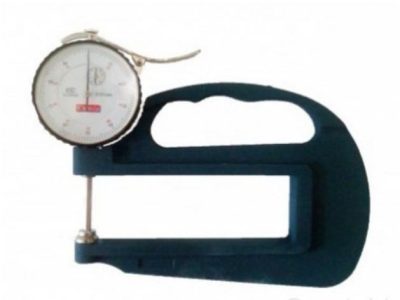
Analog Thickness Gauge
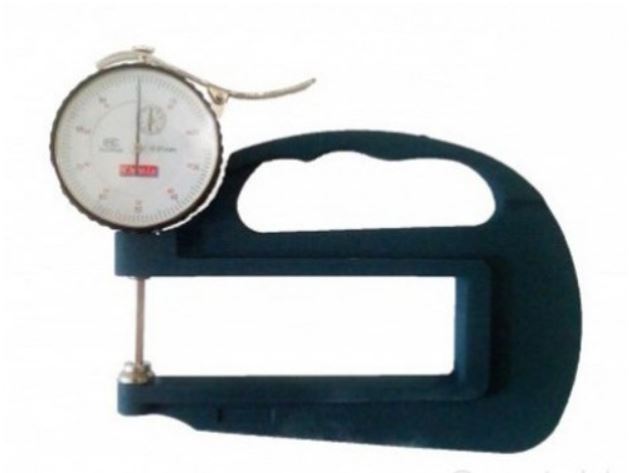
An Analog Thickness Gauge is a manual instrument used to measure the thickness of materials such as fabric, paper, leather, rubber, and plastic. Unlike digital gauges, it displays readings through a mechanical dial or scale.
Purpose Analog Thickness Gauge:
To measure material thickness with reasonable accuracy in lab or production settings.
Commonly used in textiles, packaging, leather goods, and quality control labs.
Working Principle :
The sample is placed between a flat anvil and a presser foot.
When the presser foot contacts the sample under uniform pressure, the thickness is indicated on a dial scale, typically in millimeters.
Types of Analog Thickness Gauge:
Dial Thickness Gauge – With a needle and graduated scale.
Micrometer-Type Gauge – For finer precision and small samples.
Applications:
Textile and fabric inspection
Leather and rubber sheet measurement
Paper and film thickness control
Brand : DUNLIN
Origin : TAIWAN Measuring Range : 0mm ~ 10mm
Accuracy : 0.01mm
Deep Throat Range : 120mm
Dimension : ( 195 × 130 × 25 ) mm
Benefits
High Durability – Since analog thickness gauges do not rely on electronic circuits, they are more durable and resistant to environmental factors such as dust and moisture.
No Power Requirement – These gauges operate mechanically, eliminating the need for batteries or power sources.
Cost-Effective – Analog meters are generally more affordable compared to digital alternatives while still providing precise measurements.
Ease of Use – Simple mechanical operation ensures that even non-technical users can easily measure thickness.
Reliable Performance – Analog thickness gauges provide consistent and accurate readings without the risk of software malfunctions.
Advantages
Immediate Readings – No waiting time for booting or calibration, providing instant measurement results.
Long-Lasting Accuracy – These devices do not suffer from battery drainage or electronic failures, ensuring accuracy over long periods.
Lightweight and Portable – Many analog thickness gauge meters are compact and easy to carry, making them convenient for on-the-go use.
Wide Material Compatibility – Suitable for measuring the thickness of metals, textiles, paper, and various industrial materials.
Minimal Maintenance – Without electronic parts, maintenance requirements are significantly reduced.
Applications
Manufacturing Industry – Used in quality control to ensure material thickness meets specified standards.
Automotive Sector – Helps measure paint and coating thickness on vehicles to ensure uniform application.
Metalworking and Fabrication – Used to measure sheet metal and pipe thickness to maintain precision in production.
Plastic and Rubber Industry – Ensures uniform thickness in plastic sheets, films, and rubber products.
Paper and Textile Industry – Essential for measuring paper thickness in printing industries and fabric thickness in textile production.
Aerospace and Aviation – Used for checking the thickness of coatings and composite materials in aircraft manufacturing.
An Analog Thickness Gauge is a manual instrument used to measure the thickness of materials such as fabric, paper, leather, rubber, and plastic. Unlike digital gauges, it displays readings through a mechanical dial or scale.
Shipping & Delivery
Related products
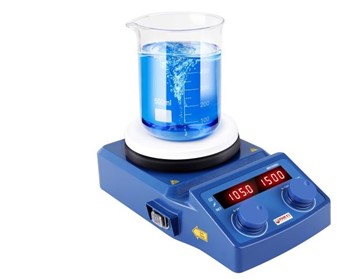

Digital hot plate-magnetic stirrer
Digital hot plate-magnetic stirrer
Digital hot plate-magnetic stirrer
- Magnetic Stirrer:
- Digital Display and Controls:
- Temperature Sensors: - Built-in or external probes (like a PT100 or thermocouple) for accurate temperature control.
- Precision and Control- Digital Interface: Allows accurate setting and monitoring of temperature and stirring speed.- Consistent Results: Ensures reproducibility in experiments and solution preparations.
- Efficient Mixing and Heating- Uniform Mixing: Magnetic stirring eliminates hotspots and ensures even distribution of solutes.- Simultaneous Operation: Ability to heat and stir at the same time improves efficiency.
- Safety Features- Overheat Protection: Prevents accidents by automatically shutting off at unsafe temperatures.- Sealed Surface: Reduces risk of contamination and easy to clean.
- Versatility
- Compact and User-Friendly- Takes up minimal bench space.- Simple to operate with user-friendly controls and displays.
- Durability- High-quality materials like ceramic or stainless steel tops resist corrosion and wear.
- Time-Saving Speeds up preparation of solutions and reactions compared to manual stirring and separate heating. Would you like these benefits presented in a slide format or for a product brochure?
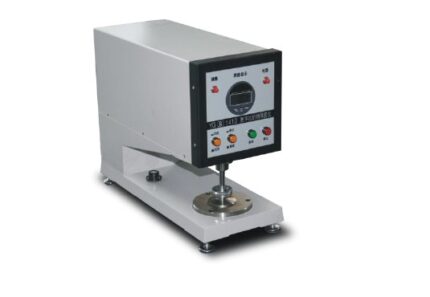
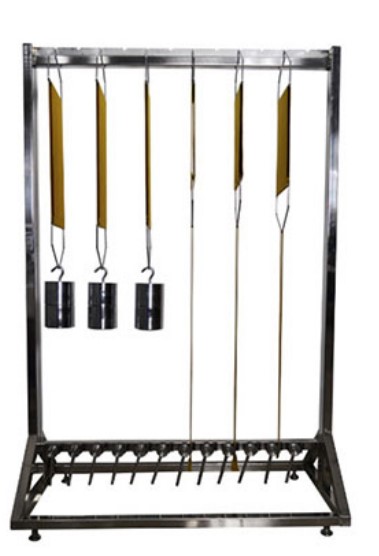
Digital thickness gauge
Digital Thickness Gauge

Digital Thickness Gauge
- High Accuracy - Offers precise measurements, often up to ±0.01 mm, reducing human error.
- Quick Readout - Instant digital display of results speeds up testing and data collection.
- Easy to Use - Simple operation with one-button zeroing and unit conversion.
- Consistent Pressure Application - Spring-loaded foot ensures uniform pressure for repeatable results.
- Multi-Material Testing - Suitable for textiles, paper, film, rubber, leather, and nonwovens.
- Portable and Lightweight- Ideal for both lab and field use with battery-powered operation.
- Data Hold Function - Locks the measurement on-screen for easy recording.
- Improves Quality Control - Helps manufacturers maintain product thickness standards.
- Digital LCD Display - Provides clear, instant thickness readings in mm or inches.
- High Resolution & Accuracy - Typically measures with 0.01 mm precision.
- Spring-Loaded Presser Foot - Applies consistent pressure on samples for reliable results.
- Zero Setting Function- Allows quick reset before each measurement.
- Unit Conversion Button - Easily switch between metric (mm) and imperial (inch) units.
- Data Hold Function - Freezes the displayed value for easy recording.
- Portable Design - Compact and battery-operated for on-site or lab use.
- Durable Construction - Made from stainless steel or hardened materials for long life.
- Auto Power-Off - Saves battery by shutting off when idle.
- Variety of Anvil & Foot Sizes - Customizable based on testing standards or material types.
- Power On the Device - Press the power button to turn on the gauge.
- Zero the Gauge - Close the anvil and presser foot fully. Press the "ZERO" button to reset the display to 0.00 mm.
- Select Unit (if needed) - Use the unit button to toggle between mm and inches.
- Place the Sample - Open the presser foot and insert the material between the foot and anvil.
- Apply Pressure - Gently release the presser foot to let it rest on the sample using its spring force.
- Read the Measurement- Read the thickness displayed on the LCD screen.
- Hold or Record the Data - Use the "HOLD" button (if available) to lock the reading for recording.
- Remove the Sample- Lift the presser foot and take out the material.
- Power Off - Turn off the device or let it auto shut-off.
- Features of Digital Thickness Gauge:
- Digital LCD Display - Provides clear, instant thickness readings in mm or inches.
- High Resolution & Accuracy - Typically measures with 0.01 mm precision.
- Spring-Loaded Presser Foot - Applies consistent pressure on samples for reliable results.
- Zero Setting Function- Allows quick reset before each measurement.
- Unit Conversion Button - Easily switch between metric (mm) and imperial (inch) units.
- Data Hold Function - Freezes the displayed value for easy recording.
- Portable Design - Compact and battery-operated for on-site or lab use.
- Durable Construction - Made from stainless steel or hardened materials for long life.
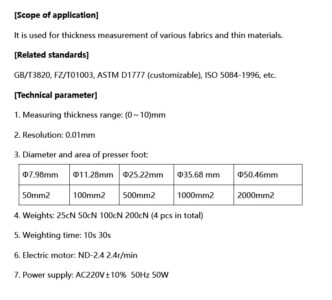
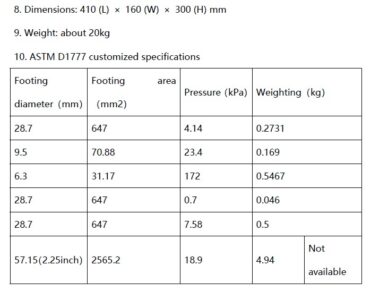

Counting Balance-Weighing Scale
Counting Balance-Weighing Scale
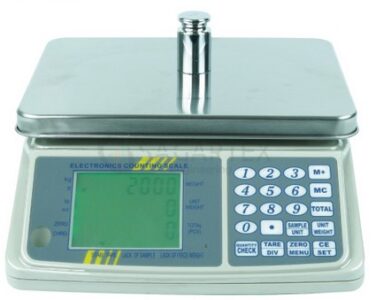
Counting Balance-Weighing Scale
Counting Balance-Weighing Scale

Digital Ink Rubbing Tester
Digital Ink Rubbing Tester
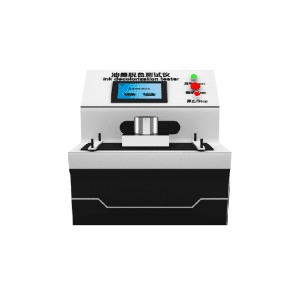
Digital Ink Rubbing Tester
Digital Ink Rubbing Tester
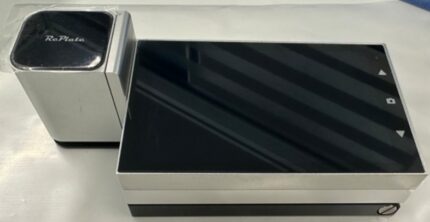
Digital Paper Dot Meter Densitometer
Digital Paper Dot Meter Densitometer
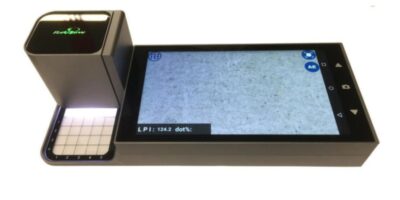
Digital Paper Dot Meter Densitometer
- Calibration: Performing white and black calibration using provided standards to ensure measurement accuracy.
- Sample Placement: Positioning the printed sample under the measurement aperture.
- Measurement: Initiating the measurement process via the touch screen or connected software.
- Data Analysis: Reviewing the displayed results and, if necessary, transferring data to a computer for further analysis.Regular calibration and maintenance are recommended to maintain the device's accuracy and longevity.
- Accurate Dot Analysis - Precisely measures dot gain, dot area, and enlargement for high-quality printing.
- Consistent Print Quality - Helps maintain uniform color density and contrast across print runs.
- Time-Saving - Quick digital readings eliminate the need for manual inspection and reduce errors.
- Multi-Parameter Testing - Measures density, color difference (ΔE), tone error, and gray balance in one device.
- Supports Industry Standards - Complies with ISO and other standards for print quality control.
- User-Friendly Interface - Touchscreen and onboard storage make it easy to operate and manage test data.
- Portable and Rechargeable - Battery-powered with thousands of readings per charge—ideal for field and lab use.
- Enhances Process Control - Enables precise adjustments during printing to reduce waste and reprints.
- High-Resolution CMOS Sensor - Ensures precise optical density and color measurements.
- Measurement Geometry: 45°/0° - Ideal for accurate reflection density readings on printed materials.
- Multiple Light Sources - Includes visible and UV LEDs for versatile testing conditions.
- Touchscreen Display - 3.5-inch color LCD with intuitive controls for easy operation.
- Multi-Function Measurement - Measures dot area, dot gain, density difference, tone error, and gray balance.
- Large Data Storage - Stores over 10,000 measurements for tracking and reporting.
- Rechargeable Battery - Long-lasting lithium battery supports up to 5,000 readings per charge.
- USB and Bluetooth Connectivity - Allows data transfer and remote operation via PC or mobile apps.
- Standard Compliance - Supports ISO Status A, E, I, T and CIE color spaces like LAB, LCh, XYZ.
- Multiple Observer Angles - Select between 2° and 10° for different visual perception simulations.
- Power On - Turn on the device using the power button.
- Calibrate - Perform black and white calibration using the provided standard tiles to ensure accuracy.
- Select Measurement Mode - Choose desired mode: density, dot area, dot gain, ΔE, contrast, or gray balance.
- Place Sample - Position the printed paper sample under the measurement aperture.
- Take Measurement - Press the measure button or tap the screen. The device will scan and display results instantly.
- Analyze Results - View data on the touchscreen. You can switch between values like density, dot area, and color difference.
- Save or Export Data - Store results in internal memory or transfer via USB/Bluetooth if needed.
- Power Off and Store - Turn off after use. Keep in a dust-free area to protect sensors.
Digital Paper Dot Meter Densitometer

Perspiration Tester
Perspiration Tester
Perspiration Tester
- Fabric samples are treated with synthetic perspiration solution (acidic or alkaline).
- They are sandwiched with adjacent fabric and placed between glass or acrylic plates.
- The assembly is loaded into the tester and pressed under specific pressure.
- it’s then incubated at 37°C (body temperature) for a fixed time (typically 4 or 16 hours).
- Afterward, color change and staining are evaluated using a gray scale.
- Accurate Sweat Simulation - Mimics real-life effects of acidic and alkaline perspiration on fabrics.
- Improves Product Quality - Ensures textiles retain color and don’t bleed or stain when worn.
- Supports Standard Compliance - Follows ISO and AATCC test standards for global market approval.
- Protects Brand Reputation- Reduces customer complaints due to dye transfer or fading.
- Simple and Repeatable- Provides consistent pressure and conditions for reliable results.
- Multi-Sample Testing- Tests multiple specimens at once, saving time in labs.
- Durable and Low Maintenance- Robust frame with minimal moving parts makes it long-lasting and easy to care for.
- Stainless Steel Frame - Corrosion-resistant body for durability and long-term use.
- Multi-Sample Capacity - Can hold up to 20 or more specimens for batch testing.
- Standardized Loading Weight- Applies uniform pressure (usually 12.5 kPa) across all samples.
- Removable Plates - Glass or acrylic plates ensure even contact and easy cleaning.
- Compact Design- Space-saving, bench-top model ideal for lab environments.
- Complies with Test Standards - Meets ISO 105 E04, AATCC 15, and related perspiration fastness standards.
- Ease of Operation - Simple loading, unloading, and incubation process.
- High-Temperature Resistance - Can be used inside incubators at 37°C or ovens as required.
- Prepare the Test Solution - Mix artificial acidic or alkaline perspiration as per standard (ISO or AATCC).
- Cut the Fabric Samples - Cut both the test fabric and adjacent white fabric (usually cotton) to standard size.
- Soak the Samples - Immerse the fabric sandwich (test + adjacent) in the test solution for 30 minutes.
- Remove Excess Liquid - Gently squeeze or blot to remove extra moisture—do not dry.
- Load in the Tester- Place each sandwich between glass or acrylic separator plates in the tester.
- Apply Pressure - Tighten the top plate or place the standard weight on top to apply uniform pressure.
- Incubate - Keep the loaded tester in an oven or incubator at 37°C for 4–16 hours (depending on the method).
- Accurate Sweat Simulation - Mimics real-life effects of acidic and alkaline perspiration on fabrics.
- Improves Product Quality - Ensures textiles retain color and don’t bleed or stain when worn.
- Supports Standard Compliance - Follows ISO and AATCC test standards for global market approval.
- Protects Brand Reputation- Reduces customer complaints due to dye transfer or fading.
- Simple and Repeatable- Provides consistent pressure and conditions for reliable results.
- Multi-Sample Testing- Tests multiple specimens at once, saving time in labs.
- Durable and Low Maintenance- Robust frame with minimal moving parts makes it long-lasting and easy to care for.
- Dry and Evaluate - Remove, air dry the samples, then assess color change and staining using a gray scale.
- Fabric samples are treated with synthetic perspiration solution (acidic or alkaline).
- They are sandwiched with adjacent fabric and placed between glass or acrylic plates.
- The assembly is loaded into the tester and pressed under specific pressure.
- it’s then incubated at 37°C (body temperature) for a fixed time (typically 4 or 16 hours).
- Afterward, color change and staining are evaluated using a gray scale.
Perspiration Tester
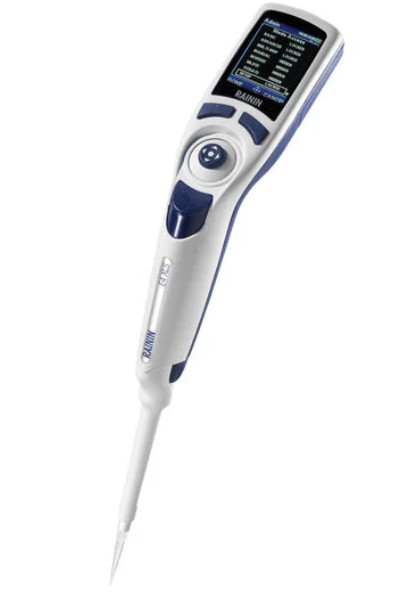
Rainin Digital Pipette
Rainin Digital Pipette
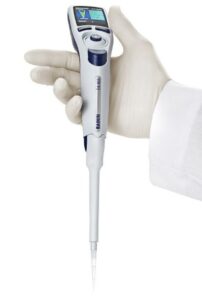
Digital Pipette
- Digital Volume Setting
- High Accuracy and Precision
- Ergonomic Design
- Easy Calibration and Maintenance
- Durable and Chemically Resistant - Built with high-quality materials that resist damage from chemicals and frequent use.
- Models and Volume Ranges - Available in single-channel and multi-channel versions.
- LTS (LiteTouch System) - Many Rainin pipettes use the LTS tip system which reduces tip ejection force and ensures a consistent seal.
- Compliance and Traceability - Some digital models offer data storage or integration with lab information systems for traceability.
- High Accuracy and Precision - Ensures reliable and reproducible results, essential for sensitive experiments.
- Digital Volume Control - Reduces human error with easy and precise volume setting via digital interface.
- Ergonomic Design- Minimizes hand strain and fatigue during prolonged use; ideal for repetitive pipetting tasks.
- LiteTouch System (LTS) - Eases tip attachment and ejection, reducing risk of RSI (Repetitive Strain Injury) and improving comfort.
- Versatile Volume Range - Available in multiple models to handle volumes from microliters to milliliters.
- Durable and Reliable - Built with high-quality materials for long life and resistance to chemicals and frequent use.
- Easy Maintenance and Calibration - Simplified calibration and cleaning ensure long-term performance and compliance.
- Data Integrity and Traceability -Some models store data, supporting audit trails and regulatory compliance.
- Enhanced Productivity - Quick setup, easy operation, and consistent performance speed up lab workflows.
- Digital Volume Adjustment - Precise and easy-to-read digital display for accurate volume setting.
- High Precision and Accuracy- Delivers consistent results, meeting ISO and GLP/GMP standards.
- Ergonomic Design- Lightweight, balanced with low plunger and tip ejection force to reduce fatigue.
- LiteTouch Tip Ejection System (LTS) - Reduces tip attachment/ejection force, improving comfort and consistency.
- Durable Construction - Built with high-quality, chemically resistant materials for long-term use.
- Wide Volume Range - Available in multiple models from 0.1 µL to 10 mL.
- Single-Channel and Multi-Channel Options - Suitable for various applications including high-throughput assays.
- Autoclavable Components- Some parts can be autoclaved for sterilization and contamination control.
- Easy Calibration and Maintenance - User-friendly calibration settings with accessible parts for cleaning.
- Optional Electronic Models - Some versions include programmable features, multiple modes (e.g., reverse pipetting), and memory storage.

Hydraulic GSM Cutter
Hydraulic GSM Cutter
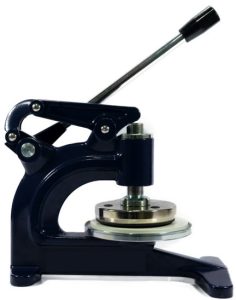
Hydraulic GSM Cutter
- High Cutting Precision - Ensures consistent and accurate fabric sample size for reliable GSM results.
- Effortless Operation- Hydraulic action reduces manual effort and operator fatigue.
- Ideal for Thick or Multi-Layer Fabrics - Cuts through dense or multiple fabric layers cleanly.
- Time-Saving - Speeds up the sample preparation process, especially for high-volume testing.
- Improves Test Accuracy - Uniform samples help eliminate errors in GSM calculation.
- Durable and Long-Lasting - Robust construction ensures stability and extended service life.
- Safety Enhancement - Reduces risk of injury compared to manual rotary cutters.
- Consistent Pressure Application - Hydraulic mechanism maintains steady force for each cut.
- Hydraulic Press Mechanism - Applies consistent and strong pressure for clean, even cuts.
- Standard Cutting Die (100 cm²) - Produces fabric samples suitable for GSM testing with standard area.
- Heavy-Duty Construction - Built with robust metal frame for long-term lab or industrial use.
- Sharp Stainless Steel Blades - Durable and replaceable blades ensure smooth, precise cuts.
- Cutting Pad Included - Comes with a rubber or nylon base to protect blades and ensure clean edges.
- Simple Lever or Button Operation - Easy to use with minimal training required.
- Non-slip Base - Provides stability during operation for safe, accurate cutting.
- Supports Various Fabric Types
- Place the Cutting Pad - Lay the rubber or nylon cutting pad on a flat surface.
- Position the Fabric - Place the fabric sample flat and smooth on the cutting pad.
- Align the Cutter - Position the GSM cutter die over the desired area of the fabric.
- Activate Hydraulic Press - Pull the lever or press the button to apply hydraulic pressure and cut the sample.
- Remove the Sample - Lift the cutter and carefully take out the circular fabric piece (usually 100 cm²).
- Weigh the Sample - Place the cut sample on a precision balance or GSM scale to determine weight.
- Calculate GSM - Multiply the sample weight (in grams) by 100 to get GSM.
Hydraulic GSM Cutter

