

 Products
 Martindale abrasion tester Updated
 VeriVide Original D65 Tube Light

0%

Hydraulic GSM Cutter
$0.00
Hydraulic GSM Cutter
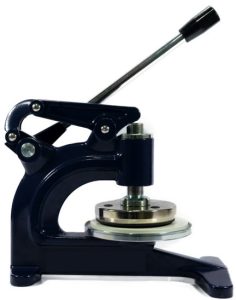
Hydraulic GSM Cutter
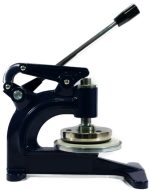
A Hydraulic GSM Cutter is a precision instrument used to cut circular fabric samples for GSM (Grams per Square Meter) testing. It uses hydraulic pressure to ensure clean, uniform cuts through multiple fabric layers, making it ideal for high-throughput or thicker materials.
Purpose of Hydraulic GSM Cutter:
– To prepare accurate circular samples (usually 100 cm² area) for determining fabric weight in GSM.
– Used widely in textile testing labs for quality control and consistency.
Working Principle of Hydraulic GSM Cutter:
– Fabric is placed on a cutting pad.
– The cutter, equipped with a sharp circular blade, is hydraulically pressed down on the fabric.
– The cut sample is then weighed to calculate GSM using a formula or GSM scale.
Applications of Hydraulic GSM Cutter:
– Suitable for woven, knitted, and nonwoven fabrics.
– Used in textile mills, labs, and R&D centers.
Benefits of Hydraulic GSM Cutter:
- High Cutting Precision – Ensures consistent and accurate fabric sample size for reliable GSM results.
- Effortless Operation- Hydraulic action reduces manual effort and operator fatigue.
- Ideal for Thick or Multi-Layer Fabrics – Cuts through dense or multiple fabric layers cleanly.
- Time-Saving – Speeds up the sample preparation process, especially for high-volume testing.
- Improves Test Accuracy – Uniform samples help eliminate errors in GSM calculation.
- Durable and Long-Lasting – Robust construction ensures stability and extended service life.
- Safety Enhancement – Reduces risk of injury compared to manual rotary cutters.
- Consistent Pressure Application – Hydraulic mechanism maintains steady force for each cut.
Features of Hydraulic GSM Cutter:
- Hydraulic Press Mechanism – Applies consistent and strong pressure for clean, even cuts.
- Standard Cutting Die (100 cm²) – Produces fabric samples suitable for GSM testing with standard area.
- Heavy-Duty Construction – Built with robust metal frame for long-term lab or industrial use.
- Sharp Stainless Steel Blades – Durable and replaceable blades ensure smooth, precise cuts.
- Cutting Pad Included – Comes with a rubber or nylon base to protect blades and ensure clean edges.
- Simple Lever or Button Operation – Easy to use with minimal training required.
- Non-slip Base – Provides stability during operation for safe, accurate cutting.
- Supports Various Fabric Types
– Suitable for woven, knitted, nonwoven, technical textiles, and coated fabrics.
How to Use Hydraulic GSM Cutter:
- Place the Cutting Pad – Lay the rubber or nylon cutting pad on a flat surface.
- Position the Fabric – Place the fabric sample flat and smooth on the cutting pad.
- Align the Cutter – Position the GSM cutter die over the desired area of the fabric.
- Activate Hydraulic Press – Pull the lever or press the button to apply hydraulic pressure and cut the sample.
- Remove the Sample – Lift the cutter and carefully take out the circular fabric piece (usually 100 cm²).
- Weigh the Sample – Place the cut sample on a precision balance or GSM scale to determine weight.
- Calculate GSM – Multiply the sample weight (in grams) by 100 to get GSM.
GSM Formula (Grams per Square Meter):
GSM is used to measure the weight of fabric and indicates its thickness and quality.
Formula:
GSM = (Sample Weight in grams × 10000) / Sample Area in cm²
For standard cutters that cut 100 cm² samples:
GSM = Sample Weight (in grams) × 100
Example:
– If a 100 cm² fabric sample weighs 1.5 grams:
GSM = 1.5 × 100 = 150 GSM
Hydraulic GSM Cutter
Shipping & Delivery
Related products

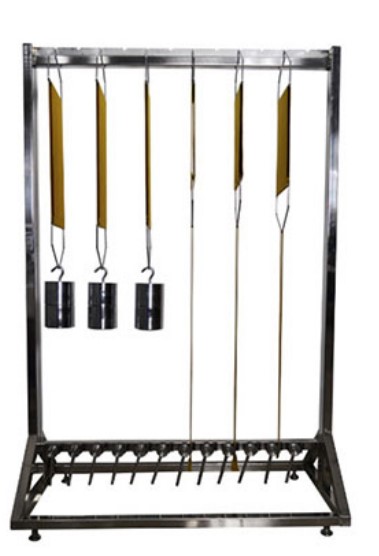
Stretch Recovery Tester Static Method
Stretch Recovery Tester – Static Method | ASTM D3107 / D2594 | Ready Stock Bangladesh
Product Introduction
The Stretch Recovery Tester – Static Method is a professional textile laboratory testing instrument designed to evaluate the stretch and recovery properties of elastic fabrics, knitted fabrics, stretch garments, ribbons and other extensible textile materials. The tester is suitable for Textile Testing Laboratories, Garment Factories, Fabric Manufacturers, QA/QC Departments, R&D Laboratories and Academic Textile Laboratories. ASTM D3107 / ASTM D2594 | Ready Stock in Bangladesh | Quick Delivery | Local SupportWhy Choose This Stretch Recovery Tester?
- Ready Stock in Bangladesh
- Suitable for textile and garment testing laboratories
- Designed for stretch and recovery evaluation
- Suitable for elastic and stretchable textile materials
- Applicable to relevant ASTM testing methods
- Easy laboratory operation
- Compact and practical testing equipment
- Competitive price in Bangladesh
- Quick local delivery
- Local sales and technical support from MAAM TEX
Testing Standards
The Stretch Recovery Tester is suitable for testing requirements related to:- ASTM D3107 – Stretch Properties of Fabrics
- ASTM D2594 – Stretch Properties of Knitted Fabrics
Scope of Application
This equipment can be used for testing:- Stretch Fabrics
- Knitted Fabrics
- Elastic Fabrics
- Stretch Garments
- Sportswear Fabrics
- Elastic Ribbons
- Hosiery Materials
- Textile Materials with Stretch Properties
Suitable For
- Textile Testing Laboratories
- Garment Manufacturing Industries
- Knitwear Factories
- Fabric Mills
- Sportswear Manufacturers
- Elastic Fabric Manufacturers
- Quality Control Laboratories
- R&D Laboratories
- Third-Party Testing Laboratories
- Textile Universities & Institutes
Key Advantages
Ready Stock in Bangladesh
No need to wait for overseas import. This product is available from MAAM TEX stock in Bangladesh, subject to current stock availability.Quick Delivery
Local stock enables faster delivery compared with normal import-based supply.Competitive Price
MAAM TEX provides competitive quotations for textile laboratory testing equipment.Local Support
Professional sales and after-sales support are available for customers in Bangladesh.Laboratory Suitable
A practical solution for routine quality control, product development and textile testing applications.Frequently Asked Questions
What is a Stretch Recovery Tester?
A Stretch Recovery Tester is a textile laboratory instrument used to evaluate the ability of a fabric or elastic textile material to stretch and recover after the application and removal of a specified load or extension.What standards are applicable?
The equipment is intended for testing requirements associated with ASTM D3107 and ASTM D2594, depending on the material and test method.Who needs a Stretch Recovery Tester?
Textile mills, garment factories, knitwear manufacturers, fabric manufacturers, QA/QC laboratories, R&D departments and textile testing laboratories can use this equipment.Is this machine available in Bangladesh?
Yes. MAAM TEX offers this Stretch Recovery Tester from stock in Bangladesh, subject to current availability.Can I get a quotation?
Yes. Contact MAAM TEX for the latest price, stock confirmation, delivery information and quotation.Ready Stock – Bangladesh
No Need to Wait for Import
Stretch Recovery Tester – Static Method Ready Stock | Competitive Price | Quick Delivery | Local Support For current stock status and quotation, please contact MAAM TEX.Call to Action
Looking for a Stretch Recovery Tester in Bangladesh? Get the Stretch Recovery Tester – Static Method from MAAM TEX with ready-stock availability, competitive pricing and local support. Contact MAAM TEX today for Price & Stock Confirmation.Stretch Recovery Tester Static Method
Stretch Recovery Tester
- A sample is stretched to a predetermined extension or force.
- The stretch is maintained for a set period.
- After removing the load, the recovery (return to original length) is measured after a fixed time.
- The fabric sample is clamped and stretched to a specific length or force.
- It’s held for a fixed duration (e.g., 1–5 minutes).
- The tension is released, and the sample is allowed to recover.
- The recovered length is measured after a set time.


Stretch Recovery Tester

Color Matching Cabinet-Light Box
Color Matching Cabinet-Light Box
Color Matching Cabinet-Light Box

Bursting strength tester
Bursting strength tester

true burst
- Available with automatic test strip feeder Measurements are simple to make with the Mullen type Bursting Strength Tester. Fast automatic measurements Measurement starts automatically once a test piece has been placed in the measuring gap. The clamping foot descends, and a bursting strength measurement is made.
- Bursting pressure can reach up to 1.2MPa 5. The maximum burst and expansion degree can reach 70mm. 6. Strengthen the lighting system on the test surface. 7. The main aerodynamic force helps to clamp the sample system. 8. A variety of test areas are available, and the switching is easy.
- A variety of unit conversions between Chinese and English. 10. Reliable anti-pinch safety protection design. [Technical parameter]: 1. Test range: (0~1)Mpa (the range above 1Mpa needs to be customized) 2. The minimum graduation value: 0.0001Mpa 3. Pressurization mode: direct pressurization, timing pressurization, and expansion degree pressurization.

Random Tumble Pilling Tester
Random Tumble Pilling Tester
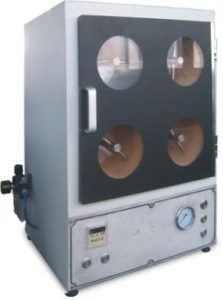
Random Tumble Pilling Tester
- Multiple Test Chambers - Typically comes with 2 or 4 cork-lined chambers for simultaneous testing of multiple fabric samples.
- High-Speed Rotating Impellers - Impellers rotate at around 1200 rpm to create intense, random tumbling motion.
- Compressed Air System - Ensures continuous fabric movement and realistic simulation of wear.
- Digital Timer- Allows precise setting of test duration with easy-to-read display.
- Viewing Windows- Transparent chamber doors for monitoring fabric movement during testing.
- Standard Compliant Design- Meets ASTM D3512, ISO 12945-3, GB/T 4802.4 and other major standards.
- Robust Construction- Durable materials and components designed for long-term laboratory use.
- Easy Sample Handling - Quick-open chamber lids and simple sample placement process.
- Compact Footprint- Saves space in laboratory environments.
- Prepare Samples- Cut fabric into standard-sized specimens (usually circular or rectangular per ASTM/ISO specs)- Condition samples as per the standard (usually 24 hrs at 21°C, 65% RH).
- Load the Chambers - Place each sample into a cork-lined test chamber. - Add a small piece of gray cotton backing fabric if required by the method.
- Set Parameters - Adjust compressed air pressure (typically 14–21 kPa or 2–3 psi).
- Start the Test- Close the chamber doors and press start. - Impellers rotate, tumbling the samples randomly with air flow.
- Stop and Unload - Once the timer ends, remove the samples carefully.
- Evaluate Pilling - Compare the tested samples to standard pilling rating photographs or scales.
- Record Results - Document the pilling grades and any observations.
 [Scope of application]:
It is used to test the fuzzing and pilling
performance of the fabric under the condition of
free rolling and friction in the drum.
[Related standards]:
GB/T4802.4 (Standard Drafting Unit)
ISO12945.3, ASTM D3512, ASTM D1375, DIN 53867, ISO 12945-3, JIS L1076, etc.
[Technical parameter]:
1. Number of boxes: 4
2. Roller specifications: diameter (146±1.0) mm, depth (152.4±1.0) mm;
3. Lining material: polychloroprene lining thickness (3.2±0.4) mm. , Hardness (60~70)
IRHD;
4. Impeller specifications: φ12.7 mm×120.6 mm;
5. Plastic blade specifications: 10 mm×65 mm;
6. Rotation speed: 1~2400 rpm can be set freely
7. Working pressure: 14kPa~21kPa;
8. Time counting: (1~999) min.
9. Power supply: AC220V±10% 50Hz 80W
10. Appearance: (480×400×680)mm
11. Weight: 40kg
[Standard accessories]
Items and specifications Qty. Note
Fuse 2 3A
Main machine 1
Power cable 1
Air tube 1 Φ8mm
Grey cotton sliver 4
Cork lining 4
Rating sample photo 1
White glue 1
[Scope of application]:
It is used to test the fuzzing and pilling
performance of the fabric under the condition of
free rolling and friction in the drum.
[Related standards]:
GB/T4802.4 (Standard Drafting Unit)
ISO12945.3, ASTM D3512, ASTM D1375, DIN 53867, ISO 12945-3, JIS L1076, etc.
[Technical parameter]:
1. Number of boxes: 4
2. Roller specifications: diameter (146±1.0) mm, depth (152.4±1.0) mm;
3. Lining material: polychloroprene lining thickness (3.2±0.4) mm. , Hardness (60~70)
IRHD;
4. Impeller specifications: φ12.7 mm×120.6 mm;
5. Plastic blade specifications: 10 mm×65 mm;
6. Rotation speed: 1~2400 rpm can be set freely
7. Working pressure: 14kPa~21kPa;
8. Time counting: (1~999) min.
9. Power supply: AC220V±10% 50Hz 80W
10. Appearance: (480×400×680)mm
11. Weight: 40kg
[Standard accessories]
Items and specifications Qty. Note
Fuse 2 3A
Main machine 1
Power cable 1
Air tube 1 Φ8mm
Grey cotton sliver 4
Cork lining 4
Rating sample photo 1
White glue 1

Counting Balance-Weighing Scale
Counting Balance-Weighing Scale
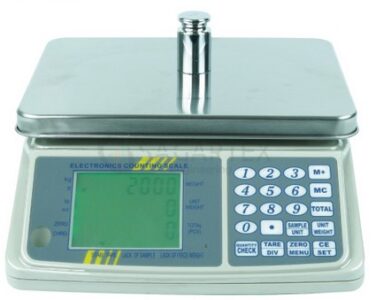
Counting Balance-Weighing Scale
Counting Balance-Weighing Scale

Fabric air permeability tester
Fabric Air Permeability Tester

Fabric air permeability tester
- Accurate Breathability Measurement - Precisely measures how breathable a fabric is, essential for comfort and performance.
- Supports Quality Control - Ensures consistent air permeability in fabric batches, critical for products like PPE, sportswear, and filters.
- Enhances Product Design - Helps in selecting or engineering fabrics with the right airflow properties for specific uses.
- Standard Compliance - Conforms to international testing standards (e.g., ASTM D737, ISO 9237), ensuring global credibility.
- Quick and Reliable Testing - Provides rapid results, increasing lab efficiency and production decision-making speed.
- Wide Material Compatibility - Suitable for woven, nonwoven, knitted fabrics, and even paper or coated materials.
- Improves Functional Performance - Helps optimize products for ventilation, moisture control, and thermal comfort.
- Reduces Product Failure - Identifies underperforming fabrics early, minimizing risks in high-performance applications.
- Digital Display - Shows air permeability readings clearly in units like L/m²/s or cm³/cm²/s.
- Precise Test Head/Clamp - Provides an airtight seal to prevent air leakage and ensure accurate results.
- Adjustable Pressure Settings - Allows testing under various pressure drops (e.g., 10–2500 Pa), depending on fabric type.
- Automatic Airflow Measurement - Built-in sensors or flow meters capture airflow rate automatically for quick analysis.
- Multiple Test Area Sizes - Interchangeable test plates to match different sample sizes and standard requirements.
- Data Logging and Export - Some models include USB or software connectivity for storing and exporting test results.
- Standard Compliance - Conforms to ASTM D737, ISO 9237, BS 5636, DIN 53887, etc.
- Robust Construction - Built with corrosion-resistant materials and durable components for long-term lab use.
- Low Maintenance - Simple cleaning and calibration process for reliable performance.
- Compact and User-Friendly Design - Ideal for lab benches and easy operation with minimal training.
- Prepare the Sample - Cut the fabric sample to the required size (usually circular, e.g., 20 cm²).
- Mount the Sample - Place the fabric securely in the test clamp or holder, ensuring no wrinkles or gaps.
- Set Test Parameters - Adjust the air pressure drop according to the fabric type or standard (e.g., 100 Pa).
- Start the Test - Turn on the air supply and start the airflow through the fabric.
- Read the Measurement - The digital display will show the air permeability value in the selected units.
- Record the Results - Note the readings or export data if the device supports it.
- Repeat if needed - Test multiple samples or areas for accuracy and average the results.
- Clean and Maintain - After testing, clean the clamp and ensure the device is calibrated regularly.
 r Permeability Tester
Appliance Range
It is used to TEST the air permeability of various textile fabrics, including industrial fabrics, nonwoven fabrics and other textile products and other breathable materials.
Related Standards
GB / T 5453, GB / T 13764, ISO 9237, ISO 5636, ASTM D737, etc.
Instrument characteristics
1. Automatic sample clamping, automatic nozzle replacement, and quick test.
2. Microcomputer processing, the test results are displayed directly, without manual table calculation;
3. Built-in continuous test mode, the test unit can be switched as needed.
4. Chinese LCD menu operation, configure computer interface.
Technical parameter
1. Range of sample pressure difference: 1 ~ 4000Pa
2. Measurable air permeability: 1 ~ 40,000mm / s
3. Measurement error: ≤ ± 2%
4. Measurable fabric thickness: ≤8mm
5. Test area: 5cm2; 20cm2; 50cm2; 100cm2
Ф50mm (≈19.6cm2)
Ф70mm (≈38.5cm2)
6. Nozzles: 11 in total (automatic replacement of digital setting)
CODE 00 01 02 03 04 05 06 07 08 09 10
DIAφ(mm)
0.8 1.2 2 3 4 6 8 10 12 16 20
7.Data Capacity:≤200 times tests
8.Power Supply:AC220V 50Hz 2KW
9.Weight:80Kg
10.Shape:1250×700×1250mm
r Permeability Tester
Appliance Range
It is used to TEST the air permeability of various textile fabrics, including industrial fabrics, nonwoven fabrics and other textile products and other breathable materials.
Related Standards
GB / T 5453, GB / T 13764, ISO 9237, ISO 5636, ASTM D737, etc.
Instrument characteristics
1. Automatic sample clamping, automatic nozzle replacement, and quick test.
2. Microcomputer processing, the test results are displayed directly, without manual table calculation;
3. Built-in continuous test mode, the test unit can be switched as needed.
4. Chinese LCD menu operation, configure computer interface.
Technical parameter
1. Range of sample pressure difference: 1 ~ 4000Pa
2. Measurable air permeability: 1 ~ 40,000mm / s
3. Measurement error: ≤ ± 2%
4. Measurable fabric thickness: ≤8mm
5. Test area: 5cm2; 20cm2; 50cm2; 100cm2
Ф50mm (≈19.6cm2)
Ф70mm (≈38.5cm2)
6. Nozzles: 11 in total (automatic replacement of digital setting)
CODE 00 01 02 03 04 05 06 07 08 09 10
DIAφ(mm)
0.8 1.2 2 3 4 6 8 10 12 16 20
7.Data Capacity:≤200 times tests
8.Power Supply:AC220V 50Hz 2KW
9.Weight:80Kg
10.Shape:1250×700×1250mm 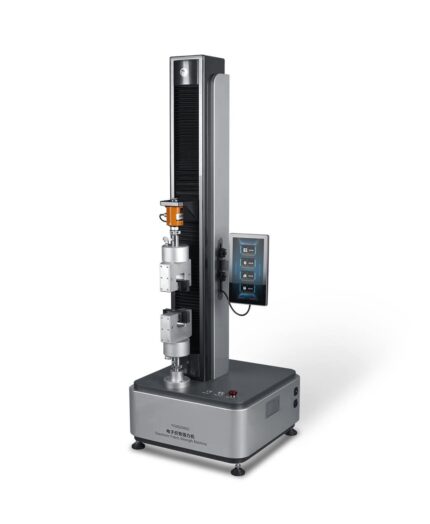
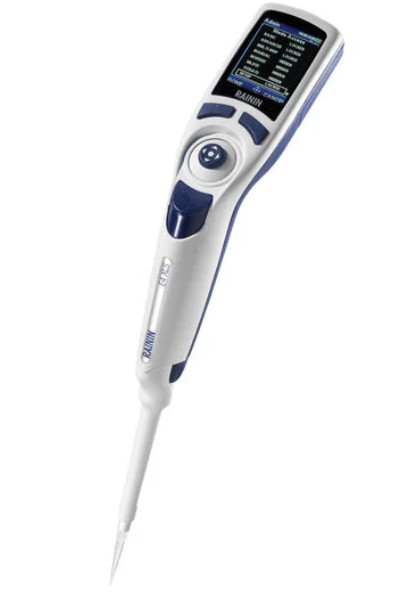
Rainin Digital Pipette
Rainin Digital Pipette
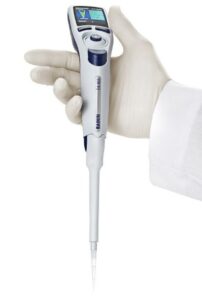
Digital Pipette
- Digital Volume Setting
- High Accuracy and Precision
- Ergonomic Design
- Easy Calibration and Maintenance
- Durable and Chemically Resistant - Built with high-quality materials that resist damage from chemicals and frequent use.
- Models and Volume Ranges - Available in single-channel and multi-channel versions.
- LTS (LiteTouch System) - Many Rainin pipettes use the LTS tip system which reduces tip ejection force and ensures a consistent seal.
- Compliance and Traceability - Some digital models offer data storage or integration with lab information systems for traceability.
- High Accuracy and Precision - Ensures reliable and reproducible results, essential for sensitive experiments.
- Digital Volume Control - Reduces human error with easy and precise volume setting via digital interface.
- Ergonomic Design- Minimizes hand strain and fatigue during prolonged use; ideal for repetitive pipetting tasks.
- LiteTouch System (LTS) - Eases tip attachment and ejection, reducing risk of RSI (Repetitive Strain Injury) and improving comfort.
- Versatile Volume Range - Available in multiple models to handle volumes from microliters to milliliters.
- Durable and Reliable - Built with high-quality materials for long life and resistance to chemicals and frequent use.
- Easy Maintenance and Calibration - Simplified calibration and cleaning ensure long-term performance and compliance.
- Data Integrity and Traceability -Some models store data, supporting audit trails and regulatory compliance.
- Enhanced Productivity - Quick setup, easy operation, and consistent performance speed up lab workflows.
- Digital Volume Adjustment - Precise and easy-to-read digital display for accurate volume setting.
- High Precision and Accuracy- Delivers consistent results, meeting ISO and GLP/GMP standards.
- Ergonomic Design- Lightweight, balanced with low plunger and tip ejection force to reduce fatigue.
- LiteTouch Tip Ejection System (LTS) - Reduces tip attachment/ejection force, improving comfort and consistency.
- Durable Construction - Built with high-quality, chemically resistant materials for long-term use.
- Wide Volume Range - Available in multiple models from 0.1 µL to 10 mL.
- Single-Channel and Multi-Channel Options - Suitable for various applications including high-throughput assays.
- Autoclavable Components- Some parts can be autoclaved for sterilization and contamination control.
- Easy Calibration and Maintenance - User-friendly calibration settings with accessible parts for cleaning.
- Optional Electronic Models - Some versions include programmable features, multiple modes (e.g., reverse pipetting), and memory storage.

