

 Products
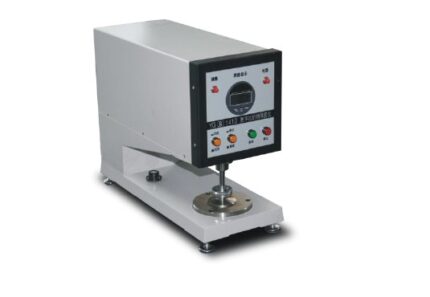
 Martindale abrasion tester Updated
0%



Down Feather Fill tester Powerful & Accurate
$0.00
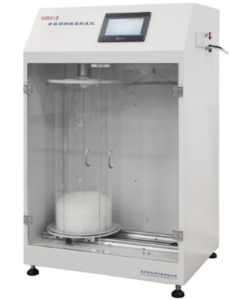
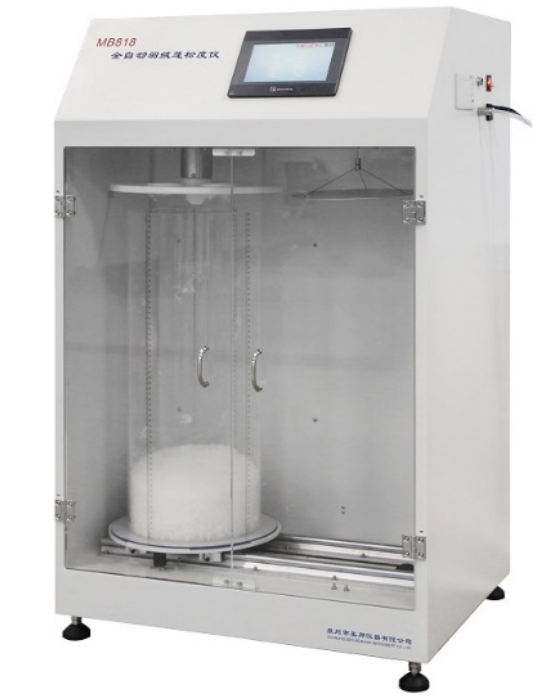
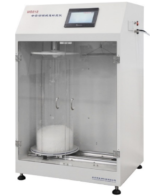
MB818 Automated Filling Power Meter for Down & Feather Fill Power Testing
Down Feather Fill tester Powerful & Accurate 1
Down Feather Fill Power Test Machine MB818 is a powerful and accurate automated testing instrument designed to measure the fill power of down, feather, and other filling materials. The machine provides reliable test results for quality control and laboratory testing in textile, garment, bedding, and down-product industries.
The Down Feather Fill tester Powerful & Accurate 1 is designed to support internationally recognized testing methods and provides convenient operation with an LCD control panel, automatic measurement, selectable testing units, and printer connectivity.
The Down Feather Fill Power Test Machine is an advanced laboratory testing instrument designed to determine the filling power of down, feather and other filling materials. The MB818 Automated Filling Power Meter measures the volume occupied by a specified amount of filling material under controlled testing conditions. Fill Power is an important quality parameter used to evaluate the approximate insulation performance and lofting characteristics of down and feather fillings.
The MB818 is suitable for textile laboratories, garment testing laboratories, bedding manufacturers, down and feather processors, quality control departments and research & development facilities. The instrument supports major international testing methods including IDFB-FP, JIS L1903, GB/T 14272 and BS EN 12130.
Product Overview
The MB818 Automated Filling Power Meter features an automated testing system, adjustable sinking speed, controlled air volume and adjustable air blowing time. It is designed to provide convenient and repeatable testing of down and feather filling materials.
The instrument incorporates a strong metal housing, adjustable rubber feet, removable testing-bin and movable testing-bin plate. A built-in blower helps loosen and prepare the test material before measurement. The LCD control panel provides convenient operation and monitoring of the testing process.
Different measuring units can be selected according to the applicable testing method, including mm, cm, l/kg, cubic inch and Japanese standard units. The instrument can also be connected to a printer for test-result documentation.
What is Fill Power of Down Feather Fill tester Powerful & Accurate 1
Fill Power is a volumetric measurement commonly used for down and feather filling materials. It indicates the volume occupied by a specific mass of filling material under defined testing conditions.
Higher-quality down generally has greater lofting ability and can occupy a larger volume with the same mass of material. Therefore, fill power is an important parameter when evaluating down and feather filling materials used in insulated garments, quilts, comforters, sleeping bags and other products.
Accurate measurement of fill power helps manufacturers and laboratories maintain consistent product quality and compare different filling materials under standardized conditions.
Scope of Application
The MB818 Down Feather Fill Power Test Machine is suitable for testing:
- Down filling materials
- Feather filling materials
- Down and feather blends
- Filling materials used in garments
- Quilt and comforter fillings
- Sleeping bag filling materials
- Bedding insulation materials
- Other suitable textile filling materials
It can be used for incoming material inspection, production quality control, laboratory testing, product development and research.
Standard Features of Down Feather Fill tester Powerful & Accurate 1
The MB818 Automated Filling Power Meter provides a combination of automated operation and flexible testing control.
Key features include:
- Modern and professional instrument design
- Strong metal housing
- Adjustable rubber feet for stability
- Movable testing-bin plate
- Removable testing-bin
- Built-in blower for loosening test material
- Adjustable sinking speed
- Adjustable air volume
- Adjustable air blowing time
- Multiple selectable measuring units
- LCD control panel
- Printer connection
- Suitable for laboratory quality control
- Supports multiple international testing methods
Technical Specification of Down Feather Fill tester Powerful & Accurate 1
| Parameter | Specification |
|---|---|
| Model | MB818 |
| Product Type | Automated Filling Power Meter |
| Brand | MEBON |
| Origin | China |
| Sinking Speed | 0–1000 mm/min, adjustable |
| Air Volume | 2–40 l/s, adjustable |
| Air Blowing Time | 0:00–99:59 min, adjustable |
| IDFB-FP Cylinder | Ø288 mm × Minimum 500 mm |
| JIS L1903 Cylinder | Ø290 mm × Minimum 600 mm, Optional |
| GB/T 14272 Cylinder | Ø240 mm × 750 mm, Optional |
| Dimensions | 450 × 500 × 1250 mm |
| Power Supply | 220V, 50Hz / 110V, 60Hz |
| Weight | Approx. 75 kg |
| Control Panel | LCD |
| Printer Connection | Available |
Testing Standards of Down Feather Fill tester Powerful & Accurate 1
The MB818 Down Feather Fill Power Test Machine is designed to support major international testing standards and methods, including:
IDFB-FP
The IDFB-FP method is used for determining the filling power of down and feather materials under specified test conditions.
JIS L1903
The instrument can be configured with an optional testing cylinder for the JIS L1903 method.
GB/T 14272
An optional testing cylinder is available for testing according to GB/T 14272 requirements.
BS EN 12130
BS EN 12130 – Feather and Down – Test Methods – Determination of the Filling Power (Massic Volume) provides a standardized method for determining the filling power of feather and down materials.
Applications of Down Feather Fill tester Powerful & Accurate 1
The MB818 can be used in a wide range of textile and filling-material testing applications.
Down and Feather Industry
The machine can be used to evaluate the filling power of raw and processed down and feather materials before they are used in finished products.
Garment Industry
Manufacturers of down jackets and insulated garments can use fill power testing to evaluate filling materials and maintain consistent product quality.
Bedding Industry
The MB818 is suitable for testing fillings used in quilts, comforters, pillows and other bedding products.
Sleeping Bags
Fill power is an important characteristic of insulation materials used in sleeping bags. The MB818 can assist manufacturers in evaluating filling performance.
Textile Laboratories
Testing laboratories can use the instrument for routine quality control, material comparison, product development and research.
Advantages of Down Feather Fill tester Powerful & Accurate 1
The MB818 offers several practical advantages for laboratory and production testing.
Automated Testing:
The automated design reduces manual operations and makes the testing procedure convenient for laboratory users.
Adjustable Testing Parameters:
Sinking speed, air volume and blowing time can be adjusted according to testing requirements.
Built-in Blower:
The integrated blower helps loosen the filling material before measurement, supporting consistent sample preparation.
Multiple Measuring Units:
Users can select different measurement units such as mm, cm, l/kg and cubic inch, including Japanese standard units.
International Standard Support:
The machine supports testing methods associated with IDFB-FP, JIS L1903, GB/T 14272 and BS EN 12130.
Strong Construction:
The metal housing and adjustable rubber feet provide a stable structure suitable for laboratory use.
Easy Operation:
The LCD control panel provides convenient operation and monitoring of test parameters.
Printer Connectivity:
The instrument can be connected to a printer for documentation and reporting of test results.
Standard Accessories of Down Feather Fill tester Powerful & Accurate 1
The standard supply includes:
- Main Unit – 01 No.
- IDFB-FP Testing Kit – 01 No.
- Power Cord – 01 No.
- User’s Manual – 01 No.
- Inspection & Conformance Certificate – 01 No.
Optional Testing Kits:
JIS L1903 and GB/T 14272 testing cylinders are available as optional configurations according to the required testing method.
Why Choose a Down Feather Fill tester Powerful & Accurate 1
Accurate fill power measurement is important for manufacturers and laboratories working with down and feather products. Manual or inconsistent testing can make it difficult to compare materials and maintain consistent quality.
A dedicated Down Feather Fill Power Test Machine provides controlled testing conditions and adjustable parameters for laboratory evaluation. The MB818 combines automated operation, adjustable testing conditions, multiple measurement units and support for international testing methods in one laboratory instrument.
For companies producing down garments, quilts, bedding, sleeping bags or other insulated products, fill power testing can support raw-material inspection, quality assurance and product development.
Suitable for Textile Quality Control
The Down Feather Fill tester Powerful & Accurate is suitable for both laboratory and quality-control environments. Its compact footprint, strong metal construction and user-friendly LCD control panel make it practical for textile testing laboratories and production quality-control departments.
The Down Feather Fill tester Powerful & Accurate machine can be used alongside other textile laboratory instruments to establish a complete quality-control system for down and feather products.
Product Summary of Down Feather Fill tester Powerful & Accurate 1
The Down Feather Fill tester Powerful & Accurate is a professional Automated Filling Power Meter for determining the filling power of down, feather and other suitable filling materials. With adjustable sinking speed, air volume and blowing time, the instrument provides flexible testing conditions for different applications.
With support for IDFB-FP, JIS L1903, GB/T 14272 and BS EN 12130, the MB818 is suitable for textile laboratories, down and feather manufacturers, garment factories, bedding manufacturers, sleeping-bag manufacturers, quality-control departments and research facilities.
Product: Down Feather Fill Power Test Machine Powerful & Accurate
Model: MB818
Brand: MEBON
Origin: China
Main Application: Down & Feather Fill Power Testing
Website: MAAM TEX www.maamtexbd.com – Textile Testing & Laboratory Equipment
https://maamtexbd.com/product/down-feather-fill-power-test-machine/
www.facebook.com/maamtex
Description
Shipping & Delivery
Related products

Random Tumble Pilling Tester
Random Tumble Pilling Tester
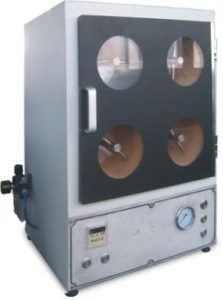
Random Tumble Pilling Tester
- Multiple Test Chambers - Typically comes with 2 or 4 cork-lined chambers for simultaneous testing of multiple fabric samples.
- High-Speed Rotating Impellers - Impellers rotate at around 1200 rpm to create intense, random tumbling motion.
- Compressed Air System - Ensures continuous fabric movement and realistic simulation of wear.
- Digital Timer- Allows precise setting of test duration with easy-to-read display.
- Viewing Windows- Transparent chamber doors for monitoring fabric movement during testing.
- Standard Compliant Design- Meets ASTM D3512, ISO 12945-3, GB/T 4802.4 and other major standards.
- Robust Construction- Durable materials and components designed for long-term laboratory use.
- Easy Sample Handling - Quick-open chamber lids and simple sample placement process.
- Compact Footprint- Saves space in laboratory environments.
- Prepare Samples- Cut fabric into standard-sized specimens (usually circular or rectangular per ASTM/ISO specs)- Condition samples as per the standard (usually 24 hrs at 21°C, 65% RH).
- Load the Chambers - Place each sample into a cork-lined test chamber. - Add a small piece of gray cotton backing fabric if required by the method.
- Set Parameters - Adjust compressed air pressure (typically 14–21 kPa or 2–3 psi).
- Start the Test- Close the chamber doors and press start. - Impellers rotate, tumbling the samples randomly with air flow.
- Stop and Unload - Once the timer ends, remove the samples carefully.
- Evaluate Pilling - Compare the tested samples to standard pilling rating photographs or scales.
- Record Results - Document the pilling grades and any observations.
 [Scope of application]:
It is used to test the fuzzing and pilling
performance of the fabric under the condition of
free rolling and friction in the drum.
[Related standards]:
GB/T4802.4 (Standard Drafting Unit)
ISO12945.3, ASTM D3512, ASTM D1375, DIN 53867, ISO 12945-3, JIS L1076, etc.
[Technical parameter]:
1. Number of boxes: 4
2. Roller specifications: diameter (146±1.0) mm, depth (152.4±1.0) mm;
3. Lining material: polychloroprene lining thickness (3.2±0.4) mm. , Hardness (60~70)
IRHD;
4. Impeller specifications: φ12.7 mm×120.6 mm;
5. Plastic blade specifications: 10 mm×65 mm;
6. Rotation speed: 1~2400 rpm can be set freely
7. Working pressure: 14kPa~21kPa;
8. Time counting: (1~999) min.
9. Power supply: AC220V±10% 50Hz 80W
10. Appearance: (480×400×680)mm
11. Weight: 40kg
[Standard accessories]
Items and specifications Qty. Note
Fuse 2 3A
Main machine 1
Power cable 1
Air tube 1 Φ8mm
Grey cotton sliver 4
Cork lining 4
Rating sample photo 1
White glue 1
[Scope of application]:
It is used to test the fuzzing and pilling
performance of the fabric under the condition of
free rolling and friction in the drum.
[Related standards]:
GB/T4802.4 (Standard Drafting Unit)
ISO12945.3, ASTM D3512, ASTM D1375, DIN 53867, ISO 12945-3, JIS L1076, etc.
[Technical parameter]:
1. Number of boxes: 4
2. Roller specifications: diameter (146±1.0) mm, depth (152.4±1.0) mm;
3. Lining material: polychloroprene lining thickness (3.2±0.4) mm. , Hardness (60~70)
IRHD;
4. Impeller specifications: φ12.7 mm×120.6 mm;
5. Plastic blade specifications: 10 mm×65 mm;
6. Rotation speed: 1~2400 rpm can be set freely
7. Working pressure: 14kPa~21kPa;
8. Time counting: (1~999) min.
9. Power supply: AC220V±10% 50Hz 80W
10. Appearance: (480×400×680)mm
11. Weight: 40kg
[Standard accessories]
Items and specifications Qty. Note
Fuse 2 3A
Main machine 1
Power cable 1
Air tube 1 Φ8mm
Grey cotton sliver 4
Cork lining 4
Rating sample photo 1
White glue 1
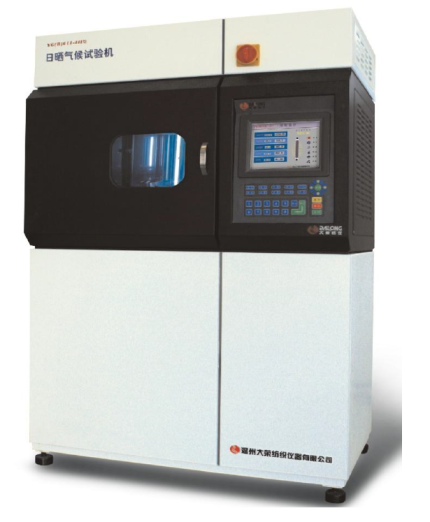

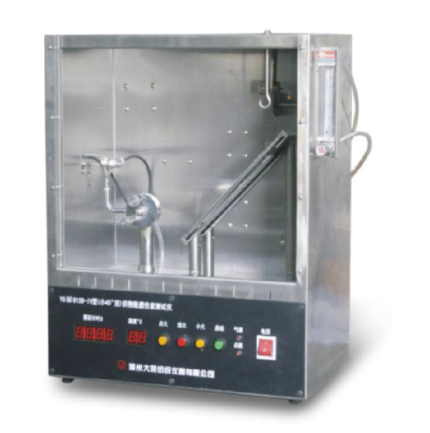
Fabric flame retardant tester
Fabric Flame Retardant Tester
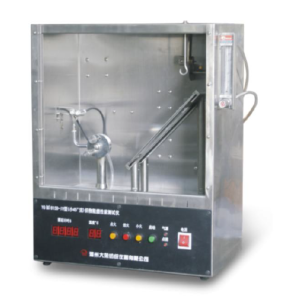
Fabric Flame Retardant Tester
- Sample Preparation: A fabric specimen is cut to specified dimensions and conditioned as per standard requirements.
- Mounting: The sample is mounted vertically or at a specified angle in the testing chamber.
- Ignition: A controlled flame is applied to the fabric for a predetermined time.
- Observation: The tester records ignition time, flame spread, after-flame time, and afterglow time.
- Evaluation: Results are compared against standard criteria to determine compliance.
- Prepare the Sample
- Mount the Sample
- Set Up the Burner Position the burner at the required angle (usually 90° for vertical tests).
- Ignite the Flame - Apply the flame to the bottom edge of the fabric for 12 seconds.
- Observe and Measure - Start timing when flame is applied.
- Record the Results
- Compare with Standards
 burning of flammable textile materials after ignition.
(specific ignition nozzles and sample holders can be customized to meet multiple criteria).
Related standards
GB/T14644 ASTM D1230 CFR1610 etc.
Technical parameters
1. The spread of time:0 ~ 999.9S resolution 0.1S
2. The temperature inside the box shows:Room temperature -99 degrees C resolution 1 c
3. Igniting time:1S
4. Type of igniter:4 1/2 syringe
5. Sample clip size:Outer frame:204mm * 78mm inner frame:152mm×38mm
6. Distance from the top of the igniter to the sample surface:8mm
7. Studio size and outline size
Studio size:370mm×220mm×350mm
Outline size:375mm×245mm×478mm
8. Power supply:AC220V 50Hz 20W
9. Weight:18Kg
burning of flammable textile materials after ignition.
(specific ignition nozzles and sample holders can be customized to meet multiple criteria).
Related standards
GB/T14644 ASTM D1230 CFR1610 etc.
Technical parameters
1. The spread of time:0 ~ 999.9S resolution 0.1S
2. The temperature inside the box shows:Room temperature -99 degrees C resolution 1 c
3. Igniting time:1S
4. Type of igniter:4 1/2 syringe
5. Sample clip size:Outer frame:204mm * 78mm inner frame:152mm×38mm
6. Distance from the top of the igniter to the sample surface:8mm
7. Studio size and outline size
Studio size:370mm×220mm×350mm
Outline size:375mm×245mm×478mm
8. Power supply:AC220V 50Hz 20W
9. Weight:18Kg

GSM Cutter with Balance
GSM Cutter with Balance

GSM Cutter with Balance

Fabric Stiffness Tester
Fabric Stiffness Tester

Fabric Stiffness Tester
- Accurate Measurement of Flexibility - Provides reliable data on fabric stiffness, essential for quality control and product development.
- Improves Product Comfort - Helps assess how soft or rigid a fabric will feel in clothing or furnishings.
- Supports Material Selection - Aids designers and engineers in choosing the right fabric for specific applications based on stiffness.
- Quality Assurance - Detects fabric inconsistencies or defects that affect handling or drape.
- Standards Compliance - Enables testing as per international standards like ASTM D1388 and ISO 9073-7 for global product approval.
- Quick and Simple Operation - Delivers fast results with minimal operator training or preparation.
- Applicable to Multiple Materials - Suitable for woven, nonwoven, knitted fabrics, paper, and films.
- Enhances R&D Accuracy - Supports consistent material testing during product innovation and textile finishing.
- Graduated Measurement Scale - Precise scale to measure overhang length for accurate stiffness calculation.
- Flat Test Platform - Smooth, level surface ensures consistent and reliable fabric movement.
- Standard Deflection Angle Guide - Built-in 41.5° angle reference for consistent stiffness testing (per ASTM/ISO).
- Manual or Motorized Models - Available in both types for simple or automated operation depending on lab needs.
- Compact Design - Space-saving unit ideal for textile labs and quality control rooms.
- Sample Holder or Clamp - Ensures correct alignment and smooth feeding of fabric strips during testing.
- Durable Construction - Made of corrosion-resistant materials like stainless steel or aluminum for long-term use.
- Compliance with Standards - Supports methods like ASTM D1388, ISO 9073-7 for stiffness testing of fabrics.
- Lightweight and Portable - Easy to move and use in various lab settings.
- Low Maintenance - Simple mechanical parts require minimal servicing.
- Prepare the Sample - Cut the fabric into a rectangular strip (e.g., 25 mm × 200 mm), as per standard.
- Place the Sample - Lay the fabric strip flat on the test platform with one end aligned at the zero mark.
- Slide the Fabric - Gently push the fabric forward so it slowly overhangs the platform.
- Watch for Deflection - Stop sliding when the free end of the fabric bends down to the reference angle (typically 41.5°).
- Read the Bending Length - Measure the overhang distance from the scale. This is the bending length (C).
- Calculate Flexural Rigidity
- Repeat for Accuracy - Test both warp and weft directions and average the results for better accuracy.
 Scope of application
It is used to measure the stiffness of cotton,
wool, silk, linen, chemical fibers and other woven fabrics,
knitted fabrics, general nonwovens, coated fabrics, etc.
It is also suitable for measuring the stiffness of paper,
leather, film and other flexible materials.
Relevant Standards
GB/T 18318, ASTM D 1388, IS09073-7, BS EN22313 etc.
[Instrument Characteristics]
1. Infrared photoelectric invisible inclined plane
detection system replaces the traditional tangible inclined plane,
realizes non-contact detection, and overcomes the problem that
the measurement accuracy is affected by
the sample torsion lifted by the inclined plane.
2. The inclination adjustable mechanism of instrument
measurement to meet different test requirements.
3. Stepping motor drive, accurate measurement, smooth operation;
4. The color touch screen display can show the extended length,
bending length, bending stiffness of the sample, the warp average,
the weft average and the total average of the above values respectively.
5. Printing of Chinese report forms for thermal printers.
Technical parameters
1. Test methods: The two method (A method: Weft test, B method: Forward and backward test)
2. Measurement angle:41.5 degree, 43 degree and 45 degree adjustable
3. Extend the length range:5-220 mm (special requirements can be made at the time of ordering)
4. Length resolution:0.01mm
5. Measurement accuracy:±0.1mm
6. Specimen specifications:250×25mm
7. Work platform specifications:250×50mm
8. Specification of sample pressing plate:250×25mm
9. Pushing speed of press plate:3 mm/s; 4 mm/s; 5 mm/s
10. Display output: Touch screen display
11. Print Output: Chinese Report
12. Data Processing Volume: A total of 15 groups, each group less than 20 trials
13. Printer: Thermal printer
14, power supply:AC220V 50Hz
15. Host volume:570mm×360mm×490mm
16. Host weight:20kg
Scope of application
It is used to measure the stiffness of cotton,
wool, silk, linen, chemical fibers and other woven fabrics,
knitted fabrics, general nonwovens, coated fabrics, etc.
It is also suitable for measuring the stiffness of paper,
leather, film and other flexible materials.
Relevant Standards
GB/T 18318, ASTM D 1388, IS09073-7, BS EN22313 etc.
[Instrument Characteristics]
1. Infrared photoelectric invisible inclined plane
detection system replaces the traditional tangible inclined plane,
realizes non-contact detection, and overcomes the problem that
the measurement accuracy is affected by
the sample torsion lifted by the inclined plane.
2. The inclination adjustable mechanism of instrument
measurement to meet different test requirements.
3. Stepping motor drive, accurate measurement, smooth operation;
4. The color touch screen display can show the extended length,
bending length, bending stiffness of the sample, the warp average,
the weft average and the total average of the above values respectively.
5. Printing of Chinese report forms for thermal printers.
Technical parameters
1. Test methods: The two method (A method: Weft test, B method: Forward and backward test)
2. Measurement angle:41.5 degree, 43 degree and 45 degree adjustable
3. Extend the length range:5-220 mm (special requirements can be made at the time of ordering)
4. Length resolution:0.01mm
5. Measurement accuracy:±0.1mm
6. Specimen specifications:250×25mm
7. Work platform specifications:250×50mm
8. Specification of sample pressing plate:250×25mm
9. Pushing speed of press plate:3 mm/s; 4 mm/s; 5 mm/s
10. Display output: Touch screen display
11. Print Output: Chinese Report
12. Data Processing Volume: A total of 15 groups, each group less than 20 trials
13. Printer: Thermal printer
14, power supply:AC220V 50Hz
15. Host volume:570mm×360mm×490mm
16. Host weight:20kg 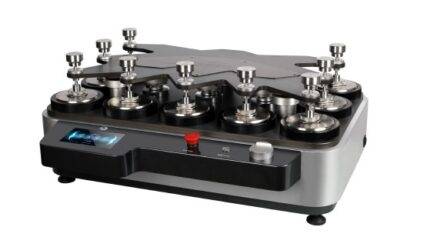
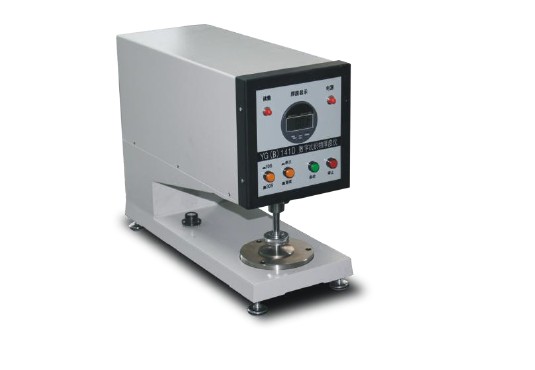
Martindale abrasion tester Updated
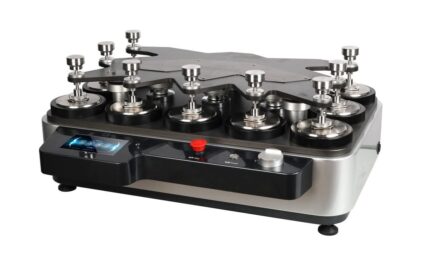
Martindale abrasion tester updated
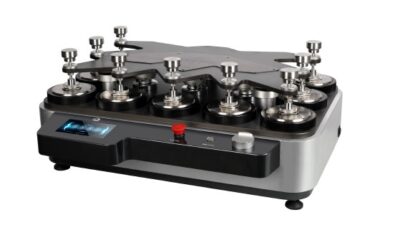
Latest Update 1 A+
- Clothing sample weight hammer:397±2g Furniture decoration sample weight hammer:597±2g C. Stainless steel discs:260±1g
- Effective friction diameter of grinding block: Type A 198g(3kpa) friction head 28.8-0.084mm Type B 155g(1.52N) friction head 90-0.10mm 6. Relative velocity of gripper and grinding table:50 + 2R / MI (20-70r / min adjustable) 7. Sampling hammer quality:2385±10g 8. Shape size:870×580×300mm 9. power supply:AC220V 50Hz 500W 10.Weight:73KG.
- [Standard accessories] Items and specifications Qty Notes Main machine 1Power cable 1A type 198g Friction head 9 B type 155g(1.52N) Friction head 9 597g Hammer 9 397g Hammer 9, 666666666 260g Stainless steel disc 9, 2385g Holding hammer 1,B Friction head felt 18 ¢90mm Steel ball 6, Rubber ring 18, Inner Hexagonal Wrench 1
- Sampler 1, Fuse 2 3A, Standard felt 18, Weight:750±50g/m2, Thickness:2.5±0.5mm, Standard foam lining 40, Density:0.03g/cm3,Thickness:3mm,Standard abrasive 9 Circular shear template Each φ140mm、φ38mm,Small screw knife 1, Bottom foot 4

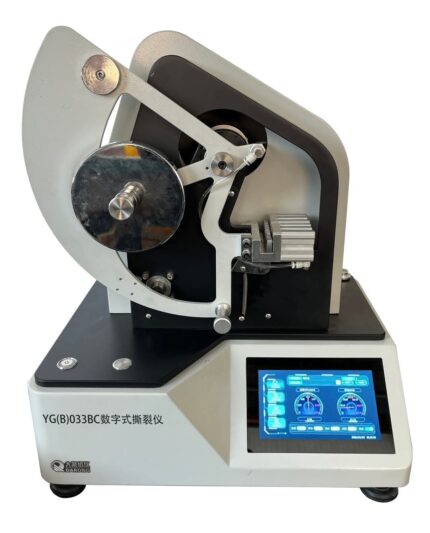
Digital Elmendorf tearing tester
Digital Elmendorf Tearing Tester
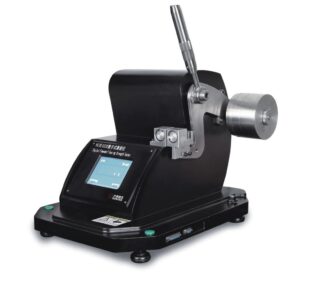
Digital Elmendorf Tearing Tester
- Accurate Tear Strength Measurement - Provides precise data on tear resistance, critical for quality control and product performance.
- Digital Readout - Easy-to-read display gives instant, reliable results without manual calculations.
- High Reproducibility - Ensures consistent test outcomes due to controlled tearing angle and speed.
- Fast Testing Process - Simple loading and quick test cycle increase lab efficiency.
- Suitable for Various Materials - Tests a wide range of flexible materials like textiles, paper, plastic, and packaging.
- Customizable Range - Use of optional weights extends the test range for low to high tear strength materials.
- Low Sample Waste - Requires small fabric or material samples, reducing waste during testing.
- Standards Compliance - Meets international testing standards (e.g., ASTM D1424, ISO 13937) for credibility and uniformity.
- Precision Sample Clamp - Securely holds samples in place to ensure accurate tear initiation.
- Pre-Cutting Blade - Integrated knife creates a precise initial slit in the sample before tearing.
- User-Friendly Interface - Simple buttons and screen navigation for ease of operation.
- Standard Test Compliance - Compatible with ASTM D1424, ISO 1974, ISO 13937, and other tear strength standards.
- Sturdy Construction - Made with durable materials for long-lasting performance and stable operation.
- Compact Design - Space-efficient footprint ideal for laboratory environments.
- Data Output Options- Some models offer USB or printer connectivity for result documentation.
- Prepare the Sample - Cut the material (fabric, paper, film, etc.) to standard size (typically 100 × 63 mm for textiles) and slit it with the pre-cutter as required.
- Select Pendulum Weight - Choose the appropriate pendulum or add counterweights based on expected tear strength.
- Calibrate the Machine - Set the pendulum to its starting position and zero the display.
- Clamp the Sample - Fix one half of the sample in the stationary clamp and the other in the moving clamp.
- Cut the Initial Slit - Use the integrated blade to make a precise cut at the marked slit area (usually 20 mm).
- Release the Pendulum - Trigger the pendulum to swing and tear the sample through the pre-slit.
- Read the Result - The digital display will show the tearing force automatically (in g, mN, or cN).
- Record or Export Data - Save or print the result if your model supports USB or printer connection.
- Reset for Next Test - Reposition the pendulum and prepare a new sample for the next cycle.
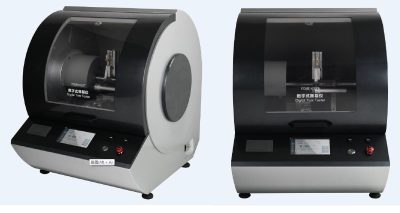 Scope of application
It is used for the determination of the tear resistance of various woven
fabrics (Elmendorf method), and it can also be used for the determination
of the tear resistance of thick paper, plastic sheeting, electrical tape, etc.
Related standards
GB/T 3917.1 FZ/T60006 FZ/T75001 ISO1974/9290 ASTM D1424/5734
etc.
Instrument characteristics
1. Maximum 300N test range
2. Microcomputer control, digital decoding, support online
communication
3. Color touch screen control, Chinese and English menu operation
interface
4. Pneumatic clamping, automatic cutting
5. A variety of measurement units (cN, gf) selection
6. Fully automatic operation with safe operation protection.
7. Automatically increase potential energy
[Technical parameter]:
1. Test range: first gear: (0~16)N second gear: (0~32)N third gear: (0~
64)N fourth gear: (0~128)N fifth gear: (0~300)N
2. Test accuracy: ≤±0.2%F·S
3. Tearing length: 43mm (non-standard 30-60mm can be set)
4. Automatic incision length: (20±0.2)mm
5. Sample size: (100×63)mm
6. Specimen clamping: pneumatic way
7. Sample test: Up to 10 sets per group on the device side, and 30 sets
of data can be selected to be saved
8. Power supply: AC220V±10% 50Hz 100W
9. Dimensions: (650×660×680)mm
10. Weight: 50kg
[Sample of control interface]:(English version is also available.)
Scope of application
It is used for the determination of the tear resistance of various woven
fabrics (Elmendorf method), and it can also be used for the determination
of the tear resistance of thick paper, plastic sheeting, electrical tape, etc.
Related standards
GB/T 3917.1 FZ/T60006 FZ/T75001 ISO1974/9290 ASTM D1424/5734
etc.
Instrument characteristics
1. Maximum 300N test range
2. Microcomputer control, digital decoding, support online
communication
3. Color touch screen control, Chinese and English menu operation
interface
4. Pneumatic clamping, automatic cutting
5. A variety of measurement units (cN, gf) selection
6. Fully automatic operation with safe operation protection.
7. Automatically increase potential energy
[Technical parameter]:
1. Test range: first gear: (0~16)N second gear: (0~32)N third gear: (0~
64)N fourth gear: (0~128)N fifth gear: (0~300)N
2. Test accuracy: ≤±0.2%F·S
3. Tearing length: 43mm (non-standard 30-60mm can be set)
4. Automatic incision length: (20±0.2)mm
5. Sample size: (100×63)mm
6. Specimen clamping: pneumatic way
7. Sample test: Up to 10 sets per group on the device side, and 30 sets
of data can be selected to be saved
8. Power supply: AC220V±10% 50Hz 100W
9. Dimensions: (650×660×680)mm
10. Weight: 50kg
[Sample of control interface]:(English version is also available.) 
Hydraulic GSM Cutter
Hydraulic GSM Cutter
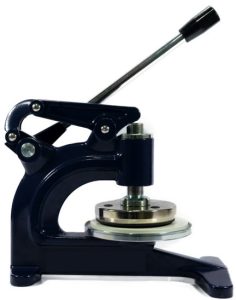
Hydraulic GSM Cutter
- High Cutting Precision - Ensures consistent and accurate fabric sample size for reliable GSM results.
- Effortless Operation- Hydraulic action reduces manual effort and operator fatigue.
- Ideal for Thick or Multi-Layer Fabrics - Cuts through dense or multiple fabric layers cleanly.
- Time-Saving - Speeds up the sample preparation process, especially for high-volume testing.
- Improves Test Accuracy - Uniform samples help eliminate errors in GSM calculation.
- Durable and Long-Lasting - Robust construction ensures stability and extended service life.
- Safety Enhancement - Reduces risk of injury compared to manual rotary cutters.
- Consistent Pressure Application - Hydraulic mechanism maintains steady force for each cut.
- Hydraulic Press Mechanism - Applies consistent and strong pressure for clean, even cuts.
- Standard Cutting Die (100 cm²) - Produces fabric samples suitable for GSM testing with standard area.
- Heavy-Duty Construction - Built with robust metal frame for long-term lab or industrial use.
- Sharp Stainless Steel Blades - Durable and replaceable blades ensure smooth, precise cuts.
- Cutting Pad Included - Comes with a rubber or nylon base to protect blades and ensure clean edges.
- Simple Lever or Button Operation - Easy to use with minimal training required.
- Non-slip Base - Provides stability during operation for safe, accurate cutting.
- Supports Various Fabric Types
- Place the Cutting Pad - Lay the rubber or nylon cutting pad on a flat surface.
- Position the Fabric - Place the fabric sample flat and smooth on the cutting pad.
- Align the Cutter - Position the GSM cutter die over the desired area of the fabric.
- Activate Hydraulic Press - Pull the lever or press the button to apply hydraulic pressure and cut the sample.
- Remove the Sample - Lift the cutter and carefully take out the circular fabric piece (usually 100 cm²).
- Weigh the Sample - Place the cut sample on a precision balance or GSM scale to determine weight.
- Calculate GSM - Multiply the sample weight (in grams) by 100 to get GSM.
Hydraulic GSM Cutter

