
 Products
 Martindale abrasion tester Updated



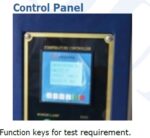

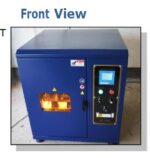
IR Dyeing Machine Dunlin
$0.00
IR Dyeing Machine Dunlin
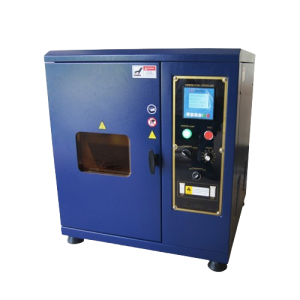
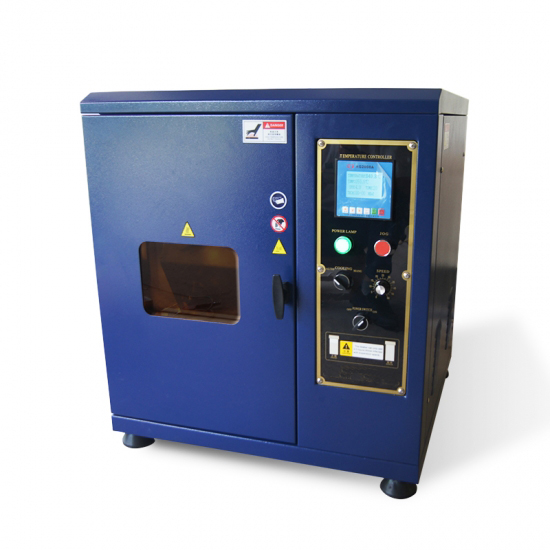
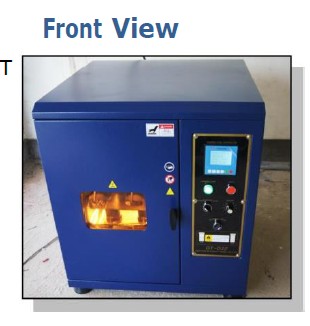
IR Dyeing machine Dunlin is Safe, high efficiency, environment friendly, energy saving, optimum for new dyeing small sample machines

24 pot 300 ml
Application
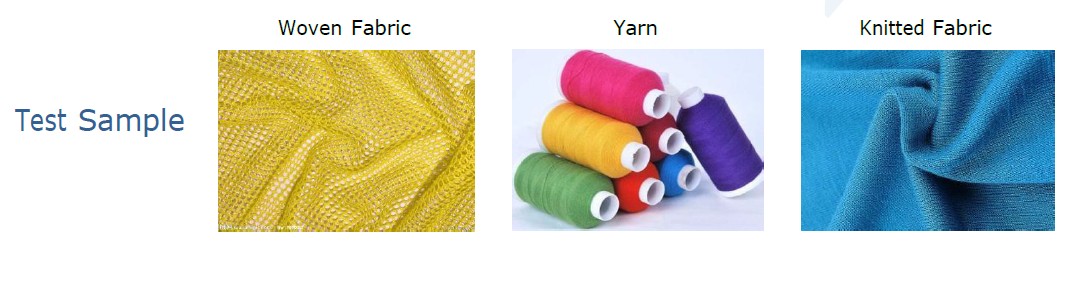
This machine is oil bath type infrared laboratory dyeing machine, it combine the advantages of traditional glycerol dyeing machine with common infrared dyeing machine together. It’s apply to dyeing and testing the color fastness of the knitted
fabric, woven fabric, yarn, cotton, loose fiber, zipper etc. It was special design for dyeing industry, chemical industry, raw material, cloth which can simulate the production conditions exactly and reach the process effect. Used for simulate the dyeing process in actual production, even apply for the small-batch production.
Characteristics
Safety, high efficiency, environmental protection, energy saving and consumption reduction, which can fully meet the requirements of dyeing and color matching experiments; segmented heating sampling experiments, segmented, uniform
dyeing and Permeability test, dye absorption rate tests of pH, temperature and bath ratio differences, concentration and other tests, etc. In addition, the machine is highly personalized, and can make different specifications of dyeing steel
cups according to customer needs.
Feature
Easy to operate, dye pot can be individually Turn plate removed to save waiting time. The ability to conduct the tests of various dyes and chemicals on dispersing, leveling, liquor ratio exhausting etc. l Special recommendation for “STEP DYEING “to select the best dyestuff and combinations for the most
Suitable dyeing curve to achieve the highest efficiency and quality Different sizes of dye pots for various weight of samples with yarn or fabric holders to ensure the good leveling result .There will be no crease mark. Suitable for low liquor ratio dyeing. Sample weight from 4g to 20g.
Special design for humanity, durability and easy-maintenance. Safe, high efficiency, environment friendly, energy saving, optimum for new dyeing small sample machines Product Parameter of IR Dyeing machine Dunlin
specifically designed with a focus on human usability, durability, and ease of maintenance. It prioritizes safety, high efficiency, and environmental friendliness while also being energy-saving. This machine is optimal for new dyeing small sample machines due to its product parameter advantages.
specifically designed to prioritize humanity, durability, and ease of maintenance. It offers a safe, high-efficiency operation while being environmentally friendly and energy-saving. This machine is optimal for new dyeing small sample machines due to its specialized features and product parameters.
Model : IF-24S
Infrared Laboratory Dyeing Machine
Key Specification
Model : IF-12S
IF-24S Staining cup number
12/24 Staining cup volume
300cc OR 425cc Control mode
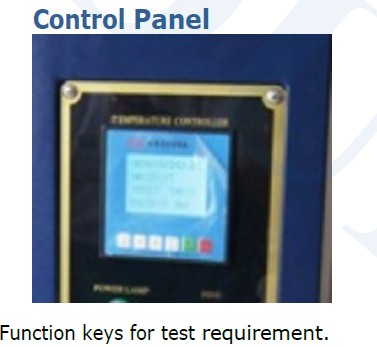
LCD Microprocessor type,
programmable process number: 100(0—99),
100 programmable steps per process Heat method
Infrared heat Temperature range
RT – 140 ℃ Temperature control accuracy
±0.2 ℃ Heating rate
0 – 3.5 ℃ / min Cooling rate
0.2 – 5 ℃ / min Cooling method
Air-cooled Rotation speed
0 – 60 rpm Liquor ratio
1:5 -1:100 Power supply
1∮AC 220V 50/60HZ Dimensions( L x W x H)
670×670×780mm
860×680×780mm Weight
100kg
120kg
Standard Accessories
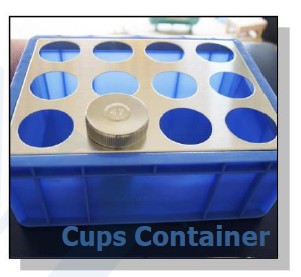
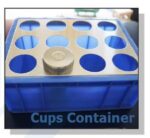
Cups 1set
Put the test sample. Cups stand 1set
Place where to put cups. Protective glove 1set
To avoid to be hurt by HT cups.
Model: IF-24SCapacity: 24 pots
Brad: DUNLIN
Origin: China
Color dyeing tests for various dyestuffs of IR Dyeing machine Dunlin
- Step dyeing tests. C. Dispersing, levelling and impregnating test. D. High or low liquor ratio exhausting tests. E. Fabric steak and staining tests. F. Concentration tests and others. Protection and Safety gates to protect. Temperature control accuracy +/- 0.2degree
Working temperature of IR Dyeing machine Dunlin 20 – 140 degree Heating rate of dye bath 0 – 3.5degree / min Cooling rate 0.2 – 5 degree / min Cooling method air-cooled / Auto Speed control frequency conversion Rotation speed 0 – 60 turn / min Microprocessor type Newhaven controller 99 programs each Program with 99steps.

IR Dyeing machine
Shipping & Delivery
Related products
Digital precision balance
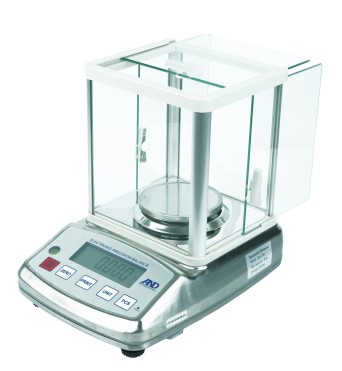
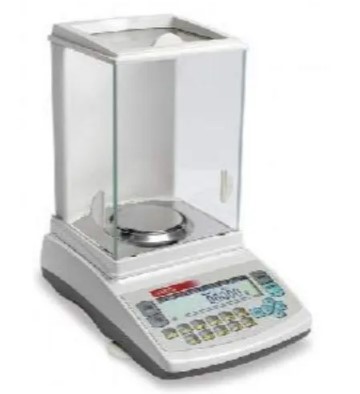
digital precision balance
2/3/4/5 Digit Digital precision Balance
digital precision balance is a weight balance machine. It’s used to Low capacity balance. digital precision balance play an important role to accurate measurement. Digital precision balance is used to check weight paper, jewelry etc. It shows accurate result. We have the best collection of digital precision balance. MAAM TEX IS the best supplier of Precision Balance in Bangladesh
A Digital Precision Balance is a high-accuracy electronic weighing device used in laboratories, industries, and educational institutions for measuring mass with a high degree of precision. It is essential for tasks that require meticulous weight measurements, such as chemical analysis, formulation, and quality control. Key Features:- High Accuracy & Precision: - Typically offers readability from 0.1 g to 0.001 g (or even finer). - Ideal for weighing small amounts of material where accuracy is crucial.
- Digital Display: - Large, backlit LCD or LED display for easy reading. - Some models include touch screen interfaces.
- Tarring Function: - Allows you to subtract the weight of a container or packaging to get the net weight.
- Calibration: - Internal or external calibration to maintain accuracy over time. - Some advanced models have auto-calibration features.
- Weighing Units: - Supports multiple units like grams (g), milligrams (mg), carats (ct), and ounces (oz). Stable Platform: - Includes a draft shield to protect against air currents and vibrations, which can affect measurement accuracy.
- High Accuracy and Precision- Delivers extremely accurate weight measurements, often down to 0.001 g or better.- Crucial for experiments and applications where even slight variations can affect outcomes.
- User-Friendly Interface- Digital display makes readings easy to read and interpret.- Most models include intuitive controls for functions like tarring, unit conversion, and calibration.3. Speed and Efficiency- Provides instant, stable readings, saving time compared to manual or mechanical balances.- Streamlines lab workflows and enhances productivity.
- Versatile Applications- Suitable for various fields including chemistry, biology, pharmacology, food testing, and gemology.- Can handle diverse weighing tasks from solids to liquids and powders.
- Advanced Features- Tare Function: Subtracts the weight of containers automatically.- Multiple Weighing Units: Supports various measurement units.- Data Connectivity: Many models allow connection to computers or printers for data logging.
- Portability and Space Efficiency- Compact design fits easily in most laboratory setups.- Lightweight models are easy to move and store.
- Enhanced Safety and Reliability- Stable platform and draft shields reduce environmental interference.- Built-in calibration ensures ongoing accuracy.
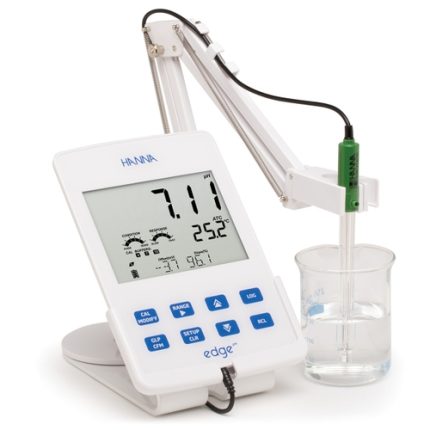
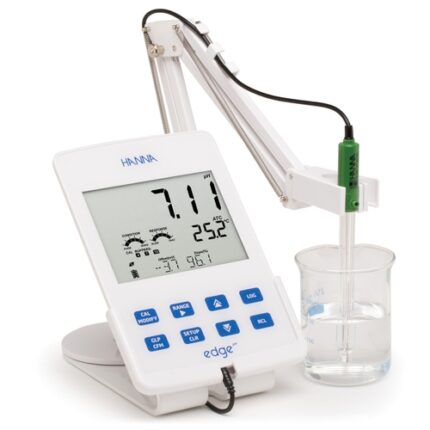
Digital Bench top PH Meter
Digital Bench top PH Meter
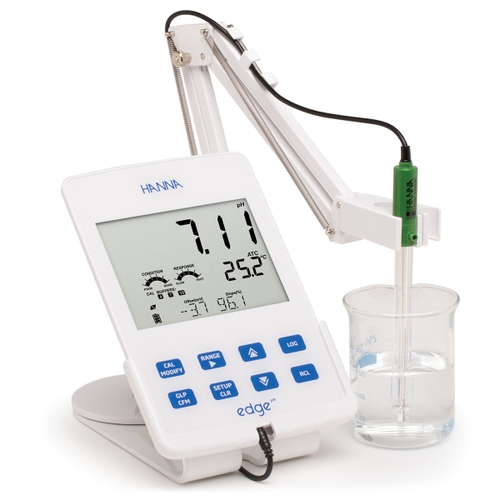
Digital Bench top PH Meter
Brand: Hanna Model: HI2002 Country of Manufacture: Romania Origin: USA
Digital Bench top PH Meter
Single parameter of Digital Bench top PH Meter features user-friendly tablet design with bench, portable or wall mount options for ultimate flexibility. Switch from portable to bench in the same procedure or clear the surface for easier working and hang on the wall. Digital Bench top PH Meter Range -2.00 to 16.00pH; pH Digital smart electrode compatible Accuracy: ±0.01 pH edge® pH is dedicated to testing pH. Using Hanna's latest innovation in technology and design, edge® can be adapted to suit your working method. Select from hand held, wall mount or bench top - or switch between them all. edge® is happy any which way. Simply plug in the electrode, then play. Measurement is simpler, quicker and more accurate than ever. Results are fast and reliable. Combining high precision technology with the user-friendly dimensions and format of a small digital tablet, edge® is breaking new ground in electrochemistry. This is a must-have meter for your laboratory.| pH Range | basic mode: -2.00 to 16.00 pH; standard mode: -2.000 to 16.000 pH | |
| Resolution | basic mode: 0.01 pH; standard mode: 0.001 pH | |
| Accuracy (@25°C) | basic mode: ±0.01 pH; standard mode: ±0.002 pH | |
| Calibration | basic mode: automatic, up to three points calibration, 5 standard buffers available; standard mode: automatic, up to five point calibration, 7 standard buffers available and two custom buffers | |
| Temperature Compensation | automatic, -5.0 to 100.0°C (using integral temperature sensor) | |
| Electrode Diagnostics | standard mode: probe condition, response time and out of calibration range | |
| mV pH Range | ±1000 mV | |
| Resolution | 0.1 mV | |
| Accuracy (@25°C) | ±0.2 mV | |
| ORP Range | ±2000 mV | |
| Resolution | 0.1 mV | |
| Accuracy (@25°C) | ±0.2 mV | |
| Temperature Range | -20.0 to 120.0°C | |
| Resolution | 0.1°C | |
| Accuracy | ±0.5°C | |
| Additional Specifications: | ||
| Probe | HI-11310 digital glass body pH electrode with 3.5mm connector and 1m cable | |
| Logging | up to 1000 (400 for basic mode) records organised in: manual log-on demand (max. 200 logs), manual log-on-stability (max. 200 logs), interval logging (max. 600 samples; 100 lots) | |
| Connectivity | 1 USB port for storage; 1 micro USB port for charging and PC connectivity | |
| Environment | 0 to 50°C; RH max 95% non-condensing | |
| Power Supply | 5 VDC adapter (included) | |
| Dimensions | 2020 x 140 x 12 mm | |
| Weight | 250 g |
- High Accuracy and Resolution
- Digital Display - Large, clear LCD or LED screen shows pH readings, temperature, and sometimes mV or ion concentration. - Some models include a backlit display for better visibility.
- Electrode System - Uses a pH-sensitive electrode (usually glass) connected to a reference electrode. Electrodes are often replaceable and require regular calibration and maintenance.
- Temperature Compensation - Automatic or manual temperature compensation to correct pH readings based on sample temperature. - Integrated temperature sensors or separate probes are used.
- Calibration Functions - Supports 2-point, 3-point, or multi-point calibration using standard buffer solutions. - Auto-recognition of calibration buffers in advanced models.
- Data Storage and Connectivity - Internal memory for storing results. - USB or RS232 ports for data export to PCs or printers; some models support wireless connectivity.
- Sturdy Design - Benchtop models are larger and more stable than portable meters. - Often come with a durable casing and electrode arm for hands-free operation.
- High Accuracy and Precision
- User-Friendly Interface- Digital displays (LCD/LED) make readings easy to see and interpret.- Many models offer intuitive controls and guided calibration, simplifying operation.
- Advanced Calibration Features- Supports multi-point calibration for improved accuracy across a wide pH range.- Some models automatically recognize buffer solutions, reducing user error.
- Temperature Compensation- Automatic temperature compensation (ATC) corrects readings based on sample temperature, ensuring accuracy.
- Stable and Durable Design- Benchtop units are more robust and stable than handheld devices, reducing the risk of spills or tipping.- Often include electrode holders or arms for secure, hands-free measurements.
- Data Management and Connectivity- Built-in memory for storing measurement data.USB, RS232, or wireless connectivity for exporting data to computers or laboratory information systems (LIS).
- Multi-Functionality- Some models also measure ORP (oxidation-reduction potential), ion concentration, or conductivity.- Suitable for a variety of testing needs beyond just pH.
- Ideal for Long-Term Use- Designed for prolonged and repeated use in laboratory environments.- Replaceable electrodes and parts extend the meter’s usable life.
- Compliance and Documentation- Data logging features support documentation and compliance with regulatory standards in regulated industries (e.g., pharma, food, environmental testing).
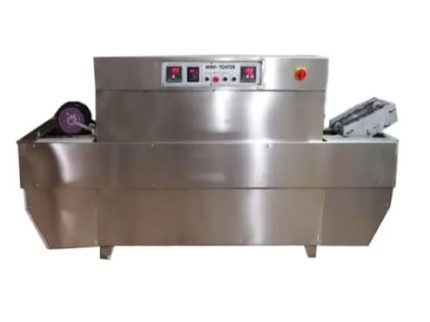
Laboratory tenter
Laboratory Tenter
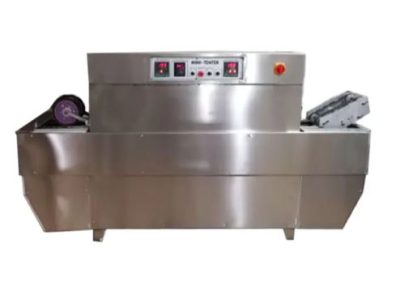
laboratory mini tenter
- Heat-Setting and Drying - Simulates the process of setting fabric dimensions and applying finishes using controlled temperature and tension.
- Fabric Width Control - Uses clips or pins on chains or rails to hold fabric edges and stretch them to desired width, just like in full-size tenters.
- Adjustable Temperature and Speed - Digital controls allow precise setting of drying/curing temperature and conveyor speed to match production conditions.
- Compact Design - Bench-top or floor-standing units suitable for labs with limited space.
- Transparent Viewing Chamber - Allows visual inspection of fabric behavior during processing.
- Versatile Application Range - Can process woven, knitted, and nonwoven fabrics of various compositions (cotton, polyester, blends, etc.).
- Accurate Simulation of Production - Replicates industrial finishing processes for reliable lab-scale testing and development.
- Improves Fabric Quality- Allows precise control of heat and tension, optimizing fabric properties like shrinkage, dimensional stability, and hand feel.
- Cost-Effective - Enables process trials and fabric development without using full-scale production equipment.
- Speeds Up R&D - Facilitates quick testing and adjustment of settings for new fabric styles or finishes.
- Versatile Applications - Suitable for drying, heat-setting, finishing, and evaluating different types of fabrics and treatments.
- Space-Efficient - Compact design fits easily into textile labs or sample rooms.
- Energy Efficient- Uses less power than industrial machines, ideal for small-scale and repeated testing.
- Process Control and Reproducibility- Digital controls ensure consistent and repeatable results, aiding in quality assurance and product development.
- Enhances Safety - Built with lab use in mind, featuring insulation and safety systems to protect users.
- Precise Temperature Control - Digital temperature setting (typically up to 220–250°C) for accurate heat-setting and drying.
- Adjustable Fabric Width - Equipped with clip or pin chains to hold and stretch fabric across the width, simulating real stentering.
- Variable Conveyor or Chain Speed- Adjustable speed to control fabric dwell time during processing.
- Compact and Lab-Friendly Design - Designed for bench-top or small floor space use in textile labs.
- Transparent Chamber Window - Allows monitoring of fabric behavior during treatment.
- Digital Display and Control Panel - Easy operation for setting temperature, speed, and time.
- Uniform Heat Distribution- Ensures even treatment across the fabric width for accurate testing.
- Stainless Steel Construction - Durable, corrosion-resistant body for long-term use at high temperatures.
- Safety Features - Includes over-temperature protection, insulated body, and emergency stop functions.
- Sample Versatility - Suitable for various fabric types (woven, knit, synthetic, blends) and lab finishing tasks.
laboratory mini tenter

Oscillation type water bath Dyeing Machine
Oscillation Type Water Bath Dyeing Machine

water bath/Shaker bath Dyeing machine
- Oscillating Mechanism - Provides back-and-forth movement of beakers for uniform dye penetration and sample agitation.
- Multiple Beaker Capacity - Supports dyeing of 12–24 samples simultaneously, ideal for comparative lab testing.
- Digital Temperature Control - Maintains precise water bath temperature (typically up to 99°C), essential for consistent dyeing.
- Variable Oscillation Speed - Adjustable speed settings (e.g., 50–200 cycles/min) to suit different materials and processes.
- Programmable Settings - Allows setting of temperature, time, and speed for repeatable and automated dyeing cycles.
- Stainless Steel Construction - Corrosion-resistant frame and bath for durability in chemical environments.
- Beaker Safety Holders - Secure placement of beakers to prevent spills and maintain consistent treatment.
- Compact Design - Lab-friendly size for easy integration into research and quality control spaces.
- Low Liquor Ratio Operation - Efficient dyeing using minimal dye bath volume (e.g., 1:5 to 1:20), reducing chemical and water use.
- Quiet and Stable Performance
water bath/Shaker bath Dyeing machine

Perspiration Tester
Perspiration Tester
Perspiration Tester
- Fabric samples are treated with synthetic perspiration solution (acidic or alkaline).
- They are sandwiched with adjacent fabric and placed between glass or acrylic plates.
- The assembly is loaded into the tester and pressed under specific pressure.
- it’s then incubated at 37°C (body temperature) for a fixed time (typically 4 or 16 hours).
- Afterward, color change and staining are evaluated using a gray scale.
- Accurate Sweat Simulation - Mimics real-life effects of acidic and alkaline perspiration on fabrics.
- Improves Product Quality - Ensures textiles retain color and don’t bleed or stain when worn.
- Supports Standard Compliance - Follows ISO and AATCC test standards for global market approval.
- Protects Brand Reputation- Reduces customer complaints due to dye transfer or fading.
- Simple and Repeatable- Provides consistent pressure and conditions for reliable results.
- Multi-Sample Testing- Tests multiple specimens at once, saving time in labs.
- Durable and Low Maintenance- Robust frame with minimal moving parts makes it long-lasting and easy to care for.
- Stainless Steel Frame - Corrosion-resistant body for durability and long-term use.
- Multi-Sample Capacity - Can hold up to 20 or more specimens for batch testing.
- Standardized Loading Weight- Applies uniform pressure (usually 12.5 kPa) across all samples.
- Removable Plates - Glass or acrylic plates ensure even contact and easy cleaning.
- Compact Design- Space-saving, bench-top model ideal for lab environments.
- Complies with Test Standards - Meets ISO 105 E04, AATCC 15, and related perspiration fastness standards.
- Ease of Operation - Simple loading, unloading, and incubation process.
- High-Temperature Resistance - Can be used inside incubators at 37°C or ovens as required.
- Prepare the Test Solution - Mix artificial acidic or alkaline perspiration as per standard (ISO or AATCC).
- Cut the Fabric Samples - Cut both the test fabric and adjacent white fabric (usually cotton) to standard size.
- Soak the Samples - Immerse the fabric sandwich (test + adjacent) in the test solution for 30 minutes.
- Remove Excess Liquid - Gently squeeze or blot to remove extra moisture—do not dry.
- Load in the Tester- Place each sandwich between glass or acrylic separator plates in the tester.
- Apply Pressure - Tighten the top plate or place the standard weight on top to apply uniform pressure.
- Incubate - Keep the loaded tester in an oven or incubator at 37°C for 4–16 hours (depending on the method).
- Accurate Sweat Simulation - Mimics real-life effects of acidic and alkaline perspiration on fabrics.
- Improves Product Quality - Ensures textiles retain color and don’t bleed or stain when worn.
- Supports Standard Compliance - Follows ISO and AATCC test standards for global market approval.
- Protects Brand Reputation- Reduces customer complaints due to dye transfer or fading.
- Simple and Repeatable- Provides consistent pressure and conditions for reliable results.
- Multi-Sample Testing- Tests multiple specimens at once, saving time in labs.
- Durable and Low Maintenance- Robust frame with minimal moving parts makes it long-lasting and easy to care for.
- Dry and Evaluate - Remove, air dry the samples, then assess color change and staining using a gray scale.
- Fabric samples are treated with synthetic perspiration solution (acidic or alkaline).
- They are sandwiched with adjacent fabric and placed between glass or acrylic plates.
- The assembly is loaded into the tester and pressed under specific pressure.
- it’s then incubated at 37°C (body temperature) for a fixed time (typically 4 or 16 hours).
- Afterward, color change and staining are evaluated using a gray scale.
Perspiration Tester
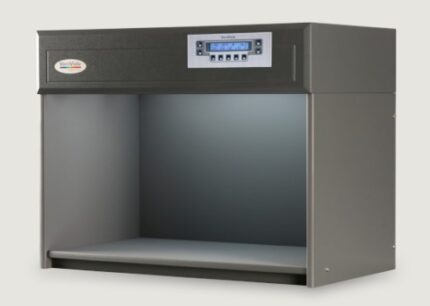

VeriVide Colour Assessment Cabinets
VeriVide Colour Assessment Cabinets
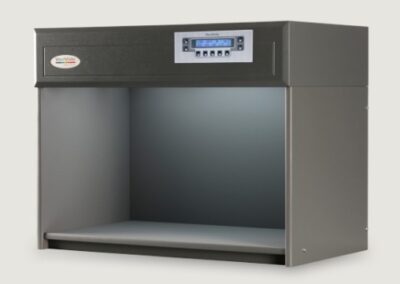 VeriVide offers high-quality Colour Assessment Cabinets (CACs) such as the CAC 60-4, CAC 60-5, and CAC 120-4&5. These cabinets, originating from the UK, are reliable tools for visual evaluation in quality assurance, meeting national, international, and retailer standards. They effectively mitigate issues related to color assessment.VeriVide Colour Assessment Cabinets
High-quality visual evaluation tool for quality assurance. Adhering to national, international and retailer standards.Colour Assessment Cabinet's (CACs) reduce problems associated with assessing products or samples in different environments,be though geological or seasonal, offering a cost-effective method to ensure visual accuracy and product quality.
Color Light Box Enhance color precision with VeriVide's cutting-edge Colour Assessment
Cabinets. These cabinets are meticulously designed to ensure accurate color evaluation in various industries. Invest in VeriVide Colour Assessment Cabinets to elevate your color assessment process.
Enhance Color Precision with VeriVide's Cutting-Edge Assessment Cabinets, which meet or surpass ISO 3664 and BS 950 Part 1 international standards. The cabinets are adaptable to user requirements, with lamp options to choose different light sources. Available in 60, 120, and 150cm widths, VeriVide Colour Assessment Cabinets provide a flexible solution for accurate color assessment.
Incorporate user-friendly features like servicing indicator, auto sequence, warm-up, power save and data storage.4 or 5 light source options Versions available for colour fastness testing and particulate testing both adhering to global standardsEnsure that you are using the best equipment available as they provide the best fluorescent D65 daylight simulator, with the highest Colour
Rendering Index (CRI), available. VeriVide Colour Assessment Cabinets products are known as light boxes, viewing booths, colour cabinets and others, depending on which industry or country they are serving in. They are used within a wide array of industry sectors throughout the world including textile and apparel, graphics, automotive, ceramics, cosmetics, pharmacology (CAC Particulate),
food, footwear, packaging and printing.Download the Datasheet below for more information or click 'VeriVide CAC Datasheet Here' to get in touch with colour experts.
VeriVide CAC Datasheet Here Features of VeriVide Colour Assessment Cabinets
• CAC 60, CAC 120 and CAC 150 accommodate 60, 120 and 150cm tubes respectively
VeriVide offers high-quality Colour Assessment Cabinets (CACs) such as the CAC 60-4, CAC 60-5, and CAC 120-4&5. These cabinets, originating from the UK, are reliable tools for visual evaluation in quality assurance, meeting national, international, and retailer standards. They effectively mitigate issues related to color assessment.VeriVide Colour Assessment Cabinets
High-quality visual evaluation tool for quality assurance. Adhering to national, international and retailer standards.Colour Assessment Cabinet's (CACs) reduce problems associated with assessing products or samples in different environments,be though geological or seasonal, offering a cost-effective method to ensure visual accuracy and product quality.
Color Light Box Enhance color precision with VeriVide's cutting-edge Colour Assessment
Cabinets. These cabinets are meticulously designed to ensure accurate color evaluation in various industries. Invest in VeriVide Colour Assessment Cabinets to elevate your color assessment process.
Enhance Color Precision with VeriVide's Cutting-Edge Assessment Cabinets, which meet or surpass ISO 3664 and BS 950 Part 1 international standards. The cabinets are adaptable to user requirements, with lamp options to choose different light sources. Available in 60, 120, and 150cm widths, VeriVide Colour Assessment Cabinets provide a flexible solution for accurate color assessment.
Incorporate user-friendly features like servicing indicator, auto sequence, warm-up, power save and data storage.4 or 5 light source options Versions available for colour fastness testing and particulate testing both adhering to global standardsEnsure that you are using the best equipment available as they provide the best fluorescent D65 daylight simulator, with the highest Colour
Rendering Index (CRI), available. VeriVide Colour Assessment Cabinets products are known as light boxes, viewing booths, colour cabinets and others, depending on which industry or country they are serving in. They are used within a wide array of industry sectors throughout the world including textile and apparel, graphics, automotive, ceramics, cosmetics, pharmacology (CAC Particulate),
food, footwear, packaging and printing.Download the Datasheet below for more information or click 'VeriVide CAC Datasheet Here' to get in touch with colour experts.
VeriVide CAC Datasheet Here Features of VeriVide Colour Assessment Cabinets
• CAC 60, CAC 120 and CAC 150 accommodate 60, 120 and 150cm tubes respectively
- Either 4 or 5 light sources available for each model including D65, D50, 840P15, F and UV - see Lamp Options.• Internal finishes in Munsell N5, Munsell N7 or Grey 5574 • Diffuser and/or dimmer options available Dimensions of VeriVide Colour Assessment Cabinets CAC 60-4 Dimensions (mm) Width Height Depth Overall 710 545 420

HTHP Glycerin bath dyeing machine
HTHP Glycerin Bath Dyeing Machine
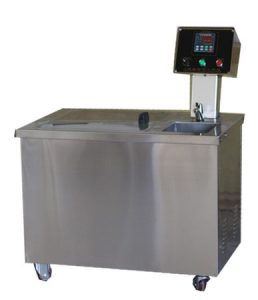
HTHP dyeing machine
- High Temperature Capability - Operates up to 140°C or more, ideal for disperse dyeing of polyester which requires elevated temperatures.
- Glycerin as Heat Transfer Medium - Glycerin allows for precise and uniform heating beyond the boiling point of water, without pressure buildup as in steam-based systems.
- Small Sample Dyeing - Used for lab-scale dyeing of fabric or yarn samples (commonly 5–10 g per tube), useful in R&D or color matching.
- Multiple Sample Capacity - Usually has multiple dyeing tubes/chambers for simultaneous dyeing of several samples under identical conditions.
- Accurate Temperature and Time Control - Digital or microprocessor-based controllers regulate temperature, heating rate, and timing precisely.
- Uniform Dyeing - Ensures even dye penetration due to consistent heat distribution and controlled rotation or agitation.
- Energy Efficient Glycerin’s heat retention reduces energy consumption compared to steam systems.
- Compact and Durable Design - Bench-top design, made from stainless steel and heat-resistant components for long life and lab use.
- Uniform Heating with Glycerin - Glycerin provides consistent heat transfer, ensuring even dye uptake and minimizing shade variation.
- Energy Efficient- Glycerin retains heat longer, reducing energy consumption compared to traditional steam-based dyeing.
- Accurate Process Control - Precise temperature and time control enhance reproducibility and dyeing consistency.
- Ideal for Lab and Sample Work - Perfect for R&D, shade matching, and recipe development with small fabric or yarn samples.
- Multi-Sample Dyeing - Allows multiple samples to be dyed simultaneously under identical conditions, saving time and effort.
- Compact and Safe - Bench-top design fits in laboratories and is safer than high-pressure steam systems.
- Low Maintenance - Simplified operation and fewer mechanical parts compared to steam-based systems lower upkeep needs.
- Faster Dyeing Cycles- Glycerin heats and cools quickly, reducing overall dyeing time.
- High-Temperature Operation - Capable of dyeing up to 140–150°C, suitable for synthetic fibers like polyester.
- Glycerin as Heat Medium - Uses glycerin for uniform, efficient heat transfer without generating high steam pressure.
- Multiple Dyeing Chambers - Usually equipped with 6–24 tubes for simultaneous multi-sample dyeing under identical conditions.
- Digital Temperature Controller- Offers precise control of temperature, time, and heating rate with programmable settings.
- Compact and Lab-Friendly Design - Bench-top model, easy to operate in laboratory environments with limited space.
- Stainless Steel Construction - Corrosion-resistant and durable for long-term, high-temperature operation.
- Safety Features - Includes over-temperature protection and thermal insulation to prevent heat loss and ensure operator safety.
- Agitation or Sample Rotation- Some models offer rotation or agitation for uniform dye penetration.
- Energy Efficient Heating - Glycerin’s heat retention improves energy efficiency over water- or steam-based systems.
- Low Maintenance - Simplified mechanical system reduces the need for frequent servicing.

Digital Ink Rubbing Tester
Digital Ink Rubbing Tester
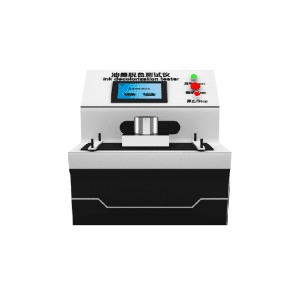
Digital Ink Rubbing Tester
Digital Ink Rubbing Tester

