

 Products
 Martindale abrasion tester Updated
0%
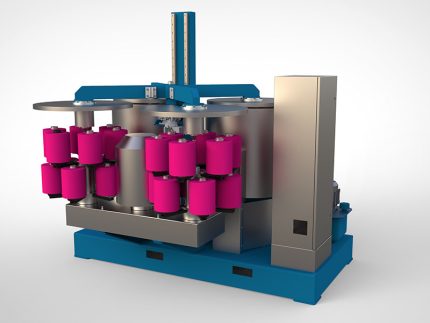

Card winding machine
$0.00
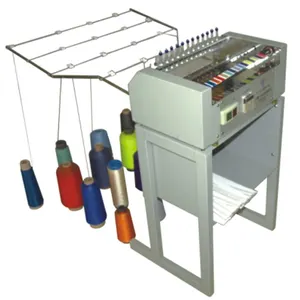
Card Winding Machine
Card Winding Machine
A Card Winding Machine is used in textile processing to wind yarn from hanks, bobbins, or cones onto cards or perforated boards, typically for dyeing or sampling purposes. It ensures uniform yarn distribution and tension, crucial for consistent dye penetration.
Purpose Card Winding Machine:
To wind yarn onto flat cards or holders for lab dyeing, color matching, or textile sample display.
Applications Card Winding Machine:
Yarn dyeing labs
R&D and sample development
Display or swatch card preparation
Yarn shade catalog creation
Working Principle Card Winding Machine:
The yarn is drawn from a source (cone or bobbin) and wound evenly onto a card.
The machine controls the winding speed, spacing, and tension to avoid tangles or breaks.
Benefits of Card Winding Machine:
Uniform Yarn Placement- Ensures even winding for consistent dyeing and presentation.
Ideal for Sampling – Perfect for creating lab dye samples, color cards, and swatches.
Time-Saving – Automates a manual process, increasing efficiency.
Low Yarn Waste – Allows controlled use of small yarn amounts for trials.
Supports Various Yarn Types – Can handle cotton, polyester, blends, and fancy yarns.
Features of Card Winding Machine:
Adjustable Winding Tension – Maintains constant tension to prevent yarn breakage.
Speed Control – Variable winding speed for different yarn types and applications.
Card Size Compatibility – Supports multiple card sizes and formats.
Precision Traverse System- Ensures neat layer formation without overlapping.
Compact Design – Table-top or stand-mounted; suitable for labs or sample rooms.
How to Use a Card Winding Machine:
Prepare the Yarn Source – Place the yarn cone or bobbin on the yarn holder. – Thread the yarn through the tensioner and guide system. Insert the Card – Mount the empty card or board onto the winding platform/clamp securely.
Set Winding Parameters- Adjust winding speed, tension, and traverse width based on yarn type and card size.
Start the Machine – Turn on the power and begin winding; monitor the yarn flow and tension.
Monitor the Winding – Ensure yarn is winding evenly and smoothly across the card.
Stop the Machine – Once the desired coverage or length is reached, stop the machine.
Remove the Card – Carefully take out the wound card and trim any loose yarn ends.
Label or Store – Label for testing or sample purposes as needed.
Maintenance Tips for Card Winding Machine:
Daily:
☐ Clean yarn guides and tensioners
☐ Wipe down the machine to remove dust or lint
☐ Check for smooth yarn feeding
Weekly:
☐ Lubricate moving parts if required
☐ Inspect tension device and traverse system for wear
☐ Test speed control and motor function
Monthly:
☐ Tighten all screws, knobs, and clamps
☐ Inspect electrical parts and connections
☐ Clean internal components if accessible
Safety Tips:
☐ Keep fingers away from moving yarn and parts during operation
☐ Do not exceed machine speed limits for delicate yarns
☐ Ensure proper grounding of the machine
☐ Always power off before cleaning or adjusting settings
☐ Wear snug clothing to avoid yarn entanglement
Product description
Color Card Winding Machine applies to a number of brass wire, yarn,
while according to technological requirements on winding type with quantitative,
bound, for yarn user optional color, contrast and testing purposes.
It is a professional new product designed to give a variety of sample cards.
Specification
Model FH-25
Color card winding machine
Voltage 220V 50HZ one phase
Color White
Dimensions L1100xW600xH800(mm)
Paper color card size According to custom-made Piece Within 25 pieces
Power 15w
Weight 30kgs
We could make special type according to the customers request.
Card Winding Machine
Shipping & Delivery
Related products
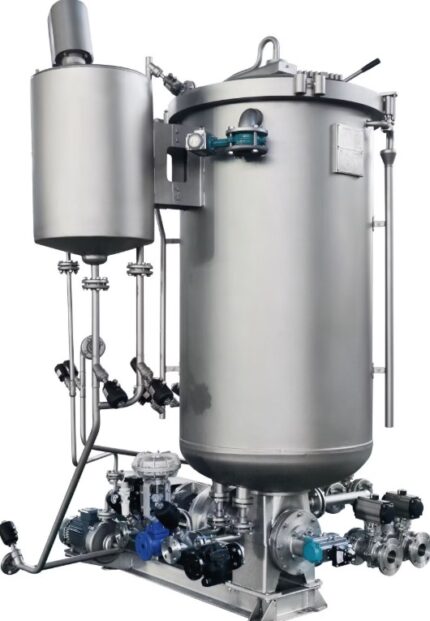
Cone yarn Dyeing machine
Cone Yarn Dyeing Machine

Cone Yarn Dyeing Machine
- Computer system: Foshan HuaGao Chinese English computer, equipped with LG PLC.
- Electromagnetic valve: Ningbo Jiaerling
- Frequency converter: Use Made in China frequency converters.
- Pump: self-made high head and large flow centrifugal water pump.
- Main pump motor: Anhui Wannan Motor.
- Master cylinder liquid level: Use 4-20mA analog signal output.
- Level of deputy temporary worker: use foam water level gauge. (American Mike)
- Temperature detection and display: digital temperature display instrument, dual temperature measuring probes.
- The safety system has a triple cylinder head safety interlock mechanism, and the main cylinder is equipped with a stainless
- steel safety valve.
- Heat exchanger: external spacer heating.
- Feeding system: Quantitative feeding based on the process curve.
- Circulation system: The main pump flows internally and externally, which is automatically controlled by a computer or manually controlled by a relay.
- Valves: Y valves are used for heating, stainless steel Y valves are used for single inlet and single row, and other Y valves are produced by joint ventures.
- Temperature control: on-off temperature control, controlled by a computer, with automatic heating, cooling, and insulation functions.
- Dyeing method: air cushion type.
- Opening method: manual opening.
- Surface treatment: polishing inside and outside the cylinder.
- Cage: Each dyeing machine is equipped with butterfly blades and self-locking locks.
- Body plate: high-quality stainless steel. (S31603)
- Bath ratio: 1:5-1:6
- Chemical material system: including heating and water adding functions, including overflow type salt melting device.
- Overflow cleaning: The cleaning port is installed on the upper part of the cylinder port, and the bottom of the cylinder is filled with water, while the cylinder is drained for easy cleaning.
- Commutation method: Novel "U" type commutation.
- Random accessories: Each model comes with one set of mechanical seals, pot mouth rings, and reversing seals for the main and auxiliary pumps.
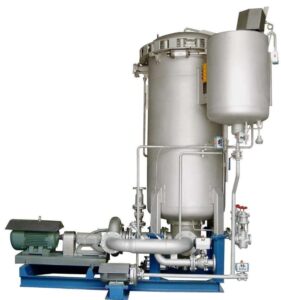
Cone Yarn Dyeing Machine

Oscillation type water bath Dyeing Machine
Oscillation Type Water Bath Dyeing Machine

water bath/Shaker bath Dyeing machine
- Oscillating Mechanism - Provides back-and-forth movement of beakers for uniform dye penetration and sample agitation.
- Multiple Beaker Capacity - Supports dyeing of 12–24 samples simultaneously, ideal for comparative lab testing.
- Digital Temperature Control - Maintains precise water bath temperature (typically up to 99°C), essential for consistent dyeing.
- Variable Oscillation Speed - Adjustable speed settings (e.g., 50–200 cycles/min) to suit different materials and processes.
- Programmable Settings - Allows setting of temperature, time, and speed for repeatable and automated dyeing cycles.
- Stainless Steel Construction - Corrosion-resistant frame and bath for durability in chemical environments.
- Beaker Safety Holders - Secure placement of beakers to prevent spills and maintain consistent treatment.
- Compact Design - Lab-friendly size for easy integration into research and quality control spaces.
- Low Liquor Ratio Operation - Efficient dyeing using minimal dye bath volume (e.g., 1:5 to 1:20), reducing chemical and water use.
- Quiet and Stable Performance
water bath/Shaker bath Dyeing machine

Perspiration Tester
Perspiration Tester
Perspiration Tester
- Fabric samples are treated with synthetic perspiration solution (acidic or alkaline).
- They are sandwiched with adjacent fabric and placed between glass or acrylic plates.
- The assembly is loaded into the tester and pressed under specific pressure.
- it’s then incubated at 37°C (body temperature) for a fixed time (typically 4 or 16 hours).
- Afterward, color change and staining are evaluated using a gray scale.
- Accurate Sweat Simulation - Mimics real-life effects of acidic and alkaline perspiration on fabrics.
- Improves Product Quality - Ensures textiles retain color and don’t bleed or stain when worn.
- Supports Standard Compliance - Follows ISO and AATCC test standards for global market approval.
- Protects Brand Reputation- Reduces customer complaints due to dye transfer or fading.
- Simple and Repeatable- Provides consistent pressure and conditions for reliable results.
- Multi-Sample Testing- Tests multiple specimens at once, saving time in labs.
- Durable and Low Maintenance- Robust frame with minimal moving parts makes it long-lasting and easy to care for.
- Stainless Steel Frame - Corrosion-resistant body for durability and long-term use.
- Multi-Sample Capacity - Can hold up to 20 or more specimens for batch testing.
- Standardized Loading Weight- Applies uniform pressure (usually 12.5 kPa) across all samples.
- Removable Plates - Glass or acrylic plates ensure even contact and easy cleaning.
- Compact Design- Space-saving, bench-top model ideal for lab environments.
- Complies with Test Standards - Meets ISO 105 E04, AATCC 15, and related perspiration fastness standards.
- Ease of Operation - Simple loading, unloading, and incubation process.
- High-Temperature Resistance - Can be used inside incubators at 37°C or ovens as required.
- Prepare the Test Solution - Mix artificial acidic or alkaline perspiration as per standard (ISO or AATCC).
- Cut the Fabric Samples - Cut both the test fabric and adjacent white fabric (usually cotton) to standard size.
- Soak the Samples - Immerse the fabric sandwich (test + adjacent) in the test solution for 30 minutes.
- Remove Excess Liquid - Gently squeeze or blot to remove extra moisture—do not dry.
- Load in the Tester- Place each sandwich between glass or acrylic separator plates in the tester.
- Apply Pressure - Tighten the top plate or place the standard weight on top to apply uniform pressure.
- Incubate - Keep the loaded tester in an oven or incubator at 37°C for 4–16 hours (depending on the method).
- Accurate Sweat Simulation - Mimics real-life effects of acidic and alkaline perspiration on fabrics.
- Improves Product Quality - Ensures textiles retain color and don’t bleed or stain when worn.
- Supports Standard Compliance - Follows ISO and AATCC test standards for global market approval.
- Protects Brand Reputation- Reduces customer complaints due to dye transfer or fading.
- Simple and Repeatable- Provides consistent pressure and conditions for reliable results.
- Multi-Sample Testing- Tests multiple specimens at once, saving time in labs.
- Durable and Low Maintenance- Robust frame with minimal moving parts makes it long-lasting and easy to care for.
- Dry and Evaluate - Remove, air dry the samples, then assess color change and staining using a gray scale.
- Fabric samples are treated with synthetic perspiration solution (acidic or alkaline).
- They are sandwiched with adjacent fabric and placed between glass or acrylic plates.
- The assembly is loaded into the tester and pressed under specific pressure.
- it’s then incubated at 37°C (body temperature) for a fixed time (typically 4 or 16 hours).
- Afterward, color change and staining are evaluated using a gray scale.
Perspiration Tester

Laboratory hydro Extractor
Laboratory Hydro Extractor
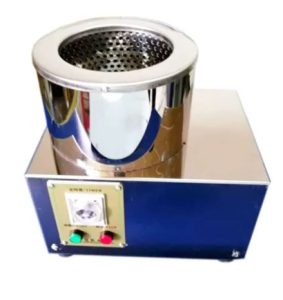
Laboratory Hydro Extractor
- Centrifugal Water Extraction - Uses high-speed spinning (typically 1400–2800 RPM) to extract water from textiles.
- Stainless Steel Inner Basket - Perforated drum holds fabric/yarn securely and allows water to drain efficiently.
- Compact Lab Design - Space-saving unit designed specifically for laboratory sample sizes.
- Digital Timer and Speed Control - Allows precise setting of spin duration and RPM to match sample needs.
- Safety Lock System - Ensures the lid remains closed during operation for user safety.
- Quick Water Removal - Significantly reduces drying time by extracting up to 90–95% of water content.
- Low Noise and Vibration - Balanced design ensures quiet and stable operation.
- Efficient Water Removal - Rapidly extracts 90–95% of water from samples, reducing drying time significantly.
- Saves Time and Energy - Cuts down the load on dryers and shortens total processing time in lab workflows.
- Improves Sample Quality - Gentle spinning preserves fabric structure, avoiding damage or distortion.
- Precise Control - Adjustable speed and timer ensure optimal settings for different fabric types.
- Compact and Lab-Friendly - Small footprint ideal for laboratory use with limited space.
- User Safety - Safety lock prevents lid opening during operation, protecting the user.
- Cost-Effective - Reduces the need for extended dryer use, saving on electricity and equipment wear.
- Versatile Use - Suitable for yarn, fabric, and garment samples across various fiber types.
- High-Speed Centrifugal Operation - Typically runs at 1400–2800 RPM for quick and efficient water removal.
- Stainless Steel Inner Drum - Corrosion-resistant, perforated basket for durability and efficient water drainage.
- Digital Timer and Speed Control - Allows precise control of spin duration and speed based on sample type.
- Compact and Portable Design - Ideal for lab environments with limited space.
- Safety Lock Mechanism - Prevents the lid from opening while the machine is in operation.
- Shock Absorption System- Reduces vibration and noise for smooth, stable performance.
- Quick Cycle Times - Short dewatering cycles improve lab throughput and efficiency.
- Low Maintenance Design - Simple mechanical setup with easy-to-clean components.
- Sample Versatility - Suitable for small fabric swatches, yarns, and small garments.
- Energy Efficient - Uses minimal power while delivering high performance.
- Prepare the Sample - After dyeing or washing, gently squeeze excess water from the fabric or yarn sample by hand.
- Load the Sample - Open the lid and place the sample evenly in the stainless steel drum. - Avoid overloading or uneven placement to maintain balance.
- Close the Lid securely - Ensure the safety lid is properly closed and locked.
- Set the Timer and Speed - Use the control panel to set the spin time (typically 1–5 minutes) and RPM suitable for the sample type.
- Start the Machine- Press the start button. The extractor will spin at the selected speed to remove water via centrifugal force.
- Wait for Spin Completion - The machine will automatically stop after the timer runs out.
- Unload the Sample - Once the drum stops completely, open the lid and carefully remove the sample.
- Proceed to Drying - The dewatered sample can now be air-dried or placed in a drying oven or stenter.
 Brad: DUNLIN
Origin: China
Application scope of small dehydrator:
This dehydrator is a kind of small sample dehydration
experimental equipment with micro capacity
Parameter specification:
Inner barrel size: 185mm in diameter * 80Hmm
Outer barrel size: ∮200*125Hmm
Overall dimension: 290 * 220* 295Hmm
Power supply: single phase 220 V / 50 Hz power: 60 W speed: 1800 R / min
Brad: DUNLIN
Origin: China
Application scope of small dehydrator:
This dehydrator is a kind of small sample dehydration
experimental equipment with micro capacity
Parameter specification:
Inner barrel size: 185mm in diameter * 80Hmm
Outer barrel size: ∮200*125Hmm
Overall dimension: 290 * 220* 295Hmm
Power supply: single phase 220 V / 50 Hz power: 60 W speed: 1800 R / min
Laboratory hydro Extractor Machine Dunlin price in Bangladesh Laboratory hydro Extractor Machine Dunlin in textile Textile testing equipment in Bangladesh Textile testing equipment in Dhaka Textile testing equipment in Uttara MAAM tex Laboratory hydro Extractor Machine Dunlin price in Bangladesh
Laboratory hydro Extractor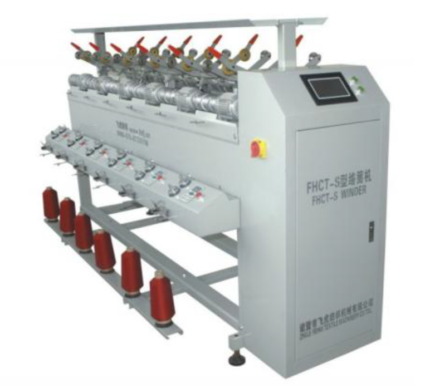
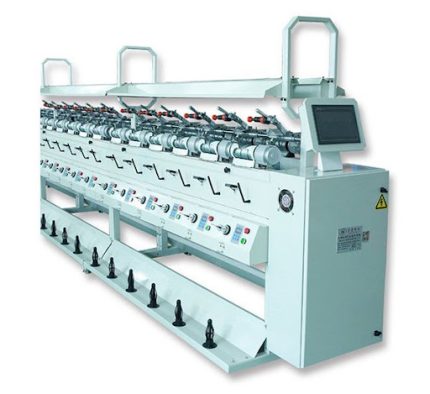
High Speed Soft Winding Machine
High Speed Soft Winding Machine latest 2026
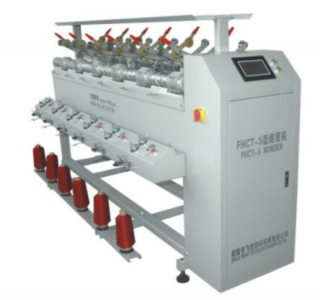
High Speed Soft Cone Winding Machine latest 2026
Product Introduction
The High Speed Soft Winding Machine latest 2026 is a high-efficiency industrial yarn winding machine specially designed for preparing yarn cones before the dyeing process. It is suitable for winding a wide range of yarns, including Cotton, Wool, Acrylic, Polyester and other commonly used textile yarns.The machine is designed to produce well-formed and uniform soft yarn packages, helping improve the quality and consistency of the subsequent dyeing process. With a winding speed of 100–1000 m/min, the machine provides high productivity while allowing the operator to adjust the process speed according to yarn quality and feeding conditions. The High Speed Soft Cone Winding Machine latest 2026 also helps reduce manual workload and improve operational efficiency in textile yarn preparation. Its integrated yarn monitoring and control functions make it suitable for modern spinning, dyeing and textile processing facilities.Scope of Application
The High Speed Soft Cone Winding Machine latest 2026 is mainly used for before-dyeing yarn preparation. It can be used in textile mills, yarn dyeing factories, spinning mills and other facilities where yarn needs to be prepared in soft cone form before dyeing. It is suitable for:- Cotton yarn
- Wool yarn
- Acrylic yarn
- Polyester yarn
- Blended yarn
- Other suitable textile yarns
Standard Features
- High-speed winding operation
- 96 spindles per set
- 12 spindles per section, double side
- Cone-to-cone winding system
- Adjustable winding speed from 100–1000 m/min
- Suitable for different types of textile yarn
- Individual 90W DC motor for each spindle
- Meter counting system
- Automatic yarn break sensor
- Adjustable speed control
- Yarn tension control device
- Anti-stack device
- Centralized control box
- Touch-screen control system
- Voltage regulator
- Complete with standard accessories
- Designed for efficient and uniform yarn package formation
Technical Specification of High Speed Soft Winding Machine latest 2026
| Parameter | Specification |
|---|---|
| Machine Name | High Speed Soft Cone Winding Machine |
| Brand | FEIHU |
| Model | FHCT-S / As Per Machine |
| Origin | China |
| Machine Type | Cone to Cone |
| Application | Before Dyeing Yarn Preparation |
| Spindle Number | 96 Spindles/Set |
| Spindle Arrangement | 12 Spindles/Section, Double Side |
| Winding Speed | 100–1000 m/min |
| Motor Power | 90W DC Motor / Spindle |
| Yarn Tension | Adjustable |
| Meter Counting | Available |
| Yarn Break Sensor | Available |
| Speed Control | Adjustable |
| Anti-Stack Device | Available |
| Control System | Centralized Control Box |
| Display | Touch Screen |
| Voltage Regulation | Available |
| Standard Accessories | Complete Set |
| Dimension | L 18160 × W 1060 × H 1560 mm / As Per Machine |
| Net Weight | As Per Machine |
Winding Speed
The FEIHU FHCT-S provides a winding speed range of 100–1000 m/min. The actual process speed can be adjusted according to the quality of yarn, yarn type, feeding condition and required package formation. This adjustable speed function allows users to select an appropriate operating condition for different yarn materials and production requirements.Spindle Configuration
The High Speed Soft Winding Machine latest 2026 is configured with 96 spindles per set, arranged as 12 spindles per section with double-side construction. This configuration allows the machine to achieve high production capacity while maintaining an organized and efficient winding arrangement. The multi-spindle design makes the FHCT-S suitable for industrial-scale yarn preparation where continuous and reliable production is required.Individual Spindle Motor
Each spindle is equipped with a 90W DC motor, providing independent and efficient spindle operation. The individual motor arrangement supports stable winding performance and allows the machine to operate effectively across its specified speed range.Yarn Tension Control
Consistent yarn tension is an important requirement for producing a properly formed yarn package. The FHCT-S is equipped with a yarn tension device to help maintain controlled yarn tension during the winding process. Proper tension control helps produce more uniform packages and supports improved performance during subsequent textile processing and dyeing operations.Meter Counting System
The integrated meter counting system enables operators to monitor the winding length during operation. This feature provides convenient production monitoring and helps maintain consistency between yarn packages.Yarn Break Sensor
The machine is equipped with a yarn break sensor for detecting yarn breakage during winding. This helps the operator identify interruptions quickly and improves the overall efficiency of the winding operation.Anti-Stack Device
The built-in anti-stack device is designed to support proper yarn distribution during winding. It helps reduce concentrated yarn build-up and contributes to better package formation.Centralized Touch-Screen Control
The FEIHU FHCT-S features a centralized control box with touch-screen operation, providing convenient access to machine operating functions. The centralized control arrangement makes it easier for operators to monitor and control the winding process from a single operating point.Voltage Regulator
A voltage regulator is included as part of the standard machine configuration. It supports stable electrical operation and helps protect the machine's control system under suitable operating conditions.Package Formation
One of the main purposes of the High Speed Soft Winding Machine latest 2026 is to produce a well-formed soft yarn package suitable for subsequent dyeing operations. Proper package formation is important in yarn dyeing because it supports consistent penetration and circulation of dye liquor through the yarn package. The machine's controlled winding speed, yarn tension system and anti-stack arrangement work together to support uniform package preparation.Applications of High Speed Soft Winding Machine latest 2026
The High Speed Soft Winding Machine latest 2026 can be used in:- Yarn Dyeing Factories
- Textile Manufacturing Plants
- Spinning Mills
- Knitting Industries
- Garment Textile Production
- Cotton Yarn Processing
- Wool Yarn Processing
- Acrylic Yarn Processing
- Polyester Yarn Processing
- Blended Yarn Processing
- Before-Dyeing Yarn Preparation
Suitable Yarn Types
The machine is designed for winding various textile yarns, including: Cotton Yarn: Suitable for preparing cotton yarn packages before dyeing. Wool Yarn: Suitable for appropriate wool yarn winding applications. Acrylic Yarn: Can be used for preparing acrylic yarn for subsequent processing. Polyester Yarn: Suitable for polyester yarn package preparation. Other Textile Yarns: The machine can also be configured for other suitable yarn types according to production requirements.Advantages of High Speed Soft Winding Machine latest 2026
High Production Efficiency
With up to 96 spindles per set and a winding speed of up to 1000 m/min, the machine is designed for high-volume yarn preparation.Uniform Yarn Packages
Controlled winding parameters and tension management help produce well-formed and consistent soft cones.Reduced Labor Intensity
The multi-spindle configuration and centralized control system reduce manual workload and improve operator efficiency.Adjustable Operating Speed
The winding speed can be adjusted according to yarn quality, yarn type and feeding conditions.Improved Process Preparation
Properly prepared yarn packages can support more consistent performance during subsequent dyeing and textile processing.Convenient Operation
The centralized touch-screen control system provides a convenient interface for machine operation and monitoring.Yarn Break Monitoring
The integrated yarn break sensor helps detect winding interruptions and supports efficient production management.Complete Standard Accessories
The machine is supplied with its standard accessories and essential operating components.Why Choose High Speed Soft Winding Machine latest 2026
The High Speed Soft Winding Machine latest2026 is designed for textile manufacturers looking for an efficient and reliable solution for before-dyeing yarn preparation. Its combination of 96-spindle capacity, adjustable 100–1000 m/min winding speed, individual DC motors, yarn tension control, meter counting, yarn break sensing, anti-stack technology and centralized touch-screen control makes it suitable for modern textile production environments. The machine can help textile factories improve yarn preparation efficiency, reduce manual workload and achieve more consistent soft cone packages for subsequent dyeing operations.Standard Accessories
The machine is supplied with complete standard accessories required for normal operation, subject to the final machine configuration and supplier specification.Machine Dimension
Length: 18160 mm Width: 1060 mm Height: 1560 mm Dimension: As Per Machine Net Weight: As Per MachineProduct Summary of High Speed Soft Winding Machine latest 2026
The High Speed Soft Winding Machine latest 2026 is an industrial cone-to-cone yarn winding machine designed primarily for before-dyeing preparation. With 96 spindles/set, 12 spindles per section, double-side configuration, 100–1000 m/min winding speed and 90W DC motor per spindle, it provides an efficient solution for preparing cotton, wool, acrylic, polyester and other textile yarns. Its meter counter, yarn break sensor, adjustable speed, yarn tension device, anti-stack device, centralized touch-screen control box and voltage regulator provide convenient and controlled winding operation for modern textile processing facilities.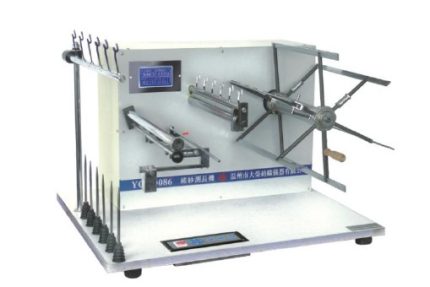
Electronic wrap reel
Electronic Wrap Reel

Electronic Wrap Reel
Electronic Wrap Reel

Sample Cone Yarn Dyeing machine
Sample Cone Yarn Dyeing Machine

Sample Cone Yarn Dyeing Machine
- Computer system: Foshan HuaGao Chinese English computer, equipped with LG PLC.
- Electromagnetic valve: Ningbo Jiaerling
- Frequency converter: Use Made in China frequency converters.
- Pump: self-made high head and large flow centrifugal water pump.
- Main pump motor: Anhui Wannan Motor.
- Master cylinder liquid level: Use 4-20mA analog signal output.
- Level of deputy temporary worker: use foam water level gauge. (American Mike)
- Temperature detection and display: digital temperature display instrument, dual temperature measuring probes.
- The safety system has a triple cylinder head safety interlock mechanism, and the main cylinder is equipped with a stainless
- steel safety valve.
- Heat exchanger: external spacer heating.
- Feeding system: Quantitative feeding based on the process curve.
- Circulation system: The main pump flows internally and externally, which is automatically controlled by a computer or manually controlled by a relay.
- Valves: Y valves are used for heating, stainless steel Y valves are used for single inlet and single row, and other Y valves are produced by joint ventures.
- Temperature control: on-off temperature control, controlled by a computer, with automatic heating, cooling, and insulation functions.
- Dyeing method: air cushion type.
- Opening method: manual opening.
- Surface treatment: polishing inside and outside the cylinder.
- Cage: Each dyeing machine is equipped with butterfly blades and self-locking locks.
- Body plate: high-quality stainless steel. (S31603)
- Bath ratio: 1:5-1:6
- Chemical material system: including heating and water adding functions, including overflow type salt melting device.
- Overflow cleaning: The cleaning port is installed on the upper part of the cylinder port, and the bottom of the cylinder is filled with water, while the cylinder is drained for easy cleaning.
- Commutation method: Novel "U" type commutation.
- Random accessories: Each model comes with one set of mechanical seals, pot mouth rings, and reversing seals for the main and auxiliary pumps.
Sample Cone Yarn Dyeing Machine

IR Dyeing Machine Dunlin
IR Dyeing Machine Dunlin
IR Dyeing machine Dunlin is Safe, high efficiency, environment friendly, energy saving, optimum for new dyeing small sample machines
0 - 3.5 ℃ / min Cooling rate 0.2 - 5 ℃ / min Cooling method Air-cooled Rotation speed 0 - 60 rpm Liquor ratio 1:5 -1:100 Power supply 1∮AC 220V 50/60HZ Dimensions( L x W x H) 670×670×780mm 860×680×780mm Weight 100kg 120kg Standard Accessories Cups 1set
Put the test sample. Cups stand 1set Place where to put cups. Protective glove 1set To avoid to be hurt by HT cups. Model: IF-24SCapacity: 24 pots Brad: DUNLIN Origin: China
Color dyeing tests for various dyestuffs of IR Dyeing machine Dunlin- Step dyeing tests. C. Dispersing, levelling and impregnating test. D. High or low liquor ratio exhausting tests. E. Fabric steak and staining tests. F. Concentration tests and others. Protection and Safety gates to protect. Temperature control accuracy +/- 0.2degree

IR Dyeing machine

