

 Products
 Martindale abrasion tester Updated


0%


GSM Cutter with Balance
$0.00
GSM Cutter with Balance

GSM Cutter with Balance
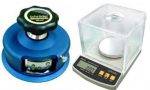
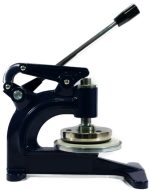
A GSM Cutter with Balance is a lab toolset used to determine the GSM (Grams per Square Meter) of fabrics, which indicates the fabric’s weight and density. The kit includes a GSM round cutter and a precision weighing balance.
Purpose GSM Cutter with Balance:
To accurately measure the weight per unit area of textile, paper, or nonwoven samples for quality control and product classification.
How It Works:
GSM Cutter: – A circular blade cuts a fixed area (usually 100 cm²) from the fabric.
Weighing Balance: – The cut piece is weighed, and the result is multiplied by 100 to get GSM.
GSM = Weight (in grams) × 100
Applications of GSM Cutter with Balance:
Textile and garment industry
Nonwovens and paper manufacturing
QC labs and R&D
Benefits of GSM Cutter with Balance:
Accurate GSM Measurement – Ensures precise fabric weight analysis for quality control.
Quick and Simple Operation – Allows fast sampling and GSM calculation in minutes.
No Need for Area Calculation – Cutter gives a fixed area (usually 100 cm²), simplifying the formula.
Improves Product Consistency – Helps maintain uniform fabric weight across batches.
Portable and User-Friendly – Compact design makes it ideal for labs and production floors.
Cost-Effective Tool – Offers high accuracy without the need for expensive equipment.
Versatile Use – Suitable for fabrics, paper, leather, films, and more.
Features of GSM Cutter with Balance:
Rotary Blade Cutter – Stainless steel blades for clean and accurate circular cuts.
Fixed Sample Area – Typically 100 cm², eliminating the need for area measurement.
Precision Digital Balance – Measures in grams with high resolution (0.01 g or better).
Rubber Cutting Pad – Protects blade and provides a smooth surface for cutting.
Safety Lock – Prevents accidental blade exposure.
Compact & Durable Design- Long-lasting, lab-friendly construction.
How to Use GSM Cutter with Balance:
Prepare the Fabric Sample- Place the fabric on the rubber cutting pad.
Cut the Sample – Hold the GSM cutter firmly and rotate it to cut a 100 cm² circular sample.
Turn on the Balance – Power up the digital weighing scale and tare it to zero.
Weigh the Sample – Place the cut fabric piece on the balance and note the weight in grams.
Calculate GSM – Multiply the weight by 100 to get GSM. – GSM = Sample weight (g) × 100
Record the Result- Log the GSM value for quality control or analysis.
Clean and Store – Wipe the cutter and balance, and store them safely after use.
GSM Calculation Formula:
GSM (g/m²) = (Weight of Sample in grams) × 100
When using a GSM cutter (100 cm²):
The cutter gives a fixed area of 100 cm², which is 1/100th of a square meter.
So, multiplying the sample’s weight by 100 gives the GSM directly.
Example:
If the sample weighs 1.75 g, then:
GSM = 1.75 × 100 = 175 g/m²
Balance Calibration Guide (Manual Calibration):
Warm-Up – Turn on the balance and let it warm up for 10–15 minutes if required.
Level the Balance – Use the built-in bubble level and adjust leveling feet until the bubble is centered.
Tare the Balance – Press the “TARE” or “ZERO” button to reset the display to 0.000 g.
Enter Calibration Mode – Press the “CAL” or “MODE” button (depends on the model).
– Some balances may require holding the button for a few seconds.
Use Standard Weight – When prompted, place a certified calibration weight (e.g., 100g, 200g) on the pan. – Wait for the display to stabilize.
Confirm Calibration – The balance will beep or show “PASS” once successful. – Remove the weight when done. Recheck Zero – Ensure the display returns to 0.000 g after removing the weight.
Tips:
Use certified weights for accuracy (Class F1 or E2).
Calibrate in a draft-free, vibration-free environment.
Calibrate daily or before critical measurements.
GSM Cutter & Balance
GSM Cutter
Brand: Schroder
Origin: Germany
Capacity: 100 Sq.cm
Supplied with 1 pcs cutting Pad and 04 pcs cutting blade.
Digital Electronics balance
Precision GSM Weight Balance 0.01g to 200g
Model: GSM200
Brand: Schroder
Origin: Germany
Shipping & Delivery
Related products
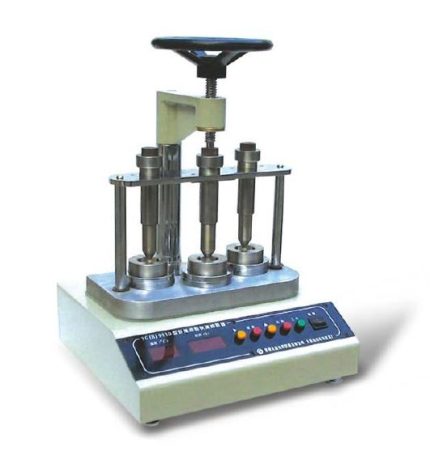

Fiber Oil Fast Extractor
Fiber Oil Fast Extractor

Fiber Oil Fast Extractor
- Sample Preparation: Cut the fabric or fiber into small pieces.
- Solvent Addition: Place the sample into a metal tube and add an appropriate solvent (e.g., petroleum ether, ethyl ether).
- Extraction: Apply weight to the sample to facilitate the dissolution of oils into the solvent.
- Evaporation: The solvent-oil mixture drips onto a heated plate where the solvent evaporates, leaving behind the oil.
- Measurement: Weigh the remaining oil and calculate its percentage relative to the initial sample mass.
- Accurate Oil Content Measurement- Precisely determines oil or finish content in fibers, crucial for quality control.
- Rapid Extraction Process - Delivers fast results, improving lab efficiency and productivity.
- Simultaneous Multi-Sample Testing - Multiple workstations (e.g., 4 at once) reduce testing time for bulk samples.
- Improved Product Quality - Helps maintain consistent oil levels, which affect dyeing, processing, and fabric performance.
- Automatic Operation - Automated pressing and heating reduce manual effort and operator error.
- Digital Monitoring - Built-in timer, temperature control, and oil calculator enhance accuracy and usability.
- Compliance with Standards - Supports industry methods like GB/T 6504-2017, ensuring reliable and standard-compliant results.
- Safe Solvent Handling - Enclosed design minimizes solvent exposure and evaporation loss.
- Multiple Test Stations - Usually equipped with 2 to 4 independent work units for parallel testing.
- Automatic Weight Pressing System - Applies consistent pressure on samples for uniform solvent extraction.
- Microcomputer Temperature Control - Maintains precise heating (typically 90–120°C) with ±1°C accuracy.
- Built-in Timer and Calculator - Allows setting extraction time and calculates oil content directly.
- Solvent Evaporation Plate- Heats and evaporates solvent quickly, leaving only the oil residue.
- Digital Display - Shows time, temperature, and process status for user-friendly operation.
- Compact and Durable Design - Made with corrosion-resistant materials suited for chemical handling.
- Safety Features - Includes overheat protection and enclosed solvent chamber to reduce exposure risk.
- Standard Compliant - Designed to meet GB/T 6504-2017 and similar industry testing standards.
- Prepare the Sample - Cut 5–10 g of fiber or yarn into small pieces and place in the sample tube.
- Add Solvent - Pour a suitable solvent (e.g., petroleum ether) into the tube to cover the sample.
- Apply Weight - Place the extractor's weight or press system onto the sample to aid extraction.
- Start Extraction - Activate the machine. The solvent dissolves the oils and flows to the heating plate.
- Heat for Evaporation - Set the temperature (typically 90–120°C). The solvent evaporates, leaving oil on the plate.
- Measure Oil Content- After drying, weigh the remaining oil. Use the built-in calculator or formula:
- Clean the Unit - After cooling, clean all parts to prepare for the next test.
Fiber Oil Fast Extractor
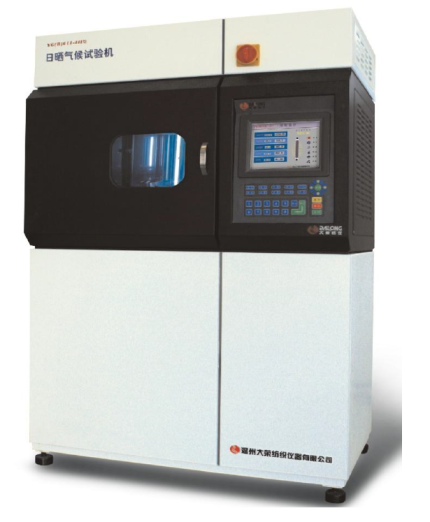

Perspiration Tester
Perspiration Tester
Perspiration Tester
- Fabric samples are treated with synthetic perspiration solution (acidic or alkaline).
- They are sandwiched with adjacent fabric and placed between glass or acrylic plates.
- The assembly is loaded into the tester and pressed under specific pressure.
- it’s then incubated at 37°C (body temperature) for a fixed time (typically 4 or 16 hours).
- Afterward, color change and staining are evaluated using a gray scale.
- Accurate Sweat Simulation - Mimics real-life effects of acidic and alkaline perspiration on fabrics.
- Improves Product Quality - Ensures textiles retain color and don’t bleed or stain when worn.
- Supports Standard Compliance - Follows ISO and AATCC test standards for global market approval.
- Protects Brand Reputation- Reduces customer complaints due to dye transfer or fading.
- Simple and Repeatable- Provides consistent pressure and conditions for reliable results.
- Multi-Sample Testing- Tests multiple specimens at once, saving time in labs.
- Durable and Low Maintenance- Robust frame with minimal moving parts makes it long-lasting and easy to care for.
- Stainless Steel Frame - Corrosion-resistant body for durability and long-term use.
- Multi-Sample Capacity - Can hold up to 20 or more specimens for batch testing.
- Standardized Loading Weight- Applies uniform pressure (usually 12.5 kPa) across all samples.
- Removable Plates - Glass or acrylic plates ensure even contact and easy cleaning.
- Compact Design- Space-saving, bench-top model ideal for lab environments.
- Complies with Test Standards - Meets ISO 105 E04, AATCC 15, and related perspiration fastness standards.
- Ease of Operation - Simple loading, unloading, and incubation process.
- High-Temperature Resistance - Can be used inside incubators at 37°C or ovens as required.
- Prepare the Test Solution - Mix artificial acidic or alkaline perspiration as per standard (ISO or AATCC).
- Cut the Fabric Samples - Cut both the test fabric and adjacent white fabric (usually cotton) to standard size.
- Soak the Samples - Immerse the fabric sandwich (test + adjacent) in the test solution for 30 minutes.
- Remove Excess Liquid - Gently squeeze or blot to remove extra moisture—do not dry.
- Load in the Tester- Place each sandwich between glass or acrylic separator plates in the tester.
- Apply Pressure - Tighten the top plate or place the standard weight on top to apply uniform pressure.
- Incubate - Keep the loaded tester in an oven or incubator at 37°C for 4–16 hours (depending on the method).
- Accurate Sweat Simulation - Mimics real-life effects of acidic and alkaline perspiration on fabrics.
- Improves Product Quality - Ensures textiles retain color and don’t bleed or stain when worn.
- Supports Standard Compliance - Follows ISO and AATCC test standards for global market approval.
- Protects Brand Reputation- Reduces customer complaints due to dye transfer or fading.
- Simple and Repeatable- Provides consistent pressure and conditions for reliable results.
- Multi-Sample Testing- Tests multiple specimens at once, saving time in labs.
- Durable and Low Maintenance- Robust frame with minimal moving parts makes it long-lasting and easy to care for.
- Dry and Evaluate - Remove, air dry the samples, then assess color change and staining using a gray scale.
- Fabric samples are treated with synthetic perspiration solution (acidic or alkaline).
- They are sandwiched with adjacent fabric and placed between glass or acrylic plates.
- The assembly is loaded into the tester and pressed under specific pressure.
- it’s then incubated at 37°C (body temperature) for a fixed time (typically 4 or 16 hours).
- Afterward, color change and staining are evaluated using a gray scale.
Perspiration Tester
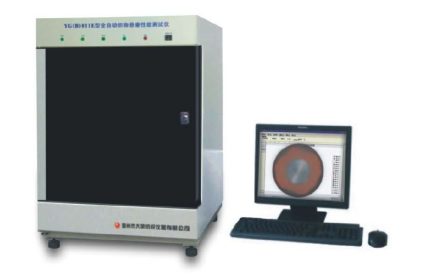
Fabric drape tester
Fabric Drape Tester
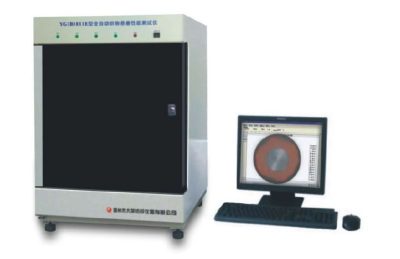
Fabric Drape Tester
- Quantifies Fabric Flow - Measures drape behavior accurately, crucial for garments and furnishings.
- Supports Design Decisions - Helps designers select fabrics that match the intended look and movement of a product.
- Improves Garment Fit and Comfort - Ensures fabrics behave naturally on the body, enhancing wear ability.
- Enhances Product Aesthetics - Prevents stiff or limp fabric choices in fashion, interior, or technical textiles.
- Standardized Evaluation - Enables comparison across fabrics using drape coefficient, based on standards (e.g., BS 5058).
- Supports R&D - Useful in developing new fabrics or finishes to improve drape quality.
- Non-Destructive Testing - Tests fabric without damaging it, allowing for further analysis.
- Boosts Quality Control - Identifies batch inconsistencies or performance issues early in production.
- Rotating Support Disc - Holds the fabric sample over a smaller disc to create natural drape.
- Standard Sample Size Support - Designed for circular fabric samples, usually 30 cm in diameter.
- Light Projection System - Projects the draped fabric’s shadow onto a screen or recording surface.
- Drape Coefficient Calculation - Measures the shadow area to compute the drape coefficient (percentage of unsupported area covered by the shadow).
- Digital or Manual Options - Available in models with digital image processing or manual plan meter tracing.
- Stable Base and Structure - Ensures consistent and vibration-free testing conditions.
- Sample Templates Provided - For cutting precise, standard-sized fabric specimens.
- User-Friendly Interface - Simple controls for rotation and light alignment.
- Compact and Lab-Ready Design - Fits easily on lab benches and in testing environments.
- Compliance with Testing Standards - Supports BS 5058 and other relevant drape measurement methods.
- Prepare the Fabric Sample - Cut a circular fabric sample, typically 30 cm in diameter, using the provided template.
- Place the Fabric - Center the fabric sample over the smaller support disc (usually 18 cm diameter) on the tester.
- Turn on the Light Source - Illuminate the fabric from above so it casts a shadow onto the recording surface or paper below.
- Capture the Shadow Outline - Trace the shadow manually on paper or capture it digitally, depending on the model.
- Measure the Shadow Area - Use a plan meter (manual) or software (digital) to determine the shadow’s area.
- Calculate Drape Coefficient (DC) - Use the formula:
- Record the Result - Log the drape coefficient to evaluate how stiff or flexible the fabric is.
- Repeat for Accuracy - Test multiple samples and average the results for consistency.
 It is used for testing dynamic and static drape properties
(drape coefficient, shape change rate, surface ripple and drape uniformity, etc.)
of various fabrics.
Related standards GB/T23329 FZ/01045 BS5058 etc.
Instrument characteristics
1. CCD imaging, dynamic and static image processing.
2. A variety of charts and data statistics, analysis, storage, output
3. No need to replace background color, can test all kinds of color samples.
4. Work mode:Microcomputer control, CCD imaging, automatic processing of images and data automatically.
Technical parameters
1. Communication interface: RS232, USB
2. Image sensor: CCD sensor.
3. Static (dynamic) state draping coefficient: 0 ~ 100% + 2
4. Drapability uniformity: 0 ~ 100% + 2
5. The rate of morphological change is 0 to 100% + 2.
6. Surface waviness error: + 1
It is used for testing dynamic and static drape properties
(drape coefficient, shape change rate, surface ripple and drape uniformity, etc.)
of various fabrics.
Related standards GB/T23329 FZ/01045 BS5058 etc.
Instrument characteristics
1. CCD imaging, dynamic and static image processing.
2. A variety of charts and data statistics, analysis, storage, output
3. No need to replace background color, can test all kinds of color samples.
4. Work mode:Microcomputer control, CCD imaging, automatic processing of images and data automatically.
Technical parameters
1. Communication interface: RS232, USB
2. Image sensor: CCD sensor.
3. Static (dynamic) state draping coefficient: 0 ~ 100% + 2
4. Drapability uniformity: 0 ~ 100% + 2
5. The rate of morphological change is 0 to 100% + 2.
6. Surface waviness error: + 1 
Color Matching Cabinet-Light Box
Color Matching Cabinet-Light Box
Color Matching Cabinet-Light Box

Counting Balance-Weighing Scale
Counting Balance-Weighing Scale
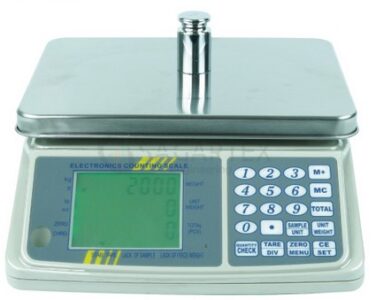
Counting Balance-Weighing Scale
Counting Balance-Weighing Scale
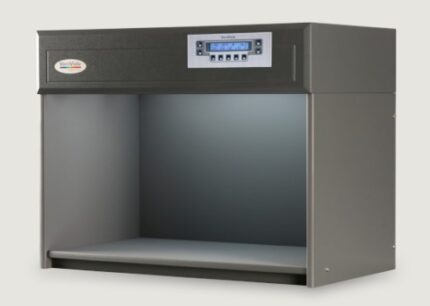
VeriVide Colour Assessment Cabinets
VeriVide Colour Assessment Cabinets
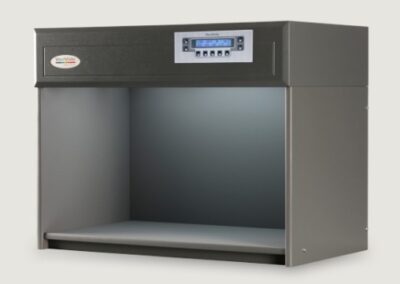 VeriVide offers high-quality Colour Assessment Cabinets (CACs) such as the CAC 60-4, CAC 60-5, and CAC 120-4&5. These cabinets, originating from the UK, are reliable tools for visual evaluation in quality assurance, meeting national, international, and retailer standards. They effectively mitigate issues related to color assessment.VeriVide Colour Assessment Cabinets
High-quality visual evaluation tool for quality assurance. Adhering to national, international and retailer standards.Colour Assessment Cabinet's (CACs) reduce problems associated with assessing products or samples in different environments,be though geological or seasonal, offering a cost-effective method to ensure visual accuracy and product quality.
Color Light Box Enhance color precision with VeriVide's cutting-edge Colour Assessment
Cabinets. These cabinets are meticulously designed to ensure accurate color evaluation in various industries. Invest in VeriVide Colour Assessment Cabinets to elevate your color assessment process.
Enhance Color Precision with VeriVide's Cutting-Edge Assessment Cabinets, which meet or surpass ISO 3664 and BS 950 Part 1 international standards. The cabinets are adaptable to user requirements, with lamp options to choose different light sources. Available in 60, 120, and 150cm widths, VeriVide Colour Assessment Cabinets provide a flexible solution for accurate color assessment.
Incorporate user-friendly features like servicing indicator, auto sequence, warm-up, power save and data storage.4 or 5 light source options Versions available for colour fastness testing and particulate testing both adhering to global standardsEnsure that you are using the best equipment available as they provide the best fluorescent D65 daylight simulator, with the highest Colour
Rendering Index (CRI), available. VeriVide Colour Assessment Cabinets products are known as light boxes, viewing booths, colour cabinets and others, depending on which industry or country they are serving in. They are used within a wide array of industry sectors throughout the world including textile and apparel, graphics, automotive, ceramics, cosmetics, pharmacology (CAC Particulate),
food, footwear, packaging and printing.Download the Datasheet below for more information or click 'VeriVide CAC Datasheet Here' to get in touch with colour experts.
VeriVide CAC Datasheet Here Features of VeriVide Colour Assessment Cabinets
• CAC 60, CAC 120 and CAC 150 accommodate 60, 120 and 150cm tubes respectively
VeriVide offers high-quality Colour Assessment Cabinets (CACs) such as the CAC 60-4, CAC 60-5, and CAC 120-4&5. These cabinets, originating from the UK, are reliable tools for visual evaluation in quality assurance, meeting national, international, and retailer standards. They effectively mitigate issues related to color assessment.VeriVide Colour Assessment Cabinets
High-quality visual evaluation tool for quality assurance. Adhering to national, international and retailer standards.Colour Assessment Cabinet's (CACs) reduce problems associated with assessing products or samples in different environments,be though geological or seasonal, offering a cost-effective method to ensure visual accuracy and product quality.
Color Light Box Enhance color precision with VeriVide's cutting-edge Colour Assessment
Cabinets. These cabinets are meticulously designed to ensure accurate color evaluation in various industries. Invest in VeriVide Colour Assessment Cabinets to elevate your color assessment process.
Enhance Color Precision with VeriVide's Cutting-Edge Assessment Cabinets, which meet or surpass ISO 3664 and BS 950 Part 1 international standards. The cabinets are adaptable to user requirements, with lamp options to choose different light sources. Available in 60, 120, and 150cm widths, VeriVide Colour Assessment Cabinets provide a flexible solution for accurate color assessment.
Incorporate user-friendly features like servicing indicator, auto sequence, warm-up, power save and data storage.4 or 5 light source options Versions available for colour fastness testing and particulate testing both adhering to global standardsEnsure that you are using the best equipment available as they provide the best fluorescent D65 daylight simulator, with the highest Colour
Rendering Index (CRI), available. VeriVide Colour Assessment Cabinets products are known as light boxes, viewing booths, colour cabinets and others, depending on which industry or country they are serving in. They are used within a wide array of industry sectors throughout the world including textile and apparel, graphics, automotive, ceramics, cosmetics, pharmacology (CAC Particulate),
food, footwear, packaging and printing.Download the Datasheet below for more information or click 'VeriVide CAC Datasheet Here' to get in touch with colour experts.
VeriVide CAC Datasheet Here Features of VeriVide Colour Assessment Cabinets
• CAC 60, CAC 120 and CAC 150 accommodate 60, 120 and 150cm tubes respectively
- Either 4 or 5 light sources available for each model including D65, D50, 840P15, F and UV - see Lamp Options.• Internal finishes in Munsell N5, Munsell N7 or Grey 5574 • Diffuser and/or dimmer options available Dimensions of VeriVide Colour Assessment Cabinets CAC 60-4 Dimensions (mm) Width Height Depth Overall 710 545 420

Random Tumble Pilling Tester
Random Tumble Pilling Tester
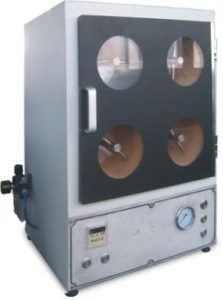
Random Tumble Pilling Tester
- Multiple Test Chambers - Typically comes with 2 or 4 cork-lined chambers for simultaneous testing of multiple fabric samples.
- High-Speed Rotating Impellers - Impellers rotate at around 1200 rpm to create intense, random tumbling motion.
- Compressed Air System - Ensures continuous fabric movement and realistic simulation of wear.
- Digital Timer- Allows precise setting of test duration with easy-to-read display.
- Viewing Windows- Transparent chamber doors for monitoring fabric movement during testing.
- Standard Compliant Design- Meets ASTM D3512, ISO 12945-3, GB/T 4802.4 and other major standards.
- Robust Construction- Durable materials and components designed for long-term laboratory use.
- Easy Sample Handling - Quick-open chamber lids and simple sample placement process.
- Compact Footprint- Saves space in laboratory environments.
- Prepare Samples- Cut fabric into standard-sized specimens (usually circular or rectangular per ASTM/ISO specs)- Condition samples as per the standard (usually 24 hrs at 21°C, 65% RH).
- Load the Chambers - Place each sample into a cork-lined test chamber. - Add a small piece of gray cotton backing fabric if required by the method.
- Set Parameters - Adjust compressed air pressure (typically 14–21 kPa or 2–3 psi).
- Start the Test- Close the chamber doors and press start. - Impellers rotate, tumbling the samples randomly with air flow.
- Stop and Unload - Once the timer ends, remove the samples carefully.
- Evaluate Pilling - Compare the tested samples to standard pilling rating photographs or scales.
- Record Results - Document the pilling grades and any observations.
 [Scope of application]:
It is used to test the fuzzing and pilling
performance of the fabric under the condition of
free rolling and friction in the drum.
[Related standards]:
GB/T4802.4 (Standard Drafting Unit)
ISO12945.3, ASTM D3512, ASTM D1375, DIN 53867, ISO 12945-3, JIS L1076, etc.
[Technical parameter]:
1. Number of boxes: 4
2. Roller specifications: diameter (146±1.0) mm, depth (152.4±1.0) mm;
3. Lining material: polychloroprene lining thickness (3.2±0.4) mm. , Hardness (60~70)
IRHD;
4. Impeller specifications: φ12.7 mm×120.6 mm;
5. Plastic blade specifications: 10 mm×65 mm;
6. Rotation speed: 1~2400 rpm can be set freely
7. Working pressure: 14kPa~21kPa;
8. Time counting: (1~999) min.
9. Power supply: AC220V±10% 50Hz 80W
10. Appearance: (480×400×680)mm
11. Weight: 40kg
[Standard accessories]
Items and specifications Qty. Note
Fuse 2 3A
Main machine 1
Power cable 1
Air tube 1 Φ8mm
Grey cotton sliver 4
Cork lining 4
Rating sample photo 1
White glue 1
[Scope of application]:
It is used to test the fuzzing and pilling
performance of the fabric under the condition of
free rolling and friction in the drum.
[Related standards]:
GB/T4802.4 (Standard Drafting Unit)
ISO12945.3, ASTM D3512, ASTM D1375, DIN 53867, ISO 12945-3, JIS L1076, etc.
[Technical parameter]:
1. Number of boxes: 4
2. Roller specifications: diameter (146±1.0) mm, depth (152.4±1.0) mm;
3. Lining material: polychloroprene lining thickness (3.2±0.4) mm. , Hardness (60~70)
IRHD;
4. Impeller specifications: φ12.7 mm×120.6 mm;
5. Plastic blade specifications: 10 mm×65 mm;
6. Rotation speed: 1~2400 rpm can be set freely
7. Working pressure: 14kPa~21kPa;
8. Time counting: (1~999) min.
9. Power supply: AC220V±10% 50Hz 80W
10. Appearance: (480×400×680)mm
11. Weight: 40kg
[Standard accessories]
Items and specifications Qty. Note
Fuse 2 3A
Main machine 1
Power cable 1
Air tube 1 Φ8mm
Grey cotton sliver 4
Cork lining 4
Rating sample photo 1
White glue 1

