

 Products
 Martindale abrasion tester Updated

0%

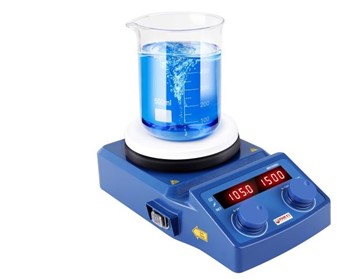
Digital hot plate-magnetic stirrer
$0.00
Digital hot plate-magnetic stirrer
Digital hot plate-magnetic stirrer
A digital hot plate-magnetic stirrer is a laboratory device that combines two essential functions: heating and stirring. It is widely used in chemistry, biology, and physics laboratories for preparing solutions, mixing chemicals, and conducting experiments that require controlled heating and stirring.
Model : (DL-300)
Brand : DUNLIN
Origin : TAIWAN
Set-up plate Dimensions : Ø 135 mm
Motor type : DC Motor
Speed range : 0-1500 rpm
Display : 5 Inch LED Display
Heating temperature range : Room Temp. 0-280°C
Temperature display : 5 Inch LED Display
Temperature display accuracy : ±0.1
Protection class according to DIN EN 60529 : IP42
Power Supply : 200-240V 3A
Dimensions ( W x D x H ) : ( 255 x 152 x 80 ) mm
Key Components of Digital hot plate-magnetic stirrer:
Hot Plate (Heating Element):
– Provides a flat surface that heats up electrically.
– Controlled via a digital interface for setting precise temperatures.
– Often features over-temperature protection for safety.
- Magnetic Stirrer:
– Uses a rotating magnetic field to spin a magnetic stir bar placed in the liquid.
– Ensures even mixing of the solution without manual stirring.
– Speed can be adjusted digitally.
- Digital Display and Controls:
– Allows precise setting of temperature and stirring speed.
– Typically includes an LCD or LED screen.
– Some models have programmable settings and timers.
- Temperature Sensors: – Built-in or external probes (like a PT100 or thermocouple) for accurate temperature control.
Features of Digital hot plate-magnetic stirrer:
– Temperature Range: Usually ranges from ambient to 300°C or higher.
– Stirring Speed: Typically ranges from 100 to 1500 RPM.
Material: The top plate is often made from ceramic, aluminum, or stainless steel to ensure durability and chemical resistance.
Applications Digital hot plate-magnetic stirrer:
– Dissolving solids in liquids.
– Heating samples while stirring to ensure uniform temperature distribution.
– Conducting chemical reactions that need constant stirring and controlled heat.
– Biological and pharmaceutical sample preparation.
Benefits of using a Digital Hot Plate & Magnetic Stirrer in laboratory and industrial settings:
- Precision and Control- Digital Interface: Allows accurate setting and monitoring of temperature and stirring speed.- Consistent Results: Ensures reproducibility in experiments and solution preparations.
- Efficient Mixing and Heating- Uniform Mixing: Magnetic stirring eliminates hotspots and ensures even distribution of solutes.- Simultaneous Operation: Ability to heat and stir at the same time improves efficiency.
- Safety Features- Overheat Protection: Prevents accidents by automatically shutting off at unsafe temperatures.- Sealed Surface: Reduces risk of contamination and easy to clean.
- Versatility
– Suitable for a wide range of applications including chemical synthesis, biological experiments, and pharmaceutical processes.- Compatible with various types of containers and volumes.
- Compact and User-Friendly- Takes up minimal bench space.- Simple to operate with user-friendly controls and displays.
- Durability- High-quality materials like ceramic or stainless steel tops resist corrosion and wear.
- Time-Saving Speeds up preparation of solutions and reactions compared to manual stirring and separate heating. Would you like these benefits presented in a slide format or for a product brochure?
Shipping & Delivery
Related products
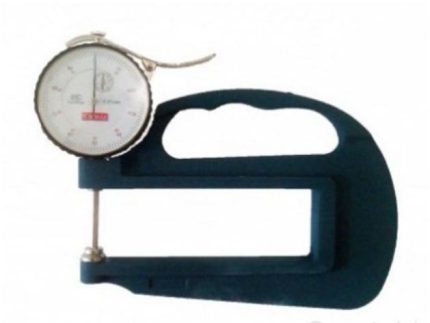
Analog Thickness Gauge
Analog Thickness Gauge
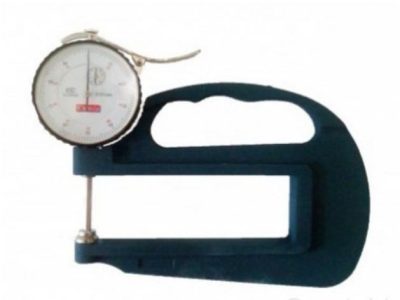
Analog Thickness Gauge
Brand : DUNLIN
Origin : TAIWAN Measuring Range : 0mm ~ 10mm
Accuracy : 0.01mm
Deep Throat Range : 120mm
Dimension : ( 195 × 130 × 25 ) mm
Benefits
High Durability – Since analog thickness gauges do not rely on electronic circuits, they are more durable and resistant to environmental factors such as dust and moisture.
No Power Requirement – These gauges operate mechanically, eliminating the need for batteries or power sources.
Cost-Effective – Analog meters are generally more affordable compared to digital alternatives while still providing precise measurements.
Ease of Use – Simple mechanical operation ensures that even non-technical users can easily measure thickness.
Reliable Performance – Analog thickness gauges provide consistent and accurate readings without the risk of software malfunctions.
Advantages
Immediate Readings – No waiting time for booting or calibration, providing instant measurement results.
Long-Lasting Accuracy – These devices do not suffer from battery drainage or electronic failures, ensuring accuracy over long periods.
Lightweight and Portable – Many analog thickness gauge meters are compact and easy to carry, making them convenient for on-the-go use.
Wide Material Compatibility – Suitable for measuring the thickness of metals, textiles, paper, and various industrial materials.
Minimal Maintenance – Without electronic parts, maintenance requirements are significantly reduced.
Applications
Manufacturing Industry – Used in quality control to ensure material thickness meets specified standards.
Automotive Sector – Helps measure paint and coating thickness on vehicles to ensure uniform application.
Metalworking and Fabrication – Used to measure sheet metal and pipe thickness to maintain precision in production.
Plastic and Rubber Industry – Ensures uniform thickness in plastic sheets, films, and rubber products.
Paper and Textile Industry – Essential for measuring paper thickness in printing industries and fabric thickness in textile production.
Aerospace and Aviation – Used for checking the thickness of coatings and composite materials in aircraft manufacturing.
An Analog Thickness Gauge is a manual instrument used to measure the thickness of materials such as fabric, paper, leather, rubber, and plastic. Unlike digital gauges, it displays readings through a mechanical dial or scale.

Digital Ink Rubbing Tester
Digital Ink Rubbing Tester
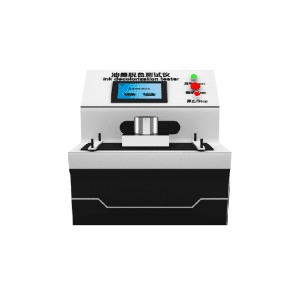
Digital Ink Rubbing Tester
Digital Ink Rubbing Tester
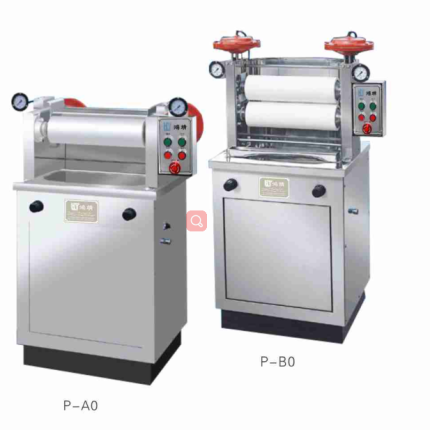
Laboratory Padder
Laboratory Padder
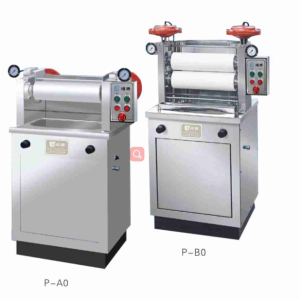
Mini Lab Dyeing Padder
- Adjustable Rollers - The fabric is passed through two or more rollers to apply even pressure and squeeze out excess solution, ensuring uniform chemical or dye application.
- Variable Pressure Control - Allows adjustment of roller pressure for different fabric types and chemical formulations, ensuring optimal penetration without damage.
- Solution Bath - Holds the liquid (e.g., dye, finish, or other chemical treatments) in a bath through which the fabric is dipped before passing through the rollers.
- Fabric Speed Control - Adjustable conveyor speed allows for control over the time the fabric spends in contact with the liquid solution, affecting the degree of treatment.
- Digital Control Panel - Provides easy adjustment of pressure, speed, and solution volume to ensure precise and reproducible results.
- Compact Design - Smaller, lab-scale version of industrial padders, ideal for research, development, and small-scale testing.
- Safety Features - Safety guards, emergency stops, and proper handling mechanisms to prevent accidents during operation.
- Precise Application of Chemicals - Provides uniform and controlled application of dyes, finishes, and other chemicals, ensuring consistent results.
- Small-Scale Testing - Ideal for small sample testing, allowing for fabric treatment without needing full-scale production equipment.
- Versatile Use - Suitable for dyeing, finishing, and applying various chemical treatments, making it a flexible tool for R&D labs.
- Cost-Effective - Reduces the need for large-scale machinery and the associated costs, while providing reliable results for small batches.
- Controlled Fabric Treatment - Offers adjustable pressure, speed, and solution concentration, enabling fine-tuned processing for different fabric types and applications.
- Accelerates Development - Speeds up the testing and development of new products or finishes, improving time-to-market for textile manufacturers.
- Energy Efficient - Consumes less energy compared to larger, industrial-scale machines, making it suitable for lab use.
- Compact and Space-Saving - Designed for laboratory environments with limited space, without compromising on functionality.
- Reproducible Results - Ensures consistent application of treatments across multiple samples, aiding in accurate testing and comparison.
- Adjustable Roller Pressure - Allows precise control over the pressure applied to the fabric, ensuring uniform chemical or dye application.
- Variable Speed Control - Adjustable conveyor speed for controlling the time the fabric spends in the solution bath, influencing the absorption rate.
- Solution Bath - Holds dye, chemicals, or finishes, and the fabric passes through this bath before moving to the rollers.
- Digital Control Panel - Easy-to-use interface for setting and adjusting parameters like speed, pressure, and solution concentration.
- Compact and Lab-Friendly Design - Designed for smaller, space-efficient use in textile labs, allowing for small sample testing.
- Roller Gap Adjustment - Allows for fine-tuning of the gap between rollers to regulate the amount of solution squeezed out of the fabric.
- Stainless Steel Construction - Durable and resistant to corrosion from the chemicals used in textile treatments.
- Safety Mechanisms - Includes safety guards, emergency stops, and user protection features during operation.
- Even and Controlled Application - Ensures even distribution of treatments (dye, finish, etc.) on fabric with minimal waste.
- Versatility in Application - Can be used for a wide range of textiles and treatments, including dyeing, softening, flame-retardant treatments, etc.
- Prepare the Fabric Sample - Cut the fabric sample to the required size for the experiment. Ensure it’s clean and free of any debris.
- Prepare the Solution - Mix the dye, chemical, or finish solution according to the desired concentration and the fabric's needs. Ensure that the solution is homogeneous.
- Set the Parameters - Pressure: Adjust the roller pressure based on the fabric type. Different fabrics require different pressure levels to ensure uniform application. - Speed: Set the fabric conveyor speed depending on the desired treatment time (longer exposure for deeper treatment).
- Load the Fabric into the Machine - Place the fabric carefully into the machine. The fabric should go through the solution bath and then pass between the rollers.
- Start the Machine - Turn on the machine and allow the fabric to pass through the rollers. The solution will be evenly applied to the fabric as it moves through the bath and is squeezed by the rollers.
- Monitor the Process - Keep an eye on the fabric to ensure it is being treated uniformly and there are no blockages or fabric jams.
- Unload the Fabric - Once the fabric has been treated, carefully remove it from the machine. Inspect for even application of the solution and any excess liquid.
- Dry or Process Further - Depending on the treatment, proceed with further steps such as drying, heat setting, or curing, as required by the experiment or process.
Mini Lab Dyeing Padder

Laboratory mini stenter Dryer
Laboratory mini stenter Dryer
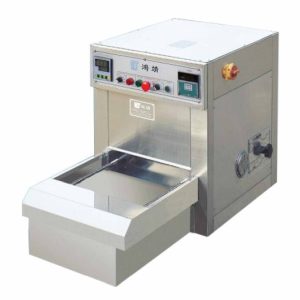
Automatic fixing Dryer
- Controlled Heating System
- Adjustable Fabric Width
- Variable Speed Conveyor - Allows control over fabric dwell time for drying or heat-setting.
- Compact and Bench-Top Design - Space-saving design ideal for textile labs and R&D units.
- Digital Controls - Easy-to-use digital interface for setting temperature, conveyor speed, and process time.
- Transparent Viewing Window - Allows operators to monitor fabric movement and drying visually.
- Low Energy Consumption - Designed for lab use, consuming less power than industrial models.
- Accurate Simulation of Production - Mimics industrial stenter conditions on a lab scale, ideal for pre-production testing and R&D.
- Cost-Effective Testing - Enables testing and fabric finishing without the high cost or space requirements of full-scale machines.
- Energy Efficient - Consumes less power compared to large stenters, making it economical for small-scale or frequent use.
- Precise Control - Offers accurate control of temperature, speed, and fabric tension, ensuring consistent results.
- Space-Saving Design - Compact and bench-top friendly, perfect for laboratories with limited space.
- Multiple Applications - Useful for drying, heat-setting, shrinkage testing, and evaluating chemical finishes.
- Faster Development Cycles - Speeds up new product development by allowing rapid sample testing and adjustments.
- Improved Fabric Quality - Helps optimize finishing parameters for better dimensional stability, hand feel, and appearance.
- Safe and User-Friendly- Designed with lab safety in mind, including temperature safety controls and easy operation.
- Compact Bench-Top Design - Ideal for laboratory use with limited space requirements.
- Adjustable Temperature Control - Precise heating (usually up to 220–250°C) with digital controllers for accurate processing.
- Variable Conveyor Speed- Allows adjustment of fabric dwell time for different drying or heat-setting needs.
- Width Adjustment Mechanism - Equipped with clips or pins to stretch and fix fabric width-wise, simulating industrial stenter conditions.
- Transparent Viewing Window - Enables visual monitoring of fabric movement and drying inside the chamber.
- Digital Display Panel- Easy-to-use interface for setting and monitoring temperature, speed, and time.
- Stainless Steel Construction- Durable and corrosion-resistant for long-term use at high temperatures.
- Uniform Heat Distribution- Ensures consistent fabric treatment across the width.
- Safety Features- Over-temperature protection and insulated body for operator safety.
- Versatile Applications - Suitable for drying, heat-setting, shrinkage testing, and chemical finish evaluations.
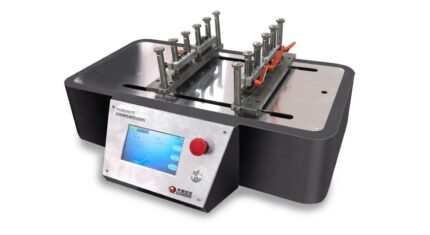
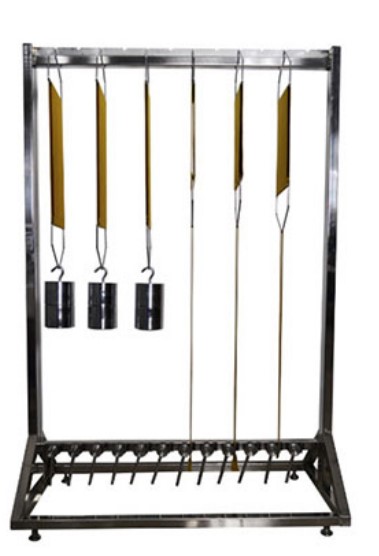
Fatigue tester for Elastic fabric
Fatigue Tester for Elastic Fabric
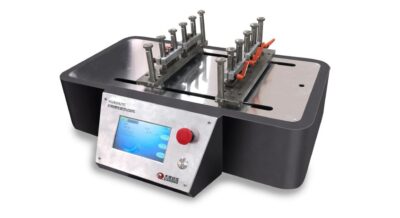
Fatigue tester for Elastic fabric
- Adjustable Stretch Range - Allows setting stretch levels (e.g., 0–100%) to simulate real-life fabric use.
- High-Cycle Capability - Supports up to millions of stretch-relax cycles for long-term fatigue analysis.
- Touch Screen Control - 7-inch color display for easy setup, monitoring, and data entry.
- Servo Motor Driven - Ensures precise and smooth linear motion during testing.
- Customizable Speed - Adjustable test speed (e.g., up to 40 cycles per minute) based on test requirements.
- Multi-Sample Testing - Some models allow testing multiple specimens simultaneously.
- Cycle Counter with Alarm - Built-in counter with programmable stop after preset cycles and auto-alert feature.
- Durable Construction - Robust metal frame suitable for continuous testing in lab environments.
- Standard Compliance - Designed to follow standards like GB/T 37635 for elastic fabric testing.
- Prepare the Sample
- Mount the Sample - Secure both ends of the fabric in the upper and lower clamps.
- Set Test Parameters
- Start the Test - Press start on the touch screen interface. - The machine will cyclically stretch and release the sample.
- Monitor Progress - Observe operation or let it run automatically.
- Remove and inspect - Take out the fabric and measure elongation, recovery, or visual defects.
- Record and Compare Results - Compare with initial measurements or standard performance criteria.
Fatigue tester for Elastic fabric

Hydraulic GSM Cutter
Hydraulic GSM Cutter
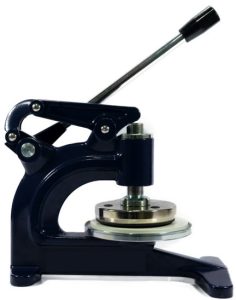
Hydraulic GSM Cutter
- High Cutting Precision - Ensures consistent and accurate fabric sample size for reliable GSM results.
- Effortless Operation- Hydraulic action reduces manual effort and operator fatigue.
- Ideal for Thick or Multi-Layer Fabrics - Cuts through dense or multiple fabric layers cleanly.
- Time-Saving - Speeds up the sample preparation process, especially for high-volume testing.
- Improves Test Accuracy - Uniform samples help eliminate errors in GSM calculation.
- Durable and Long-Lasting - Robust construction ensures stability and extended service life.
- Safety Enhancement - Reduces risk of injury compared to manual rotary cutters.
- Consistent Pressure Application - Hydraulic mechanism maintains steady force for each cut.
- Hydraulic Press Mechanism - Applies consistent and strong pressure for clean, even cuts.
- Standard Cutting Die (100 cm²) - Produces fabric samples suitable for GSM testing with standard area.
- Heavy-Duty Construction - Built with robust metal frame for long-term lab or industrial use.
- Sharp Stainless Steel Blades - Durable and replaceable blades ensure smooth, precise cuts.
- Cutting Pad Included - Comes with a rubber or nylon base to protect blades and ensure clean edges.
- Simple Lever or Button Operation - Easy to use with minimal training required.
- Non-slip Base - Provides stability during operation for safe, accurate cutting.
- Supports Various Fabric Types
- Place the Cutting Pad - Lay the rubber or nylon cutting pad on a flat surface.
- Position the Fabric - Place the fabric sample flat and smooth on the cutting pad.
- Align the Cutter - Position the GSM cutter die over the desired area of the fabric.
- Activate Hydraulic Press - Pull the lever or press the button to apply hydraulic pressure and cut the sample.
- Remove the Sample - Lift the cutter and carefully take out the circular fabric piece (usually 100 cm²).
- Weigh the Sample - Place the cut sample on a precision balance or GSM scale to determine weight.
- Calculate GSM - Multiply the sample weight (in grams) by 100 to get GSM.
Hydraulic GSM Cutter

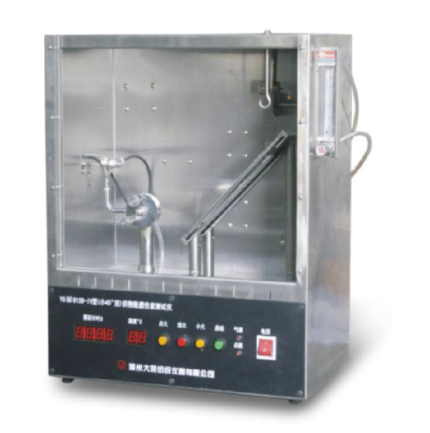
Fabric flame retardant tester
Fabric Flame Retardant Tester
Fabric Flame Retardant Tester
- Sample Preparation: A fabric specimen is cut to specified dimensions and conditioned as per standard requirements.
- Mounting: The sample is mounted vertically or at a specified angle in the testing chamber.
- Ignition: A controlled flame is applied to the fabric for a predetermined time.
- Observation: The tester records ignition time, flame spread, after-flame time, and afterglow time.
- Evaluation: Results are compared against standard criteria to determine compliance.
- Prepare the Sample
- Mount the Sample
- Set Up the Burner Position the burner at the required angle (usually 90° for vertical tests).
- Ignite the Flame - Apply the flame to the bottom edge of the fabric for 12 seconds.
- Observe and Measure - Start timing when flame is applied.
- Record the Results
- Compare with Standards
 burning of flammable textile materials after ignition.
(specific ignition nozzles and sample holders can be customized to meet multiple criteria).
Related standards
GB/T14644 ASTM D1230 CFR1610 etc.
Technical parameters
1. The spread of time:0 ~ 999.9S resolution 0.1S
2. The temperature inside the box shows:Room temperature -99 degrees C resolution 1 c
3. Igniting time:1S
4. Type of igniter:4 1/2 syringe
5. Sample clip size:Outer frame:204mm * 78mm inner frame:152mm×38mm
6. Distance from the top of the igniter to the sample surface:8mm
7. Studio size and outline size
Studio size:370mm×220mm×350mm
Outline size:375mm×245mm×478mm
8. Power supply:AC220V 50Hz 20W
9. Weight:18Kg
burning of flammable textile materials after ignition.
(specific ignition nozzles and sample holders can be customized to meet multiple criteria).
Related standards
GB/T14644 ASTM D1230 CFR1610 etc.
Technical parameters
1. The spread of time:0 ~ 999.9S resolution 0.1S
2. The temperature inside the box shows:Room temperature -99 degrees C resolution 1 c
3. Igniting time:1S
4. Type of igniter:4 1/2 syringe
5. Sample clip size:Outer frame:204mm * 78mm inner frame:152mm×38mm
6. Distance from the top of the igniter to the sample surface:8mm
7. Studio size and outline size
Studio size:370mm×220mm×350mm
Outline size:375mm×245mm×478mm
8. Power supply:AC220V 50Hz 20W
9. Weight:18Kg

Perspiration Tester
Perspiration Tester
Perspiration Tester
- Fabric samples are treated with synthetic perspiration solution (acidic or alkaline).
- They are sandwiched with adjacent fabric and placed between glass or acrylic plates.
- The assembly is loaded into the tester and pressed under specific pressure.
- it’s then incubated at 37°C (body temperature) for a fixed time (typically 4 or 16 hours).
- Afterward, color change and staining are evaluated using a gray scale.
- Accurate Sweat Simulation - Mimics real-life effects of acidic and alkaline perspiration on fabrics.
- Improves Product Quality - Ensures textiles retain color and don’t bleed or stain when worn.
- Supports Standard Compliance - Follows ISO and AATCC test standards for global market approval.
- Protects Brand Reputation- Reduces customer complaints due to dye transfer or fading.
- Simple and Repeatable- Provides consistent pressure and conditions for reliable results.
- Multi-Sample Testing- Tests multiple specimens at once, saving time in labs.
- Durable and Low Maintenance- Robust frame with minimal moving parts makes it long-lasting and easy to care for.
- Stainless Steel Frame - Corrosion-resistant body for durability and long-term use.
- Multi-Sample Capacity - Can hold up to 20 or more specimens for batch testing.
- Standardized Loading Weight- Applies uniform pressure (usually 12.5 kPa) across all samples.
- Removable Plates - Glass or acrylic plates ensure even contact and easy cleaning.
- Compact Design- Space-saving, bench-top model ideal for lab environments.
- Complies with Test Standards - Meets ISO 105 E04, AATCC 15, and related perspiration fastness standards.
- Ease of Operation - Simple loading, unloading, and incubation process.
- High-Temperature Resistance - Can be used inside incubators at 37°C or ovens as required.
- Prepare the Test Solution - Mix artificial acidic or alkaline perspiration as per standard (ISO or AATCC).
- Cut the Fabric Samples - Cut both the test fabric and adjacent white fabric (usually cotton) to standard size.
- Soak the Samples - Immerse the fabric sandwich (test + adjacent) in the test solution for 30 minutes.
- Remove Excess Liquid - Gently squeeze or blot to remove extra moisture—do not dry.
- Load in the Tester- Place each sandwich between glass or acrylic separator plates in the tester.
- Apply Pressure - Tighten the top plate or place the standard weight on top to apply uniform pressure.
- Incubate - Keep the loaded tester in an oven or incubator at 37°C for 4–16 hours (depending on the method).
- Accurate Sweat Simulation - Mimics real-life effects of acidic and alkaline perspiration on fabrics.
- Improves Product Quality - Ensures textiles retain color and don’t bleed or stain when worn.
- Supports Standard Compliance - Follows ISO and AATCC test standards for global market approval.
- Protects Brand Reputation- Reduces customer complaints due to dye transfer or fading.
- Simple and Repeatable- Provides consistent pressure and conditions for reliable results.
- Multi-Sample Testing- Tests multiple specimens at once, saving time in labs.
- Durable and Low Maintenance- Robust frame with minimal moving parts makes it long-lasting and easy to care for.
- Dry and Evaluate - Remove, air dry the samples, then assess color change and staining using a gray scale.
- Fabric samples are treated with synthetic perspiration solution (acidic or alkaline).
- They are sandwiched with adjacent fabric and placed between glass or acrylic plates.
- The assembly is loaded into the tester and pressed under specific pressure.
- it’s then incubated at 37°C (body temperature) for a fixed time (typically 4 or 16 hours).
- Afterward, color change and staining are evaluated using a gray scale.
Perspiration Tester

