Skip to content
About us
Select category
  • Select category
  • Dyeing Lab Machine
  • Lab Equipment & Instrument
  • Physical Testing & Fabric Testing
  • Yarn Dyeing Machine & Equipment
1 item $0.00
Menu
About us
1 item $0.00
Create your first navigation menu here and add it to the "Main menu" location.
“Pantone book” has been added to your cart. View cart
Digital Bench top PH Meter
360 product view
    0%
    Click to enlarge
    Digital Bench top PH Meter
    Digital Bench top PH Meter
    Home Dyeing Lab Machine Digital Bench top PH Meter
    COLOR FASTNESS TO WASHING MACHINE
    Color fastness to washing machine $0.00
    Back to products
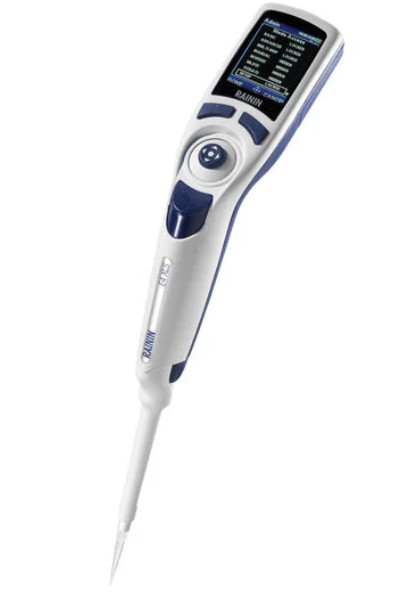
    Rainin Digital Pipette
    Rainin Digital Pipette $0.00

    Digital Bench top PH Meter

    $0.00

    Digital Bench top PH Meter

    Digital Bench top PH Meter

    Digital Bench top PH Meter

    Brand: Hanna
    Model: HI2002
    Country of Manufacture: Romania
    Origin: USA

    Digital Bench top PH Meter

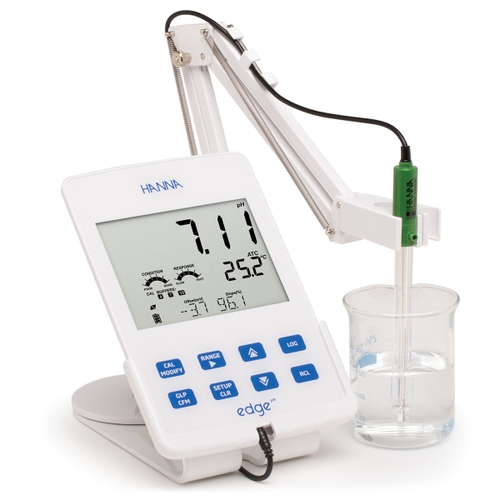
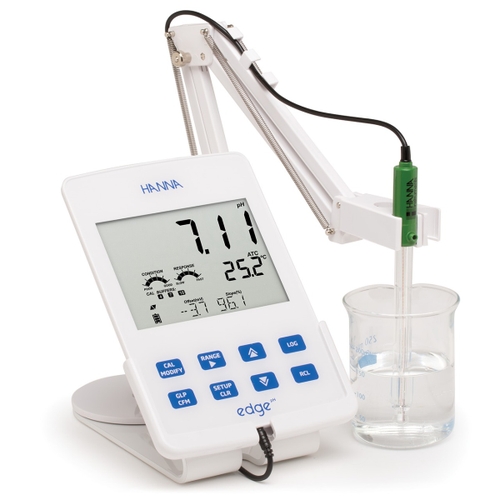
    Single parameter of Digital Bench top PH Meter features user-friendly tablet design with bench, portable or wall mount options for ultimate flexibility. Switch from portable to bench in the same procedure or clear the surface for easier working and hang on the wall.

    Digital Bench top PH Meter Range -2.00 to 16.00pH; pH  Digital smart electrode compatible  Accuracy: ±0.01 pH edge® pH is dedicated to testing pH. Using Hanna’s latest innovation in technology and design, edge® can be adapted to suit your working method.

    Select from hand held, wall mount or bench top – or switch between them all. edge® is happy any which way. Simply plug in the electrode, then play.

    Measurement is simpler, quicker and more accurate than ever.

    Results are fast and reliable. Combining high precision technology with the user-friendly dimensions and format of a small digital tablet, edge® is breaking new ground in electrochemistry.

    This is a must-have meter for your laboratory.

    pH Range basic mode: -2.00 to 16.00 pH; standard mode: -2.000 to 16.000 pH
     Resolution basic mode: 0.01 pH; standard mode: 0.001 pH
     Accuracy (@25°C) basic mode: ±0.01 pH; standard mode: ±0.002 pH
     Calibration basic mode: automatic, up to three points calibration, 5 standard buffers available; standard mode: automatic, up to five point calibration, 7 standard buffers available and two custom buffers
    Temperature Compensation automatic, -5.0 to 100.0°C (using integral temperature sensor)
    Electrode Diagnostics standard mode: probe condition, response time and out of calibration range
    mV pH Range ±1000 mV
     Resolution 0.1 mV
     Accuracy (@25°C) ±0.2 mV
    ORP Range ±2000 mV
     Resolution 0.1 mV
     Accuracy (@25°C) ±0.2 mV
    Temperature Range -20.0 to 120.0°C
     Resolution 0.1°C
     Accuracy ±0.5°C
    Additional Specifications:
     Probe HI-11310 digital glass body pH electrode with 3.5mm connector and 1m cable
     Logging up to 1000 (400 for basic mode) records organised in: manual log-on demand (max. 200 logs), manual log-on-stability (max. 200 logs), interval logging (max. 600 samples; 100 lots)
     Connectivity 1 USB port for storage; 1 micro USB port for charging and PC connectivity
     Environment 0 to 50°C; RH max 95% non-condensing
     Power Supply 5 VDC adapter (included)
     Dimensions 2020 x 140 x 12 mm
     Weight 250 g

    A Digital Bench Top pH Meter is a laboratory-grade instrument designed to measure the pH (acidity or alkalinity) of liquid samples with high precision. It’s commonly used in research labs, industrial applications, environmental testing, and educational institutions.

    Key Features of a Digital Bench Top pH Meter

    1. High Accuracy and Resolution

    – Offers precise pH measurements, often with accuracy up to ±0.01 pH units.

    – Suitable for applications where exact pH control is critical.


    1. Digital Display   – Large, clear LCD or LED screen shows pH readings, temperature, and sometimes mV or ion      concentration.   – Some models include a backlit display for better visibility.


    1. Electrode System   – Uses a pH-sensitive electrode (usually glass) connected to a reference electrode. Electrodes are often replaceable and require regular calibration and maintenance.


    1. Temperature Compensation – Automatic or manual temperature compensation to correct pH readings based on sample temperature.   – Integrated temperature sensors or separate probes are used.
    1. Calibration Functions   – Supports 2-point, 3-point, or multi-point calibration using standard buffer solutions.   – Auto-recognition of calibration buffers in advanced models.
    1. Data Storage and Connectivity   – Internal memory for storing results.   – USB or RS232 ports for data export to PCs or printers; some models support wireless connectivity.
    1. Sturdy Design   – Benchtop models are larger and more stable than portable meters.   – Often come with a durable casing and electrode arm for hands-free operation.

    Applications

    – Water quality testing (e.g., in wastewater treatment, drinking water monitoring)

    – Chemical and pharmaceutical industries

    – Food and beverage production

    – Biological and environmental research

    – Educational laboratories

    A Digital Bench Top pH Meter offers numerous benefits, making it a preferred choice in laboratory and industrial environments where accuracy, reliability, and ease of use are essential.

    Benefits of a Digital Bench Top pH Meter

    1. High Accuracy and Precision

    – Provides accurate and consistent pH readings, often with ±0.01 pH resolution.

    – Ideal for scientific and quality control applications where precise pH monitoring is critical.


    1. User-Friendly Interface- Digital displays (LCD/LED) make readings easy to see and interpret.- Many models offer intuitive controls and guided calibration, simplifying operation.


    1. Advanced Calibration Features- Supports multi-point calibration for improved accuracy across a wide pH range.- Some models automatically recognize buffer solutions, reducing user error.
    1. Temperature Compensation- Automatic temperature compensation (ATC) corrects readings based on sample temperature, ensuring accuracy.
    1. Stable and Durable Design- Benchtop units are more robust and stable than handheld devices, reducing the risk of spills or tipping.- Often include electrode holders or arms for secure, hands-free measurements.
    1. Data Management and Connectivity- Built-in memory for storing measurement data.USB, RS232, or wireless connectivity for exporting data to computers or laboratory information systems (LIS).
    1. Multi-Functionality- Some models also measure ORP (oxidation-reduction potential), ion concentration, or conductivity.- Suitable for a variety of testing needs beyond just pH.
    1. Ideal for Long-Term Use- Designed for prolonged and repeated use in laboratory environments.- Replaceable electrodes and parts extend the meter’s usable life.
    1. Compliance and Documentation- Data logging features support documentation and compliance with regulatory standards in regulated industries (e.g., pharma, food, environmental testing).


    Category: Dyeing Lab Machine Tags: Benchtop ph meter Supplier in Bangladesh, lab ph meter, Ph meter, Ph meter price in Bangladesh, Textile lab Machine supplier, textile lab machine supplier in Bangladesh, Textile testing equipment in Bangladesh, Textile testing equipment in Dhaka, Textile testing equipment in Uttara, textile testing machine & Equipment Brand: HANNA
    Share:
    • Shipping & Delivery
    Shipping & Delivery

    Related products

    Fatigue tester for Elastic fabric

    Fatigue tester for Elastic fabric

    Physical Testing & Fabric Testing, Dyeing Lab Machine
    $0.00

    Fatigue Tester for Elastic Fabric

    Fatigue tester for Elastic fabric

    Fatigue tester for Elastic fabric

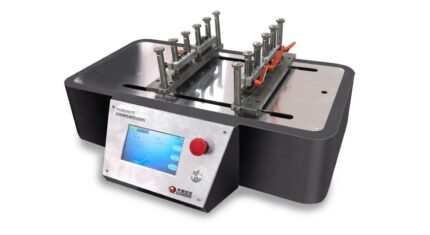
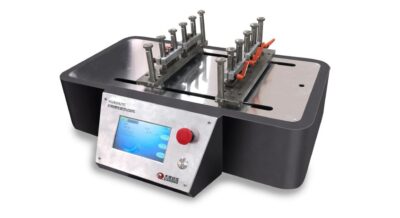
      A Fatigue Tester for Elastic Fabric is a specialized instrument designed to evaluate the durability and performance of elastic materials, such as elastic bands, tapes, and fabrics, under repeated stretching and relaxation cycles. This testing is crucial for applications where elastic materials are subjected to continuous or repetitive stress, ensuring they maintain their functionality over time.   Purpose Fatigue Tester for Elastic Fabric The primary objective of this tester is to simulate the conditions that elastic fabrics endure during actual use. By repeatedly stretching and relaxing the material, the tester assesses:   - Elastic Recovery: The ability of the material to return to its original length after stretching. - Fatigue Resistance: How well the material withstands repeated cycles without significant degradation. - Durability: The lifespan of the elastic properties under continuous use.   Working Principle of Fatigue Tester for Elastic Fabric The tester operates by clamping a specimen of the elastic fabric and subjecting it to cyclic stretching and relaxation.   Key operational features include: Cycle Count: The number of stretching and relaxation cycles is set according to testing requirements. - Speed Regulation: The rate of stretching can be adjusted to simulate different usage conditions. - Monitoring: The tester records data such as the number of cycles completed and any changes in the fabric's properties.   For instance, the Elastic Band Fatigue Tester ADL-FT01 features a high-speed linear slide, servo motor, and touch screen control software, allowing precise control over stretching parameters   Key Specifications of Fatigue Tester for Elastic Fabric While specifications may vary among different models, common parameters include: - Stretch Percentage: Adjustable from 0% to 100%. - Stretching Speed: Up to 40 cycles per minute. - Sample Length Range: Maximum of 260mm. - Cycle Count Capacity: Up to 9,999,999 cycles. - Control Interface: Typically a 7-inch color touch screen. - Power Supply: AC220V 50Hz/60Hz. These features enable comprehensive testing of elastic materials under various conditions.   Benefits of Fatigue Tester for Elastic Fabric - Quality Assurance: Ensures that elastic materials meet required durability standards. - Product Development: Aids in the design of materials with improved fatigue resistance. Cost Efficiency: Identifies potential material failures early, reducing product returns and warranty claims. - Compliance: Helps manufacturers adhere to industry standards such as GB/T 37635.   Applications of Fatigue Tester for Elastic Fabric Fatigue testers for elastic fabrics are widely used in: - Textile Manufacturing: Testing elastic components in garments, such as waistbands and cuffs. - Medical Textiles: Evaluating the durability of elastic materials used in bandages and supports. - Automotive Industry: Assessing elastic components in car interiors. - Research and Development: Developing new elastic materials with enhanced properties.   Features of Fatigue Tester for Elastic Fabric:
    1. Adjustable Stretch Range - Allows setting stretch levels (e.g., 0–100%) to simulate real-life fabric use.
    2. High-Cycle Capability - Supports up to millions of stretch-relax cycles for long-term fatigue analysis.
    3. Touch Screen Control - 7-inch color display for easy setup, monitoring, and data entry.
    4. Servo Motor Driven - Ensures precise and smooth linear motion during testing.
     
    1. Customizable Speed - Adjustable test speed (e.g., up to 40 cycles per minute) based on test requirements.
    2. Multi-Sample Testing - Some models allow testing multiple specimens simultaneously.
    3. Cycle Counter with Alarm - Built-in counter with programmable stop after preset cycles and auto-alert feature.
     
    1. Durable Construction - Robust metal frame suitable for continuous testing in lab environments.
    2. Standard Compliance - Designed to follow standards like GB/T 37635 for elastic fabric testing.
      How to Use Fatigue Tester for Elastic Fabric:
    1. Prepare the Sample
    - Cut the elastic fabric to the specified size (e.g., 260 mm max length). - Mark the gauge length if needed for measurement after testing.
    1. Mount the Sample - Secure both ends of the fabric in the upper and lower clamps.
    2. Set Test Parameters
    - Enter the desired stretch percentage (e.g., 50%). - Set the number of cycles and speed (e.g., 30 cycles/min). - Adjust dwell time if required (time fabric stays stretched).  
    1. Start the Test - Press start on the touch screen interface. - The machine will cyclically stretch and release the sample.
    2. Monitor Progress - Observe operation or let it run automatically.
    - Machine stops automatically after reaching the set cycles.
    1. Remove and inspect - Take out the fabric and measure elongation, recovery, or visual defects.
    2. Record and Compare Results - Compare with initial measurements or standard performance criteria.
      Fatigue tester for Elastic fabric

      Fatigue tester for Elastic fabric

       
    Add to cart
    Quick view
    Stretch Recovery Tester (Static Method)

    Stretch Recovery Tester Static Method

    Physical Testing & Fabric Testing, Dyeing Lab Machine
    $0.00

    Stretch Recovery Tester – Static Method | ASTM D3107 / D2594 | Ready Stock Bangladesh

    Product Introduction

    The Stretch Recovery Tester – Static Method is a professional textile laboratory testing instrument designed to evaluate the stretch and recovery properties of elastic fabrics, knitted fabrics, stretch garments, ribbons and other extensible textile materials. The tester is suitable for Textile Testing Laboratories, Garment Factories, Fabric Manufacturers, QA/QC Departments, R&D Laboratories and Academic Textile Laboratories. ASTM D3107 / ASTM D2594 | Ready Stock in Bangladesh | Quick Delivery | Local Support

    Why Choose This Stretch Recovery Tester?

    • Ready Stock in Bangladesh
    • Suitable for textile and garment testing laboratories
    • Designed for stretch and recovery evaluation
    • Suitable for elastic and stretchable textile materials
    • Applicable to relevant ASTM testing methods
    • Easy laboratory operation
    • Compact and practical testing equipment
    • Competitive price in Bangladesh
    • Quick local delivery
    • Local sales and technical support from MAAM TEX

    Testing Standards

    The Stretch Recovery Tester is suitable for testing requirements related to:
    • ASTM D3107 – Stretch Properties of Fabrics
    • ASTM D2594 – Stretch Properties of Knitted Fabrics
    Testing procedure and applicable standard should be selected according to the material and customer's laboratory requirement.

    Scope of Application

    This equipment can be used for testing:
    • Stretch Fabrics
    • Knitted Fabrics
    • Elastic Fabrics
    • Stretch Garments
    • Sportswear Fabrics
    • Elastic Ribbons
    • Hosiery Materials
    • Textile Materials with Stretch Properties

    Suitable For

    • Textile Testing Laboratories
    • Garment Manufacturing Industries
    • Knitwear Factories
    • Fabric Mills
    • Sportswear Manufacturers
    • Elastic Fabric Manufacturers
    • Quality Control Laboratories
    • R&D Laboratories
    • Third-Party Testing Laboratories
    • Textile Universities & Institutes

    Key Advantages

    Ready Stock in Bangladesh

    No need to wait for overseas import. This product is available from MAAM TEX stock in Bangladesh, subject to current stock availability.

    Quick Delivery

    Local stock enables faster delivery compared with normal import-based supply.

    Competitive Price

    MAAM TEX provides competitive quotations for textile laboratory testing equipment.

    Local Support

    Professional sales and after-sales support are available for customers in Bangladesh.

    Laboratory Suitable

    A practical solution for routine quality control, product development and textile testing applications.

    Frequently Asked Questions

    What is a Stretch Recovery Tester?

    A Stretch Recovery Tester is a textile laboratory instrument used to evaluate the ability of a fabric or elastic textile material to stretch and recover after the application and removal of a specified load or extension.

    What standards are applicable?

    The equipment is intended for testing requirements associated with ASTM D3107 and ASTM D2594, depending on the material and test method.

    Who needs a Stretch Recovery Tester?

    Textile mills, garment factories, knitwear manufacturers, fabric manufacturers, QA/QC laboratories, R&D departments and textile testing laboratories can use this equipment.

    Is this machine available in Bangladesh?

    Yes. MAAM TEX offers this Stretch Recovery Tester from stock in Bangladesh, subject to current availability.

    Can I get a quotation?

    Yes. Contact MAAM TEX for the latest price, stock confirmation, delivery information and quotation.

    Ready Stock – Bangladesh

    No Need to Wait for Import

    Stretch Recovery Tester – Static Method Ready Stock | Competitive Price | Quick Delivery | Local Support For current stock status and quotation, please contact MAAM TEX.

    Call to Action

    Looking for a Stretch Recovery Tester in Bangladesh? Get the Stretch Recovery Tester – Static Method from MAAM TEX with ready-stock availability, competitive pricing and local support. Contact MAAM TEX today for Price & Stock Confirmation.

    Stretch Recovery Tester Static Method 

    Stretch Recovery Tester (Static Method)

    Stretch Recovery Tester

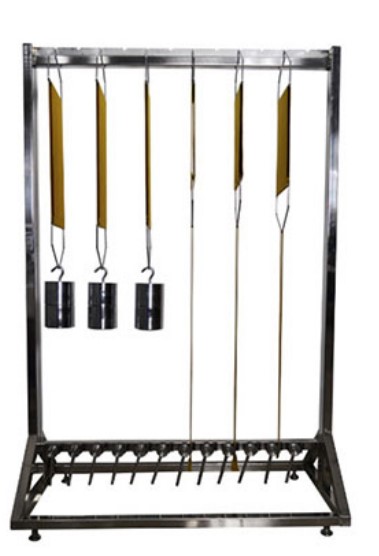
      A Stretch Recovery Tester Static Method is a lab instrument used to evaluate the stretch ability and recovery properties of fabrics, elastomers, or other stretchable materials. This method is crucial in textiles and material science to assess how well a material returns to its original shape after being stretched. Key Functions of Stretch Recovery Tester Static Method : - Measures elongation under a fixed force or length. - Assesses the recovery percentage after a specified recovery time once the force is removed. - Evaluates fabric's resilience, durability, and comfort properties. How It Works Stretch Recovery Tester  Static Method:
    1. A sample is stretched to a predetermined extension or force.
    2. The stretch is maintained for a set period.
    3. After removing the load, the recovery (return to original length) is measured after a fixed time.
    4. The fabric sample is clamped and stretched to a specific length or force.
    5. It’s held for a fixed duration (e.g., 1–5 minutes).
    6. The tension is released, and the sample is allowed to recover.
    7. The recovered length is measured after a set time.
    Main Components: - Fixed clamps to hold the sample. - Movable clamps for stretching. - Precision scale or ruler for measuring elongation and recovery. - Timing device (manual or digital) to control stretching and recovery periods. - To assess elastic recovery and dimensional stability after stretching. Applications: - Used in testing knitwear, sportswear, elastic fabrics, and compression garments. - Helps in product development and quality assurance. Stretch Recovery Tester Static Method is designed to determine the stretch recovery property of elastic material by static method. 2.0mm thickness stainless steel frame and base board, makes the tester firm and stable. Sample holder can be slid along the guide rail smoothly and can be fixed at any position of the rail. Test Scope:elastomeric material Testing Standards:ASTM D2594、ASTM D3107, etc. key features of a Stretch Recovery Tester Static Method: Adjustable clamps and measurement scale. - Timer for accurate stretch/recovery periods. - Simple mechanical design for ease of use. ✅ 1. Manual or Semi-Automatic Operation - Allows controlled stretching and recovery measurements. - Simple setup for routine quality control. ✅ 2. Adjustable Clamp System - Securely holds samples of various sizes and thicknesses. - Ensures consistent test conditions. ✅ 3. Precision Measurement Scale - Provides accurate readings of elongation and recovery length. - Often graduated in millimeters or inches. ✅ 4. Sturdy Frame - Made of corrosion-resistant metal or coated steel. - Ensures durability and stability during testing. ✅ 5. Time Control Support - Timer to monitor stretch and recovery durations. - Helps standardize test procedures. ✅ 6. Compact Design - Space-saving for lab environments. - Easy to move and operate. ✅ 7. Compliance with Standards - Often designed to meet standards like ASTM D3107 or BS 4294. Would you like a comparison with the dynamic method or specifications for a particular model? key benefits of using a Stretch Recovery Tester Static Method: ✅ 1. Accurate Fabric Performance Analysis- Provides reliable data on stretch and recovery, critical for assessing elasticity and fit. ✅ 2. Easy to Operate- Simple, manual setup makes it ideal for routine testing and quality control. ✅ 3. Cost-Effective- More affordable than dynamic testers, making it suitable for smaller labs or production units. ✅ 4. Standardized Testing- Supports industry-standard methods (e.g., ASTM D3107), ensuring consistency across tests. ✅ 5. Versatile Applications- Suitable for testing knit fabrics, elastic bands, spandex materials, and other stretchable textiles. ✅ 6. Durable and Low Maintenance- Mechanically straightforward with minimal upkeep required. ✅ 7. Enhances Product Development- Helps designers and manufacturers optimize materials for comfort, performance, and durability. Applications: - Textile R&D - Production quality control
    Stretch Recovery Tester (Static Method)

    Stretch Recovery Tester

    - Evaluating materials for comfort, durability, and fit Stretch Recovery Tester Diller In Bangladesh, Stretch Recovery Tester Importer In Bangladesh, Stretch Recovery Tester in Bangladesh, Stretch Recovery Tester in Bd, Stretch Recovery Tester In Uttara, Stretch Recovery Tester Price in Bangladesh, Stretch Recovery Tester Supplier in Bangladesh  
    Add to cart
    Quick view
    Digital Yarn Twist Tester
    Digital Yarn Twist Tester

    Digital Yarn Twist Tester

    Yarn Dyeing Machine & Equipment
    $0.00

    Digital Yarn Twist Tester

    Digital Yarn Twist Tester

    Digital Yarn Twist Tester

      A Digital Yarn Twist Tester is a laboratory device used to measure the number of twists (turns) per unit length in a yarn. It’s crucial for evaluating yarn quality, strength, elasticity, and uniformity. The digital version offers precise, automated readings for both S-twist and Z-twist yarns.   Purpose Digital Yarn Twist Tester: To determine twist per inch (TPI) or twist per meter (TPM) in single and plied yarns using direct untwist or untwist-retwist methods.   Applications Digital Yarn Twist Tester: Quality control in spinning mills Yarn standard testing (cotton, polyester, blends) R&D in textile manufacturing   Working Principle Digital Yarn Twist Tester: One end of the yarn is clamped, and the other is rotated to remove or measure twists. The tester counts and displays twist digitally based on length and rotation.   Benefits of Digital Yarn Twist Tester: High Accuracy - Digital readout ensures precise twist measurements. Quick Testing - Faster than manual methods, increasing lab efficiency. Versatile Application - Suitable for single, doubled, or plied yarns. Reduces Human Error - Automated counting improves repeatability and consistency.   Supports Both S & Z Twist - Measures both twist directions accurately. User-Friendly Operation - Intuitive controls and clear display simplify use.   Features of Digital Yarn Twist Tester: Digital Display - Shows real-time twist count and length. Motorized Rotation- Smooth, adjustable rotation speed for controlled untwisting. Dual Clamp System - Holds yarn securely to prevent slippage. Length Measurement Scale - Built-in ruler or encoder for precise yarn length setup.   Auto Stop Function - Automatically stops when yarn is fully untwisted. Selectable Units - Twist readings available in TPI or TPM.   How to Use Digital Yarn Twist Tester: Prepare the Yarn Sample - Cut a yarn length (e.g., 250 mm or 10 inches) as per testing standard. - Make sure it’s free from knots or damage. Mount the Yarn   - Fix one end in the stationary clamp and the other in the rotating clamp. - Ensure the yarn is straight and under slight tension.   Set the Gauge Length - Adjust the length scale or input it digitally, depending on the machine. Select Twist Direction - Choose S or Z direction based on the yarn's twist. Start the Test - Activate the motor to untwist (or untwist-retwist, if applicable).   - The display shows the number of rotations. Read the Twist Value  - The twist (TPI/TPM) appears automatically based on the set length.   Stop and Unload - Once reading is complete, stop the machine and remove the yarn. Record the Result - Note the reading for documentation or further analysis.   Maintenance Tips for Digital Yarn Twist Tester: Daily: ☐ Wipe down the machine and clamps to remove dust or fibers ☐ Check for yarn residue on rotating parts ☐ Ensure display and buttons are responsive   Weekly: ☐ Lubricate rotating spindle lightly (if required) ☐ Inspect clamps for wear or misalignment ☐ Test motor rotation for smooth operation ☐ Check twist direction selector switch   Monthly: ☐ Calibrate digital display if twist readings drift ☐ Inspect electrical wiring and connectors ☐ Tighten any loose screws or panel parts     Safety Tips: Avoid Loose Clothing: Prevent getting caught in the rotating spindle Use Proper Yarn Tension: Overstretching may snap the yarn or damage clamps Handle With Care: Avoid rough handling of the digital panel or twist arm Power Off When Not in Use: Prevents accidental operation Follow Manual: Refer to user guide for specific calibration or cleaning procedures   Digital Yarn Twist Tester – Maintenance & Safety Checklist   Daily Maintenance: ☐ Clean clamps and body surface ☐ Remove lint or yarn fragments ☐ Verify display & control buttons function properly   Weekly Maintenance: ☐ Lightly lubricate spindle if required ☐ Inspect clamp alignment and grip ☐ Test motor for smooth, silent operation ☐ Check twist direction switch   Monthly Maintenance: ☐ Calibrate twist reading accuracy ☐ Inspect cables and connectors ☐ Tighten loose hardware ☐ Run full test to ensure system performance   Safety Checklist: ☐ Keep hands clear of rotating parts during testing ☐ Avoid loose clothing or jewelry ☐ Do not overstretch or over tension yarn ☐ Power off when cleaning or not in use ☐ Follow the machine's manual for calibration and service   Basic Troubleshooting Guide – Digital Yarn Twist Tester   Issue: No Power / Display Not Turning On -  Check power cable and socket -  Inspect fuse or main switch -  Ensure emergency stop isn’t engaged   Issue: Twist Count Seems Inaccurate -  Recalibrate the machine -  Verify yarn length input is correct -  Check for slippage in clamps   Issue: Motor Not Rotating -  Ensure motor switch is ON -  Inspect motor connection and wiring -  Test rotation manually to check for blockage   Issue: Display Freezes or Buttons Unresponsive -  Restart the machine -  Check control panel for dust or moisture -  Contact support if issue persists   Issue: Auto-Stop Not Working -  Ensure length and twist direction are set -  Check sensor alignment or damage -  Reboot and re-run test   Scope of application It is used for testing the twist, twist irregularity and twist shrinkage of all kinds of yarns. [Related standards] GB/T2543.1/2 FZ/T10001 ISO2061 ASTM D1422 JIS L1095 etc.   Technical parameters 1. Work mode:Computer program control, data processing, printout results 2. Test methods: A, Average twisting slip elongation B, Average maximum twisting elongation. C, Direct counting method D, twisting twisting A method E, Twisting twisting B method f and three times twisting twisting method 3. Sample length:10、25、50、100、200、250、500mm 4. Twist test range:1~1998 twist /10cm, 1~1998 twist /m 5. The extent of twist removal:Maximum 50mm 6. Maximum twist measurement.20mm 7. Speed:600~3000r/min 8. Pre tension:0.5~171.5cN
    Digital Yarn Twist Tester

    Digital Yarn Twist Tester

    9. Size:920×170×220mm 10. Power supply:Ac220V 50Hz 25W 11. Weight:16kg
    Add to cart
    Quick view
    New
    Fabric air permeability tester

    Fabric air permeability tester

    Dyeing Lab Machine, Physical Testing & Fabric Testing
    $0.00
    Fabric Air Permeability Tester
    Fabric air permeability tester

    Fabric air permeability tester

      Fabric Air Permeability Tester is a lab instrument used to measure how easily air passes through a fabric. It quantifies the air permeability, which is crucial for evaluating breathability, comfort, and functional performance in textiles. Purpose Fabric Air Permeability Tester: It determines the rate of airflow through a fabric sample under a set air pressure, typically reported in units like cm³/cm²/s or L/m²/s. Working Principle: The tester creates a pressure difference across the fabric sample and measures the volume of air flowing through it. Higher air permeability means the fabric is more breathable. Main Components of Fabric Air Permeability Tester: - Test Head / Clamp: Holds the fabric securely without leakage. - Pressure Regulator: Maintains a constant air pressure during testing. - Flow Meter or Digital Sensor: Measures the actual airflow rate through the fabric. - Display Unit: Shows readings of air permeability instantly.   Applications of Fabric Air Permeability Tester: - Performance textiles (sportswear, PPE) - Technical fabrics (filters, tents, airbags) - Medical textiles (masks, gowns) - Nonwovens and industrial materials   Benefits of Fabric Air Permeability Tester:
    1. Accurate Breathability Measurement - Precisely measures how breathable a fabric is, essential for comfort and performance.
    2. Supports Quality Control - Ensures consistent air permeability in fabric batches, critical for products like PPE, sportswear, and filters.
     
    1. Enhances Product Design - Helps in selecting or engineering fabrics with the right airflow properties for specific uses.
    2. Standard Compliance - Conforms to international testing standards (e.g., ASTM D737, ISO 9237), ensuring global credibility.
    3. Quick and Reliable Testing - Provides rapid results, increasing lab efficiency and production decision-making speed.
     
    1. Wide Material Compatibility - Suitable for woven, nonwoven, knitted fabrics, and even paper or coated materials.
    2. Improves Functional Performance - Helps optimize products for ventilation, moisture control, and thermal comfort.
    3. Reduces Product Failure - Identifies underperforming fabrics early, minimizing risks in high-performance applications.
    Features of Fabric Air Permeability Tester:
    1. Digital Display - Shows air permeability readings clearly in units like L/m²/s or cm³/cm²/s.
    2. Precise Test Head/Clamp - Provides an airtight seal to prevent air leakage and ensure accurate results.
    3. Adjustable Pressure Settings - Allows testing under various pressure drops (e.g., 10–2500 Pa), depending on fabric type.
     
    1. Automatic Airflow Measurement - Built-in sensors or flow meters capture airflow rate automatically for quick analysis.
    2. Multiple Test Area Sizes - Interchangeable test plates to match different sample sizes and standard requirements.
    3. Data Logging and Export - Some models include USB or software connectivity for storing and exporting test results.
     
    1. Standard Compliance - Conforms to ASTM D737, ISO 9237, BS 5636, DIN 53887, etc.
    2. Robust Construction - Built with corrosion-resistant materials and durable components for long-term lab use.
    3. Low Maintenance - Simple cleaning and calibration process for reliable performance.
    4. Compact and User-Friendly Design - Ideal for lab benches and easy operation with minimal training.
    How to Use Fabric Air Permeability Tester:
    1. Prepare the Sample - Cut the fabric sample to the required size (usually circular, e.g., 20 cm²).
    2. Mount the Sample - Place the fabric securely in the test clamp or holder, ensuring no wrinkles or gaps.
    3. Set Test Parameters - Adjust the air pressure drop according to the fabric type or standard (e.g., 100 Pa).
     
    1. Start the Test - Turn on the air supply and start the airflow through the fabric.
    2. Read the Measurement - The digital display will show the air permeability value in the selected units.
    3. Record the Results - Note the readings or export data if the device supports it.
    4. Repeat if needed - Test multiple samples or areas for accuracy and average the results.
    5. Clean and Maintain - After testing, clean the clamp and ensure the device is calibrated regularly.
      Tip: Ensure the test environment maintains standard temperature and humidity for consistent results.   Fabric Air Permeability Tester Appliance Range It is used to TEST the air permeability of various textile fabrics, including industrial fabrics, nonwoven fabrics and other textile products and other breathable materials. Related Standards GB / T 5453, GB / T 13764, ISO 9237, ISO 5636, ASTM D737, etc. Instrument characteristics 1. Automatic sample clamping, automatic nozzle replacement, and quick test. 2. Microcomputer processing, the test results are displayed directly, without manual table calculation; 3. Built-in continuous test mode, the test unit can be switched as needed. 4. Chinese LCD menu operation, configure computer interface. Technical parameter 1. Range of sample pressure difference: 1 ~ 4000Pa 2. Measurable air permeability: 1 ~ 40,000mm / s 3. Measurement error: ≤ ± 2% 4. Measurable fabric thickness: ≤8mm 5. Test area: 5cm2; 20cm2; 50cm2; 100cm2 Ф50mm (≈19.6cm2) Ф70mm (≈38.5cm2) 6. Nozzles: 11 in total (automatic replacement of digital setting) CODE 00 01 02 03 04 05 06 07 08 09 10 DIAφ(mm) 0.8 1.2 2 3 4 6 8 10 12 16 20 7.Data Capacity:≤200 times tests 8.Power Supply:AC220V 50Hz 2KW 9.Weight:80Kg 10.Shape:1250×700×1250mm
    Add to cart
    Quick view
    Card Winding Machine
    Card Winding Machine

    Card winding machine

    Yarn Dyeing Machine & Equipment
    $0.00

    Card Winding Machine

    Card Winding Machine

    Card Winding Machine

      A Card Winding Machine is used in textile processing to wind yarn from hanks, bobbins, or cones onto cards or perforated boards, typically for dyeing or sampling purposes. It ensures uniform yarn distribution and tension, crucial for consistent dye penetration.   Purpose Card Winding Machine: To wind yarn onto flat cards or holders for lab dyeing, color matching, or textile sample display.   Applications Card Winding Machine: Yarn dyeing labs R&D and sample development Display or swatch card preparation Yarn shade catalog creation   Working Principle Card Winding Machine: The yarn is drawn from a source (cone or bobbin) and wound evenly onto a card. The machine controls the winding speed, spacing, and tension to avoid tangles or breaks.   Benefits of Card Winding Machine: Uniform Yarn Placement- Ensures even winding for consistent dyeing and presentation. Ideal for Sampling - Perfect for creating lab dye samples, color cards, and swatches. Time-Saving - Automates a manual process, increasing efficiency.   Low Yarn Waste - Allows controlled use of small yarn amounts for trials. Supports Various Yarn Types - Can handle cotton, polyester, blends, and fancy yarns.   Features of Card Winding Machine: Adjustable Winding Tension - Maintains constant tension to prevent yarn breakage. Speed Control - Variable winding speed for different yarn types and applications. Card Size Compatibility - Supports multiple card sizes and formats. Precision Traverse System- Ensures neat layer formation without overlapping. Compact Design - Table-top or stand-mounted; suitable for labs or sample rooms.   How to Use a Card Winding Machine: Prepare the Yarn Source - Place the yarn cone or bobbin on the yarn holder. - Thread the yarn through the tensioner and guide system. Insert the Card - Mount the empty card or board onto the winding platform/clamp securely.   Set Winding Parameters- Adjust winding speed, tension, and traverse width based on yarn type and card size. Start the Machine - Turn on the power and begin winding; monitor the yarn flow and tension. Monitor the Winding - Ensure yarn is winding evenly and smoothly across the card.   Stop the Machine - Once the desired coverage or length is reached, stop the machine. Remove the Card - Carefully take out the wound card and trim any loose yarn ends. Label or Store - Label for testing or sample purposes as needed.   Maintenance Tips for Card Winding Machine: Daily: ☐ Clean yarn guides and tensioners ☐ Wipe down the machine to remove dust or lint ☐ Check for smooth yarn feeding   Weekly: ☐ Lubricate moving parts if required ☐ Inspect tension device and traverse system for wear ☐ Test speed control and motor function   Monthly: ☐ Tighten all screws, knobs, and clamps ☐ Inspect electrical parts and connections ☐ Clean internal components if accessible   Safety Tips: ☐ Keep fingers away from moving yarn and parts during operation ☐ Do not exceed machine speed limits for delicate yarns ☐ Ensure proper grounding of the machine ☐ Always power off before cleaning or adjusting settings ☐ Wear snug clothing to avoid yarn entanglement  
    Product description
    Color Card Winding Machine applies to a number of brass wire, yarn,
    while according to technological requirements on winding type with quantitative,
    bound, for yarn user optional color, contrast and testing purposes.
    It is a professional new product designed to give a variety of sample cards.
    Specification
    Model FH-25
    Color card winding machine
    Voltage 220V 50HZ one phase
    Color White
    Dimensions L1100xW600xH800(mm)
    Paper color card size According to custom-made Piece Within 25 pieces
    Power 15w
    Weight 30kgs
    We could make special type according to the customers request.
    Card Winding Machine

    Card Winding Machine

    Add to cart
    Quick view
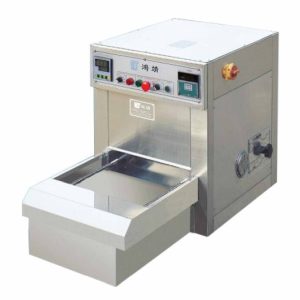
    Laboratory Mini Stenter Dryer

    Laboratory mini stenter Dryer
    Dyeing Lab Machine, Physical Testing & Fabric Testing
    $0.00
    Laboratory mini stenter Dryer
    Laboratory Mini Stenter Dryer

    Automatic fixing Dryer

      A Laboratory Mini Stenter Dryer is a compact, lab-scale machine designed to simulate the drying and heat-setting processes used in textile finishing. It mimics the function of industrial stenter machines but on a much smaller scale, making it ideal for testing fabric behavior, shrinkage, and finish quality under controlled conditions. Key Features:
    1. Controlled Heating System
    - Typically uses electric heating with adjustable temperature (up to 220–250°C). - Ensures uniform and precise temperature control.
    1. Adjustable Fabric Width
    - Equipped with clips or pins to hold and stretch fabric width-wise, simulating stenter frame action.  
    1. Variable Speed Conveyor - Allows control over fabric dwell time for drying or heat-setting.
    2. Compact and Bench-Top Design - Space-saving design ideal for textile labs and R&D units.
    3. Digital Controls - Easy-to-use digital interface for setting temperature, conveyor speed, and process time.
    1. Transparent Viewing Window - Allows operators to monitor fabric movement and drying visually.
    2. Low Energy Consumption - Designed for lab use, consuming less power than industrial models.
    Applications: - Heat-setting of synthetic fabrics.   Drying and curing of samples post-dyeing or printing. - Evaluating fabric shrinkage, dimensional stability, and finish behavior. - Testing chemicals and auxiliaries used in textile finishing.   Benefits of Laboratory Mini Stenter Dryer:
    1. Accurate Simulation of Production - Mimics industrial stenter conditions on a lab scale, ideal for pre-production testing and R&D.
    2. Cost-Effective Testing - Enables testing and fabric finishing without the high cost or space requirements of full-scale machines.
     
    1. Energy Efficient - Consumes less power compared to large stenters, making it economical for small-scale or frequent use.
    2. Precise Control - Offers accurate control of temperature, speed, and fabric tension, ensuring consistent results.
     
    1. Space-Saving Design - Compact and bench-top friendly, perfect for laboratories with limited space.
    2. Multiple Applications - Useful for drying, heat-setting, shrinkage testing, and evaluating chemical finishes.
     
    1. Faster Development Cycles - Speeds up new product development by allowing rapid sample testing and adjustments.
    2. Improved Fabric Quality - Helps optimize finishing parameters for better dimensional stability, hand feel, and appearance.
    3. Safe and User-Friendly- Designed with lab safety in mind, including temperature safety controls and easy operation.
      Features of Laboratory Mini Stenter Dryer:
    1. Compact Bench-Top Design - Ideal for laboratory use with limited space requirements.
    2. Adjustable Temperature Control - Precise heating (usually up to 220–250°C) with digital controllers for accurate processing.
     
    1. Variable Conveyor Speed- Allows adjustment of fabric dwell time for different drying or heat-setting needs.
    2. Width Adjustment Mechanism - Equipped with clips or pins to stretch and fix fabric width-wise, simulating industrial stenter conditions.
     
    1. Transparent Viewing Window - Enables visual monitoring of fabric movement and drying inside the chamber.
    2. Digital Display Panel- Easy-to-use interface for setting and monitoring temperature, speed, and time.
    3. Stainless Steel Construction- Durable and corrosion-resistant for long-term use at high temperatures.
     
    1. Uniform Heat Distribution- Ensures consistent fabric treatment across the width.
    2. Safety Features- Over-temperature protection and insulated body for operator safety.
    3. Versatile Applications - Suitable for drying, heat-setting, shrinkage testing, and chemical finish evaluations.
      Laboratory Mini Stenter Dryer dealer In Bangladesh, Lab Mini Stenter Dryer Importer in Bangladesh, Mini Stenter Dryer in Bangladesh, Laboratory Stenter Dryer in Bd, Lab Stenter Dryer In Uttara, Lab Stenter Price in Bangladesh, Laboratory Stenter Dryer in Bangladesh, Laboratory Mini Dryer in Bangladesh,   Automatic fixing dryer Application: used for simulating the production onsite to produce the textile that meets customer requirement, including the time、temperature、resin auxiliary agent formula, elongation of the same textile, and it is also can provide basis manufacture and to ensure the correctness of mass production. Basic design as Automatic Fixing Dryer,also connect external steam for printing sample steaming. Owing the wide adjusting ranges regarding temperature, humidity, dwelling time, this apparatus can be used for : a) Electric heating for drying, curing and thermofixation, room temp.~230℃. b) Steaming with saturated steam 102±2℃ c) Electric heating and steam together for HT steaming between 102±230℃ Textile Testing Instruments Automatic Fixing Dryer  dealer In Bangladesh, Automatic Fixing Dryer Importer in Bangladesh, Automatic Fixing Dryer in Bangladesh, Automatic Fixing Dryer  in Bd, Automatic Fixing Dryer  In Uttara, Automatic Fixing Dryer  Price in Bangladesh, Automatic Fixing Dryer  Supplier in Bangladesh, Lab Dryer Machine in Bangladesh, Rapid Dryer Mini Stanter in Bangladesh
    Add to cart
    Quick view
    Oscillation Type Water Bath Dyeing Machine
    Oscillation Type Water Bath Dyeing Machine

    Oscillation type water bath Dyeing Machine

    Dyeing Lab Machine, Yarn Dyeing Machine & Equipment
    $0.00
    Oscillation Type Water Bath Dyeing Machine
    Oscillation Type Water Bath Dyeing Machine

    water bath/Shaker bath Dyeing machine

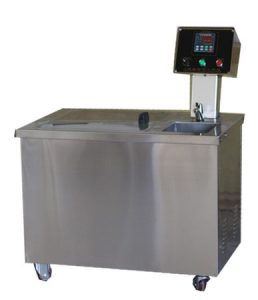
    An Oscillation Type Water Bath Dyeing Machine is a laboratory apparatus designed for dyeing and washing textile samples under controlled temperature conditions. It combines a heated water bath with an oscillating mechanism to ensure uniform dye penetration and consistent coloration across fabric or yarn samples.   Key Features of Oscillation Type Water Bath Dyeing Machine - Oscillating Mechanism: Provides back-and-forth movement to agitate the dye solution, ensuring even contact between the dye and the textile sample.- Multiple Beaker Capacity: Typically accommodates 12 to 24 beakers, allowing simultaneous processing of multiple samples under identical or varied conditions.   - Digital Temperature Control: Maintains precise temperature settings, usually up to 99°C, suitable for various dyeing processes including atmospheric dyeing, scouring, and bleaching.- Adjustable Oscillation Speed: Offers variable speed settings, commonly ranging from 50 to 200 cycles per minute, to accommodate different fabric types and dyeing requirements. - Programmable Settings: Advanced models come with programmable controllers, allowing users to set and save multiple dyeing protocols for repeatability and efficiency. Durable Construction: Constructed with high-quality stainless steel (e.g., SUS304), ensuring resistance to corrosion and longevity even under rigorous laboratory conditions.   ✅ Benefits of Oscillation Type Water Bath Dyeing Machine - Uniform Dyeing Results: The oscillation mechanism ensures consistent dye penetration, reducing the risk of uneven coloration and enhancing the reproducibility of results.- Efficiency in Sample Processing: The ability to process multiple samples simultaneously accelerates laboratory workflows and facilitates comparative studies.   - Versatility: Suitable for a range of applications including dyeing, washing, scouring, bleaching, and fastness testing across various textile materials.- Energy and Resource Conservation: Designed for low liquor ratios (e.g., 1:5 to 1:20), these machines minimize water and chemical usage, promoting sustainable laboratory practices.   - Enhanced Safety and Cleanliness: Enclosed beaker systems reduce the risk of spills and exposure to chemicals, ensuring a safer laboratory environment.   Typical Applications of Oscillation Type Water Bath Dyeing Machine - Textile Research and Development: Ideal for developing and testing new dye formulations and processes on a small scale before scaling up to production levels. Quality Control: Used in quality assurance laboratories to assess color fastness, dye uptake, and other critical parameters of textile products.- Educational Purposes: Serves as a practical tool in academic settings for teaching dyeing principles and techniques. In summary, the Oscillation Type Water Bath Dyeing Machine is an essential tool in textile laboratories, offering precise control over dyeing parameters, improving efficiency, and ensuring high-quality, reproducible results across various textile materials.   Features of Oscillation Type Water Bath Dyeing Machine:
    1. Oscillating Mechanism - Provides back-and-forth movement of beakers for uniform dye penetration and sample agitation.
    2. Multiple Beaker Capacity - Supports dyeing of 12–24 samples simultaneously, ideal for comparative lab testing.
     
    1. Digital Temperature Control - Maintains precise water bath temperature (typically up to 99°C), essential for consistent dyeing.
    2. Variable Oscillation Speed - Adjustable speed settings (e.g., 50–200 cycles/min) to suit different materials and processes.
     
    1. Programmable Settings - Allows setting of temperature, time, and speed for repeatable and automated dyeing cycles.
    2. Stainless Steel Construction - Corrosion-resistant frame and bath for durability in chemical environments.
     
    1. Beaker Safety Holders - Secure placement of beakers to prevent spills and maintain consistent treatment.
    2. Compact Design - Lab-friendly size for easy integration into research and quality control spaces.
    3. Low Liquor Ratio Operation - Efficient dyeing using minimal dye bath volume (e.g., 1:5 to 1:20), reducing chemical and water use.
    4. Quiet and Stable Performance
    Engineered for smooth, vibration-free operation in laboratory conditions.     Oscillation Type Dyeing Machine Brand: DUNLIN Model:DL-D24 Origin: China Pot Capacity:24 Pot , 250ml SS Beaker Heating Mode: Electric heating Heating Medium: Water/ glycerin Heating Power: 3 Kw Temperature Range: RT- 99℃/250℃ Liquor Ratio: 1:5-:20 Thermostat Tiime:0~99min Oscillation: Speed:50-200rpm Oscillation Range: 40±3mm Power supply: 1∮AC 220V 50/60HZ Dimensions (LxWxH): 880×420×330mm Oscillation Type Dyeing Machine Dunlin price in Bangladesh Oscillation Type Dyeing Machine Dunlin in textile Textile testing equipment in Bangladesh Textile testing equipment in Dhaka Textile testing equipment in Uttara MAAM tex Oscillation Type Dyeing Machine Dunlin price in Bangladesh
    Oscillation Type Water Bath Dyeing Machine

    water bath/Shaker bath Dyeing machine

    Oscillation Type Dyeing Machine
    Add to cart
    Quick view
    HTHP Glycerin bath dyeing machine
    HTHP Glycerin bath dyeing machine

    HTHP Glycerin bath dyeing machine

    Dyeing Lab Machine
    $0.00
    HTHP Glycerin Bath Dyeing Machine
    HTHP Glycerin bath dyeing machine

    HTHP dyeing machine

      The HTHP Glycerin Bath Dyeing Machine (High Temperature High Pressure) is a laboratory or small-scale dyeing machine designed to dye textile samples, especially synthetic fibers like polyester, under high temperature and pressure using glycerin as a heating medium instead of water. Key Features:
    1. High Temperature Capability - Operates up to 140°C or more, ideal for disperse dyeing of polyester which requires elevated temperatures.
    2. Glycerin as Heat Transfer Medium - Glycerin allows for precise and uniform heating beyond the boiling point of water, without pressure buildup as in steam-based systems.
    1. Small Sample Dyeing - Used for lab-scale dyeing of fabric or yarn samples (commonly 5–10 g per tube), useful in R&D or color matching.
    2. Multiple Sample Capacity - Usually has multiple dyeing tubes/chambers for simultaneous dyeing of several samples under identical conditions.
    1. Accurate Temperature and Time Control - Digital or microprocessor-based controllers regulate temperature, heating rate, and timing precisely.
    2. Uniform Dyeing - Ensures even dye penetration due to consistent heat distribution and controlled rotation or agitation.
    1. Energy Efficient Glycerin’s heat retention reduces energy consumption compared to steam systems.
    2. Compact and Durable Design - Bench-top design, made from stainless steel and heat-resistant components for long life and lab use.
    Applications: - Disperse dyeing of polyester. - Color matching and development. - Small-batch dye recipe trials before production. Benefits of HTHP Glycerin Bath Dyeing Machine: High-Temperature Dyeing - Enables dyeing of synthetic fibers like polyester at temperatures above 100°C without requiring high-pressure steam systems.
    1. Uniform Heating with Glycerin - Glycerin provides consistent heat transfer, ensuring even dye uptake and minimizing shade variation.
    1. Energy Efficient- Glycerin retains heat longer, reducing energy consumption compared to traditional steam-based dyeing.
    2. Accurate Process Control - Precise temperature and time control enhance reproducibility and dyeing consistency.
    1. Ideal for Lab and Sample Work - Perfect for R&D, shade matching, and recipe development with small fabric or yarn samples.
    2. Multi-Sample Dyeing - Allows multiple samples to be dyed simultaneously under identical conditions, saving time and effort.
    3. Compact and Safe - Bench-top design fits in laboratories and is safer than high-pressure steam systems.
    1. Low Maintenance - Simplified operation and fewer mechanical parts compared to steam-based systems lower upkeep needs.
    2. Faster Dyeing Cycles- Glycerin heats and cools quickly, reducing overall dyeing time.
    Features of HTHP Glycerin Bath Dyeing Machine:
    1. High-Temperature Operation - Capable of dyeing up to 140–150°C, suitable for synthetic fibers like polyester.
    2. Glycerin as Heat Medium - Uses glycerin for uniform, efficient heat transfer without generating high steam pressure.
    1. Multiple Dyeing Chambers - Usually equipped with 6–24 tubes for simultaneous multi-sample dyeing under identical conditions.
    2. Digital Temperature Controller- Offers precise control of temperature, time, and heating rate with programmable settings.
    1. Compact and Lab-Friendly Design - Bench-top model, easy to operate in laboratory environments with limited space.
    2. Stainless Steel Construction - Corrosion-resistant and durable for long-term, high-temperature operation.
    3. Safety Features - Includes over-temperature protection and thermal insulation to prevent heat loss and ensure operator safety.
    1. Agitation or Sample Rotation- Some models offer rotation or agitation for uniform dye penetration.
    2. Energy Efficient Heating - Glycerin’s heat retention improves energy efficiency over water- or steam-based systems.
    3. Low Maintenance - Simplified mechanical system reduces the need for frequent servicing.
    HTHP Glycerin Bath Dyeing Machine dealer In Bangladesh, Glycerin Bath Dyeing Machine Importer in Bangladesh, HTHP  Dyeing Machine in Bangladesh, HTHP Bath Dyeing Machine in Bd, HTHP Dyeing Machine In Uttara, Glycerin Bath Dyeing Machine Price in Bangladesh, HTHP Dyeing Machine Supplier in Bangladesh, Glycerin Bath Dyeing Machine in Bangladesh,   High temperature glycerin Bath Dyeing machine. Brad: DUNLIN Origin: China Application scope of high temperature glycerin machine: it is suitable for high temperature sample dyeing and washing fastness test of needle woven fabric, woven fabric, yarn, cotton, loose fiber and zipper. It is a high temperature dyeing sample machine specially designed for dyeing industry, chemical industry, raw material and cloth industry. It can accurately simulate the actual production conditions and achieve the required process effect. Parameter specification: Model: H-24P Number of test cups: 24*450ml Maximum dyeing temperature: 235 ℃ Bath ratio: 1:10~1:60 Heating power: 10800w Heating medium: Glycerin Motor power: 0.75w Rotor speed: 42 r/min
    Add to cart
    Quick view
    • Address
      • House 05, Road 3/A, Sector 09, Uttara, Dhaka.
    • Phone
      • 01713741546, 01974741546, 01714634452, 01838488804
    • Email
      • maamtexbd@gmail.com, info.maamtex@gmail.com, mamun@maamtexbd.com, info@maamtexbd.com
    • USEFUL LINKS
      • Privacy Policy
      • Terms & Conditions
    • USEFUL LINKS
      • Home
      • Contact Us
      • About Us

    SOCIAL MEDIA:

    Copyright Reserved by Maamtexbd 2024 | Developed by Systemeye.net.
    • Menu
    • Categories
    • Electronics
    • Lab Scientific Item
    Create your first navigation menu here
    Shopping cart
    Close
    Accessibility Adjustments

    Powered by OneTap

    How long do you want to hide the toolbar?
    Hide Toolbar Duration
    Select your accessibility profile
    Vision Impaired Mode
    Enhances website's visuals
    Seizure Safe Profile
    Clear flashes & reduces color
    ADHD Friendly Mode
    Focused browsing, distraction-free
    Blindness Mode
    Reduces distractions, improves focus
    Epilepsy Safe Mode
    Dims colors and stops blinking
    Content Modules
    Font Size

    Default

    Line Height

    Default

    Color Modules
    Orientation Modules
    Chat Now